
Antique Needlework Frame
An antique needlework frame holds centuries of textile art, offering a glimpse into domestic skill through preserved wool, silk and canvas.
Antique Needlework Frame
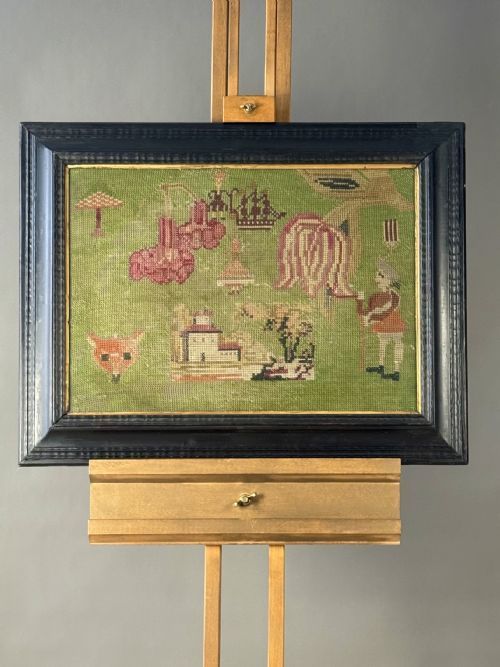
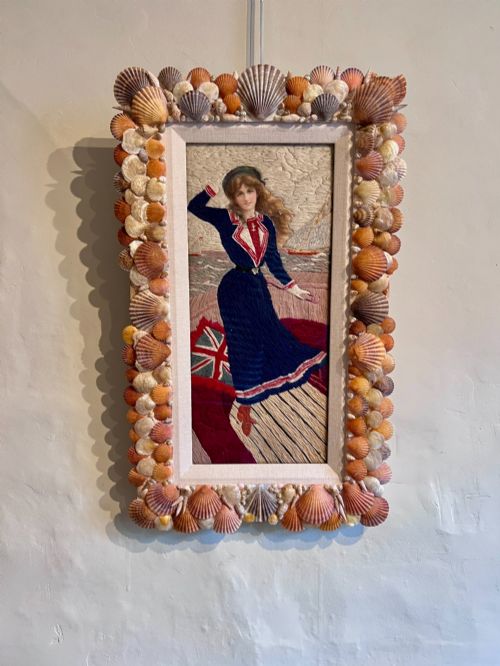
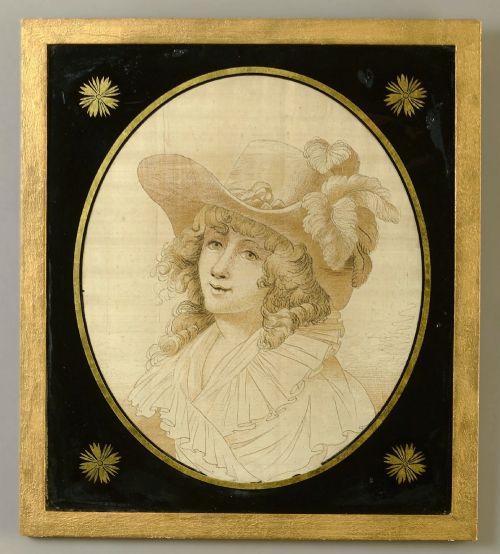
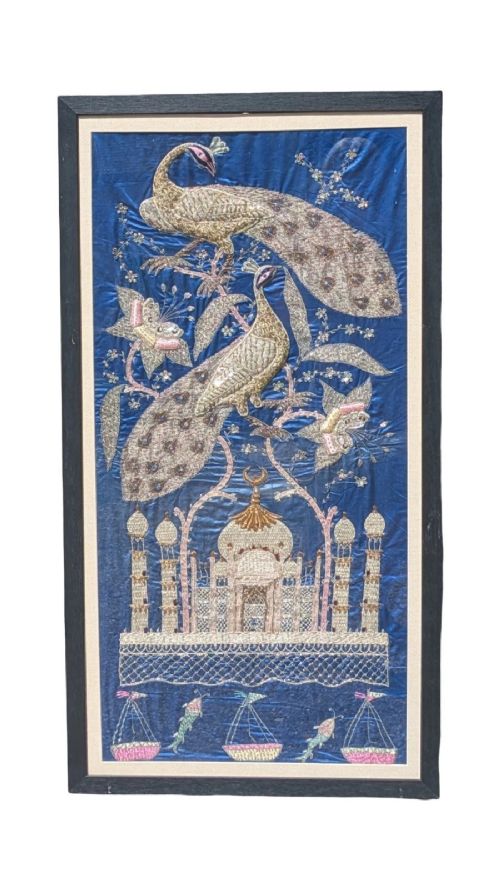
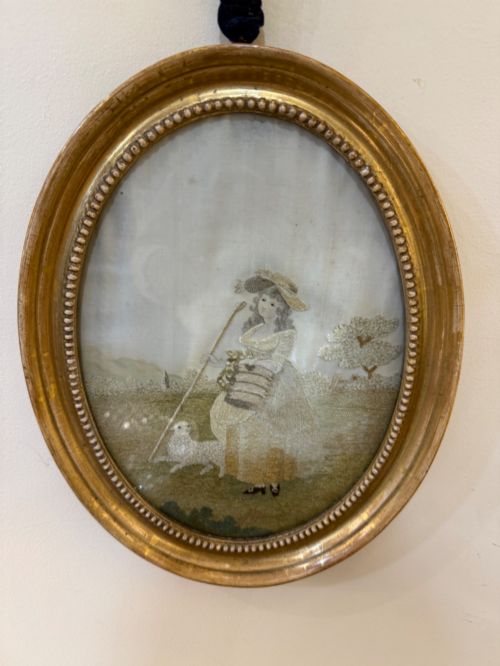
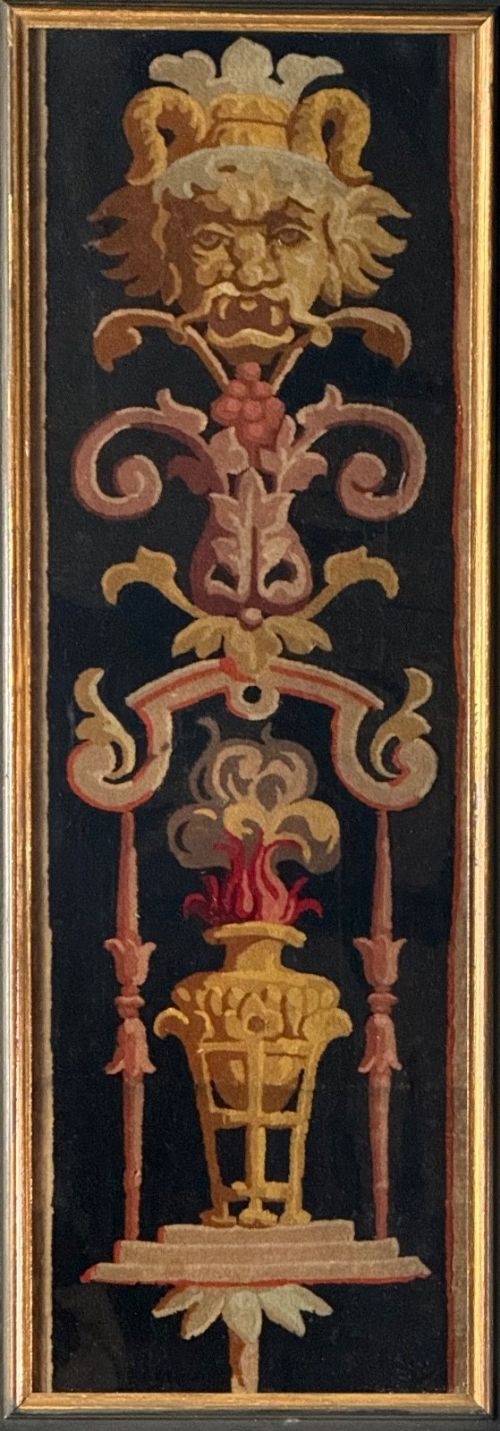
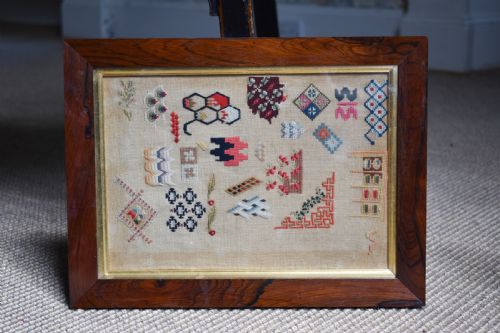
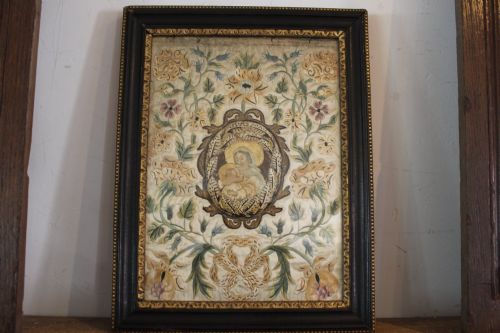
When you search for an antique needlework frame, you encounter a diverse collection of framed textile art spanning from the seventeenth century through to the Edwardian era. These pieces range from educational alphabets and maps to intricate pastoral scenes, portraits and religious depictions worked by hand.
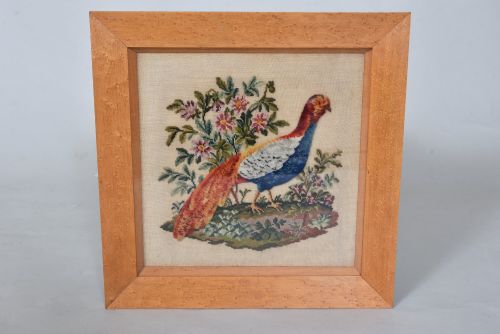
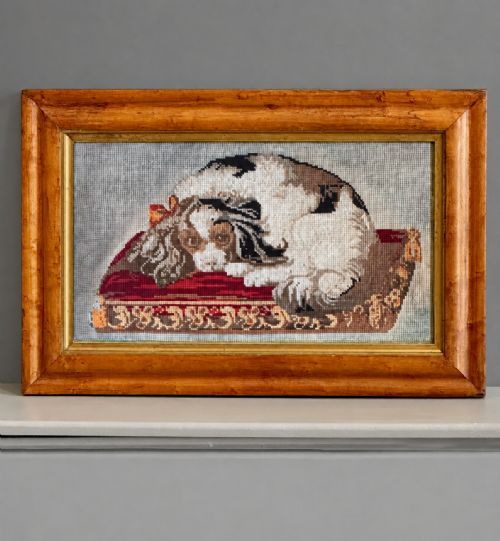
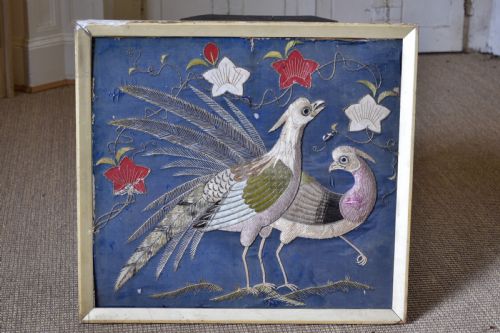
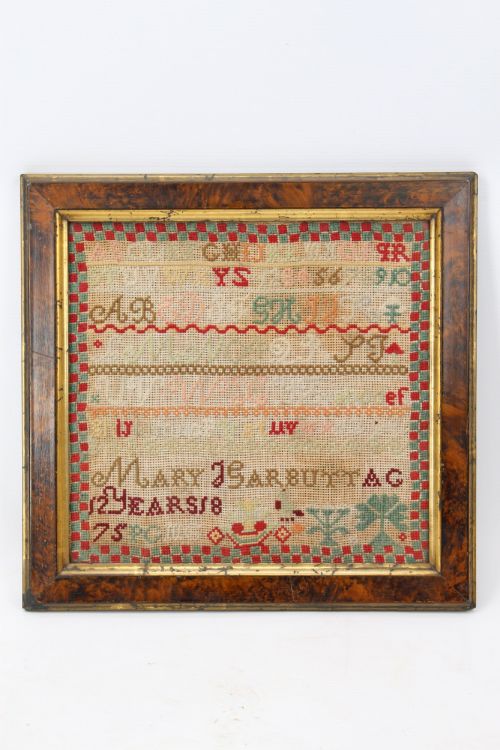
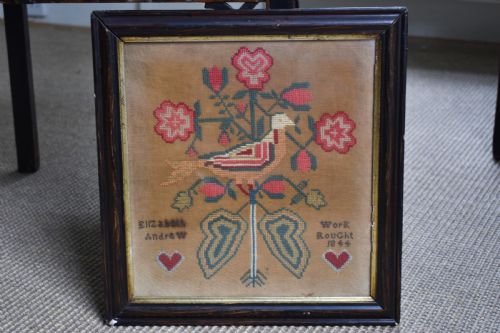
The most common examples on this page are Victorian woolwork pictures, Berlin woolwork panels and nineteenth-century samplers, often housed in their original wood or gilt frames. Buyers find everything from small decorative bird embroideries to large narrative tapestries depicting classical or historical subjects.
The physical objects combine the needlework itself with period mounting and framing materials, preserving fragile silks and wools behind glass. Whether you examine a Georgian silk map or a Stuart stumpwork panel, each item represents a distinct period of domestic handcraft.
Materials and construction
Maker construction relies on natural textiles such as wool, silk and linen thread worked onto canvas, linen or wool ground fabric. Artisans employed specialised techniques including gros-point, plushwork, beadwork and metal thread embroidery to build texture and depth.
Framing materials reflect the period of creation, utilising burr maple, rosewood, carved giltwood gesso, walnut and faux tortoiseshell to house the delicate stitchery. Many pieces retain original glass and protective wooden backs that secure the textile art in place.
A youthful Mary Banion carefully embroidered a map of England and Wales in eighteen-eleven, ensuring her nine-year-old efforts remain legible today.
Distinctions in quality
Quality in these textiles rests upon the precision of the needlework, the complexity of the design and the survival of the original materials. Finer pieces demonstrate intricate shading, sophisticated subject matter such as historical portraits or detailed cartography, and well-preserved colour in the silk floss or wool.
The housing contributes significantly to the overall merit, with original period frames like burr maple or elaborately carved giltwood enhancing the historical integrity of the textile. Pieces that retain contemporary documentation, such as a maker's name, age and date, command greater interest from collectors.
Sir James Dromgole Linton·Mary J Garbutt·Mary Banion·Mary Greening
The Antique Needlework Frame Glossary
- Berlin work
- A popular form of nineteenth-century needlepoint worked in brightly coloured wool on canvas from printed gridded patterns. It allowed stitchers to create elaborate pictorial scenes and portraits.
- Sampler
- A demonstration piece created by a young maker to practise and showcase various alphabet stitches and motifs. They frequently record the maker's age and date of completion.
- Stumpwork
- A raised embroidery style popular in the seventeenth century featuring padded figures and elements that project from the background plane. It often depicts royal or biblical scenes.
- Plushwork
- A textured textile technique that creates a velvety, pile-like surface using looped stitches which are subsequently cut. It appears on Victorian animal depictions such as pheasants.
- Gros-point
- A foundational needlepoint stitch executed on coarse canvas using wool yarn. This technique produces durable, hard-wearing tapestries suitable for wall hangings and upholstery.
Antique Needlework Frame: Frequently Asked Questions
How do I date an antique needlework frame?
Dating relies on examining the style of the stitching, the materials used in the textile, and the construction methods of the accompanying frame. Many samplers explicitly include the maker's name, age, and a specific year.
Secondary clues include the type of wood used for the frame, such as burr maple or rosewood, alongside the framing techniques typical of Georgian or Victorian periods.
Were these textiles always framed?
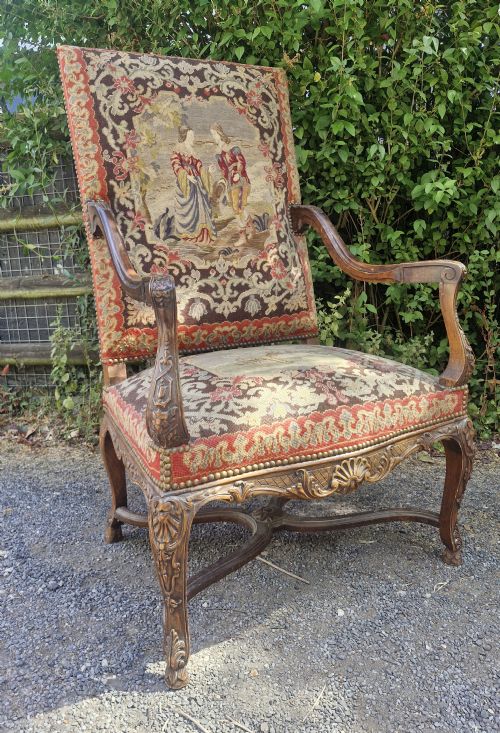
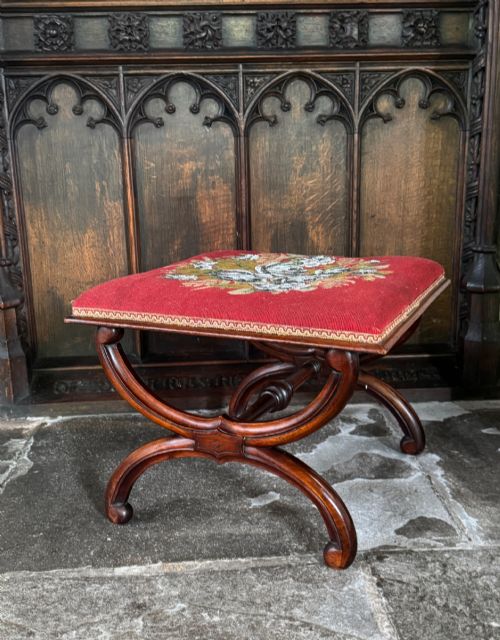
Many samplers and decorative panels were framed soon after completion to protect the delicate silk and wool threads from dust and handling. Some pieces, however, spent time mounted as upholstery or stored in portfolios before later being placed behind glass.
Original frames provide valuable context, though nineteenth-century and earlier works are frequently found in frames added during subsequent generations.
How should I care for antique needlework?
Protect textile art from direct sunlight to prevent the fading of natural wool and silk threads. Maintain stable indoor humidity levels and keep pieces away from heat sources to preserve the backing materials and wooden frames.
When cleaning is necessary, consult a textile conservator rather than attempting domestic restoration, as fragile canvas and old stitching easily suffer damage.
What is the difference between a sampler and a picture?
A sampler functions as a showcase of varied stitches, alphabets, numbers and motifs, traditionally worked by learners to prove their skill. A needlework picture presents a complete pictorial scene, such as a landscape, portrait or sporting event, executed for display.
Pictures rely on complex shading and perspective, whereas samplers focus on formal arrangements of decorative and typographic elements.