


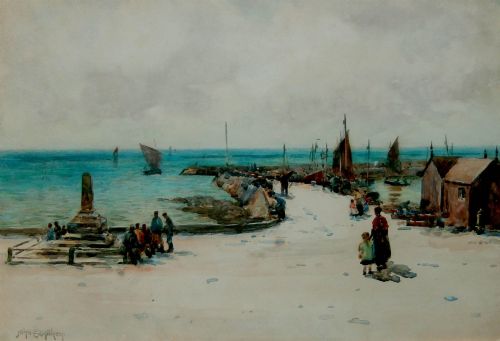
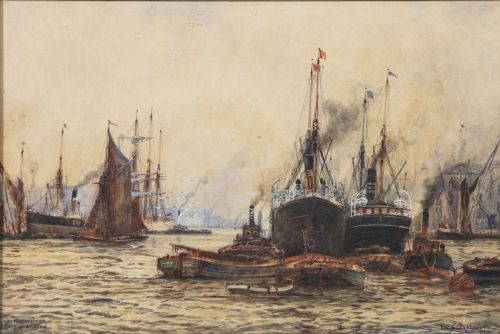
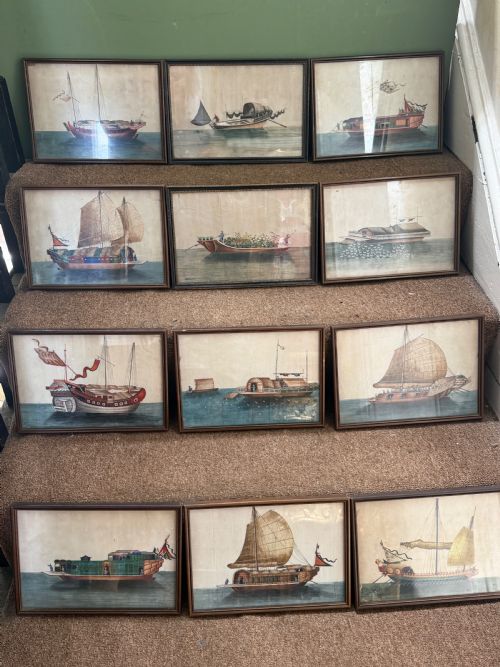
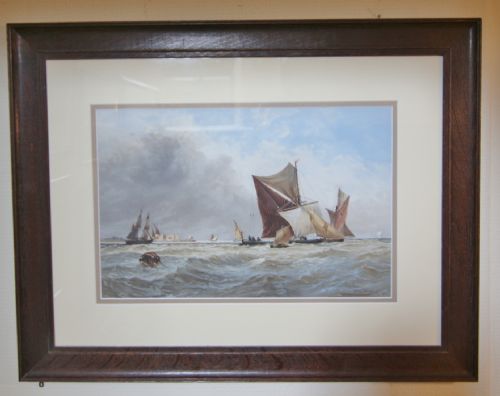
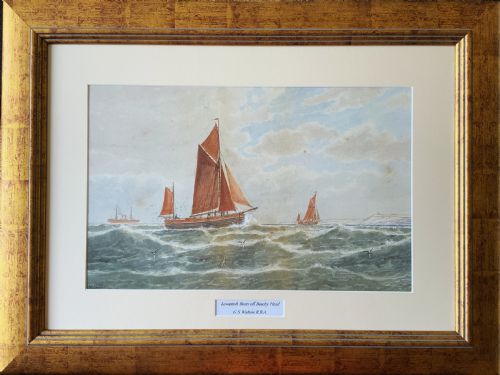
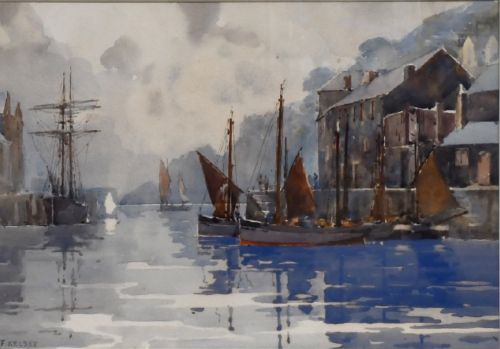
Antique Nautical Watercolour
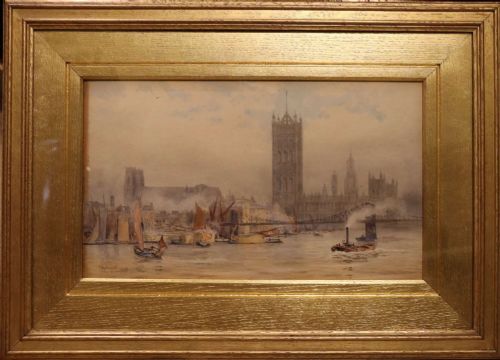
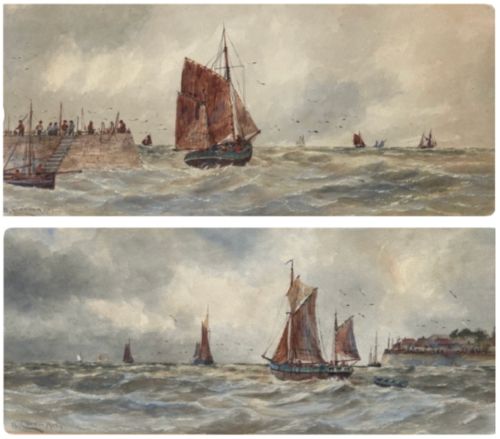
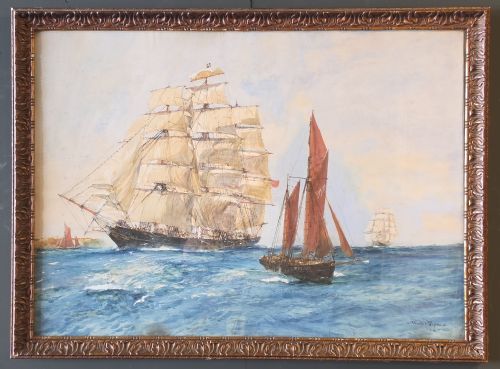
An antique nautical watercolour captures the movement of coastal tides, working vessels and ocean liners on paper through the hands of Victorian and Edwardian painters.
Antique Nautical Watercolour
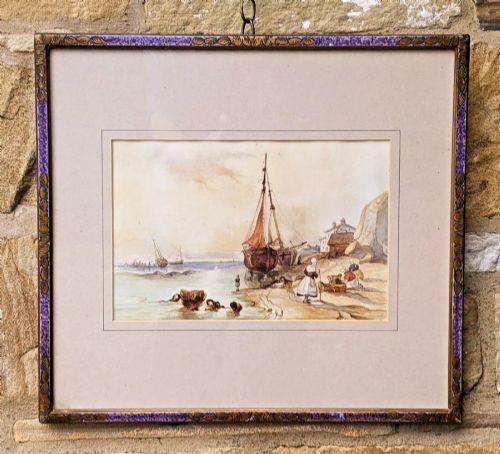
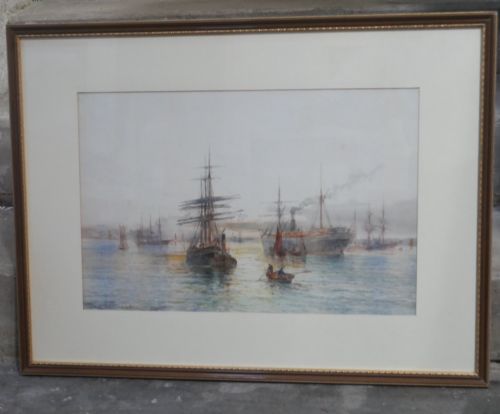
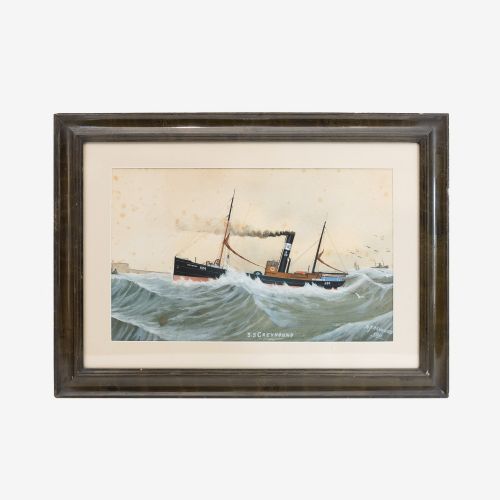
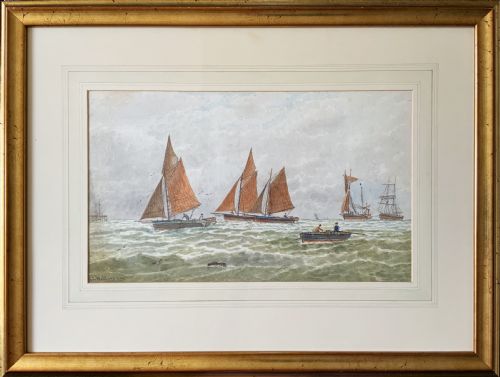
When searching for an antique nautical watercolour, collectors look at original maritime paintings depicting harbours, fishing boats, sailing ships and coastal scenes created during the nineteenth and early twentieth centuries.
The pieces on this page span the Victorian and Edwardian periods, stretching into the mid-century, capturing everything from bustling commercial ports to quiet fishing villages along British and European shores.
Common formats include framed works on paper showing coastal shipping lanes, tidal rivers and naval vessels under varying atmospheric conditions.
Materials and methods
Artists applied watercolour pigment and bodycolour gouache onto paper sheets, frequently utilising pen and ink lines to define the rigging of sailing ships and the architecture of harbour walls.
Protective framing typically combines glass with wooden mouldings, often enclosing gilt wood frames that preserve the delicate pigments from atmospheric moisture and handling.
Listings feature works created using paper, watercolour pigment, gouache, and ink, housed within wood and gilt wood frames.
Evaluating the standard
Quality rests in the artist's handling of light and water, where skilled brushwork conveys the transparency of the sea and the shifting atmosphere of coastal weather rather than stiff delineation.
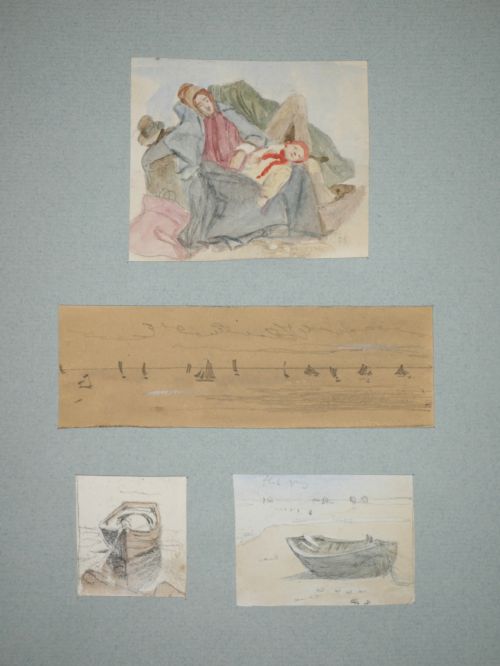
Works by established marine painters show a precise understanding of naval architecture, vessel rigging and maritime topography that separates them from amateur sketches.
H. Medlycott·James Orrock·William Cannon·Charles Edward Dixon·John E. Aitken·Frank William Scarbrough·Thomas Bush Hardy·Alexander Harwood·George Stanfield Walters·Frank Kelsey·Henry Barlow Carter·William Frederick Settle·Richard Harry Carter·Vincenzo D’Esposito·William Lee Hankey·Ernest Dade·Robert Leslie Howey·William Tuck·Fred Waugh·Samuel Owen·Leslie Rackham·William Wyld
The Antique Nautical Watercolour Glossary
- Watercolour
- A paint consisting of colour pigments suspended in a water-soluble vehicle, applied to paper to create translucent washes of tone.
- Gouache
- An opaque water-based paint often combined with transparent watercolour in marine art to highlight white foam, sails and clouds.
- Bodycolour
- Another term for gouache, providing solid highlights and opaque passages within a watercolour painting.
- Gilt wood
- Wood coated with a thin layer of gold leaf or metallic paint, commonly used for traditional picture frames.
Antique Nautical Watercolour: Frequently Asked Questions
How do I date an old marine painting?
Dating relies on visible clues such as the rig of the vessels, artist signatures, period framing styles, and occasionally ink inscriptions on the reverse of the paper.
Changes in ship design, from wooden sailing clippers to ironclad battleships and steamships, help narrow down the decade of creation.
Are these paintings original works?
The listings consist of original hand-painted watercolours and gouaches executed directly by artists rather than modern mass-produced prints or mechanical reproductions.
Brushstrokes, paper texture, and pigment layering confirm the unique hand of the painter on each sheet.
How should I frame and hang marine art?
Watercolours require conservation framing behind glass to prevent fading caused by direct sunlight, along with acid-free mounts that keep the paper away from the glazing.
Displaying them on interior walls away from direct sunlight and damp conditions ensures the longevity of the paper and pigments.
What subjects appear in these watercolours?
Common subjects include trawling luggers, fishing boats off coastal cliffs, naval men-of-war, commercial shipping in busy ports, and quiet estuaries.
Artists frequently documented specific locations such as the River Thames, Whitby, Scarborough, and various European harbours.