


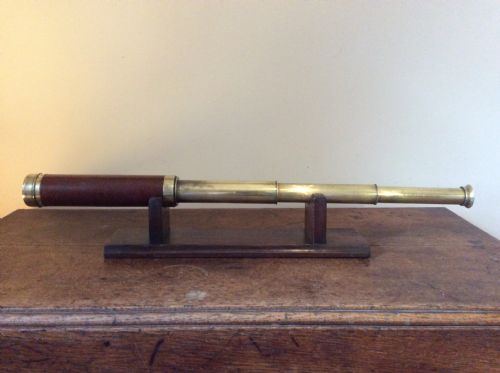
Antique Nautical Monocular
These antique nautical monoculars are portable optical instruments designed for maritime use, offering magnification for navigation and observation.
Antique Nautical Monocular
When you search for antique nautical monocular, you encounter historical optical devices primarily built for maritime navigation, marine observation, and terrestrial viewing. The pieces available include single draw, two draw, three draw, and four draw telescopes, alongside pocket telescopes and specialised officer of the watch instruments.
The selections span multiple eras, encompassing Georgian, Regency, Victorian, Edwardian, and early twentieth-century periods. Many examples originate from English makers, alongside specific items from London, Sheffield, and German workshops.
Forms vary from leather dressed spyglasses and hexagonal marine telescopes to cased instruments mounted on stands. Buyers meet both day or night configurations and terrestrial sighting devices designed for explorers and naval officers.
How they were made
Makers utilised brass as the primary structural metal for barrels and draw tubes, combining it with glass lenses to achieve optical magnification. Exterior bodies frequently incorporated protective coverings of leather or wrappings of turned wood.
Carpenters and instrument makers selected dense timbers such as mahogany, oak, walnut, and fruitwood for tubes, decorative cladding, and protective storage cases. Nickel also appears alongside brass components in later twentieth-century examples.
An officer of the watch could sweep the horizon at dawn, trusting that polished brass and tight leather would survive salt spray and rough seas.
What varies in quality
The distinction between standard utility instruments and superior workshop production rests upon the precision of the metal draw tubes and the clarity of the glass optics. Master opticians achieved smoother sliding actions and tighter joints between brass sections, ensuring stability when extended.
Material selection and decorative execution further differentiate the tier of a piece, from simple turned wood barrels to finely stitched leather casings and signed brass engravings from notable London and regional makers.
Nairne & Blunt of London·Ross of London·Voigtländer & Sohn AG·Newton & Co·Chadburn Brothers of Sheffield
The Antique Nautical Monocular Glossary
- Draw
- A sliding tubular section of a telescope that extends to adjust the focal length. Telescopes are categorized by the number of draws they possess, such as three draw or four draw.
- Spyglass
- A small, portable refracting telescope used at sea or on land. These handheld devices were essential tools for maritime lookouts and explorers.
- Terrestrial
- An optical design configured to display right-side-up images for viewing land objects. These contrast with astronomical telescopes that invert the picture.
- Cased
- An instrument housed within its original fitted box for transport and protection. These wooden cases often feature brass hinges and specialised interior linings.
- Single draw
- A telescope consisting of just two main tubes, where one single section slides out from the main body. This simpler construction offers robust handling for maritime use.
Antique Nautical Monocular: Frequently Asked Questions
How do I use an antique nautical monocular?
Extend the sliding brass draws fully until the internal lenses lock into their correct focal positions. Hold the instrument steadily to your eye and rotate the final eyepiece section slightly until the distant view sharpens into focus.
Keep the brass tubes clean and dry during handling to ensure smooth operation when sliding the sections in and out. Store the monocular in a safe position to protect the glass optics from accidental impact.
Were these telescopes used exclusively at sea?
Naval officers and ship watchmen utilised these instruments extensively for navigation, signaling, and spotting coastline hazards. However, explorers and land travellers also adopted portable spyglasses for terrestrial observation.
Many day or night configurations allowed users to gather more light during dusk or dawn operations. This versatility made them valuable tools both on marine vessels and during overland expeditions.
How can I tell the period of a telescope?
Examine the materials, engraving styles, and construction techniques used on the brass barrels and wooden components. Georgian and Regency pieces often display distinct proportions and simpler finishing compared to later Victorian and Edwardian examples.
Maker signatures and address details engraved on the draw tubes provide direct historical clues for dating. Comparing the number of draws and the presence of leather or wood cladding also helps place the instrument within its era.
What is the difference between draw counts?
Draw counts refer to the number of sliding tubes that nest inside the main outer barrel when the telescope is closed. A greater number of draws allows a longer instrument to collapse into a shorter, more portable length for pocket or belt transport.
Single draw versions offer fewer joints and greater rigidity, whereas three draw and four draw models prioritize compact storage. Each configuration reflects the specific portability demands of the original owner.