



Antique Nautical Lighting
Antique nautical lighting brings maritime history directly into domestic interiors through genuine salvage and period maritime objects.
Antique Nautical Lighting
When you search for antique nautical lighting, you encounter functional items adapted from vessels alongside decorative pieces created in maritime styles. These objects span periods from the nineteenth century through the Edwardian era and the nineteen-twenties, reflecting changing technologies at sea and ashore.
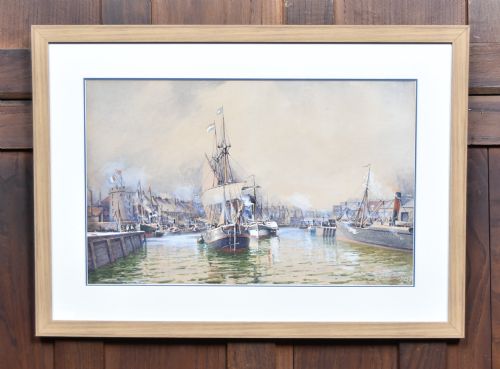
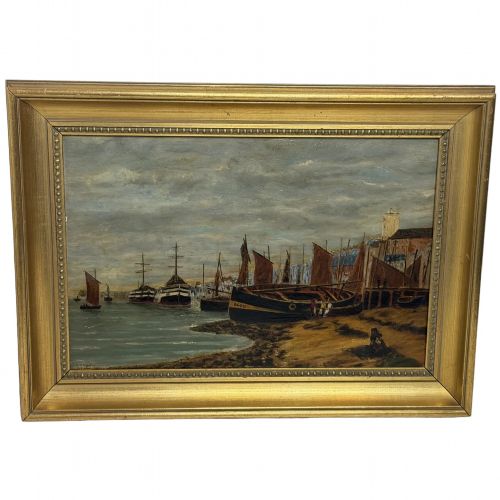
The selection on this page centres on ship lanterns, gimbal lamps, and pendant lights fashioned from brass, copper, and nickel-plated metal. Alongside these working fixtures appear architectural salvage, table lamps, and marine paintings depicting harbours and vessels.
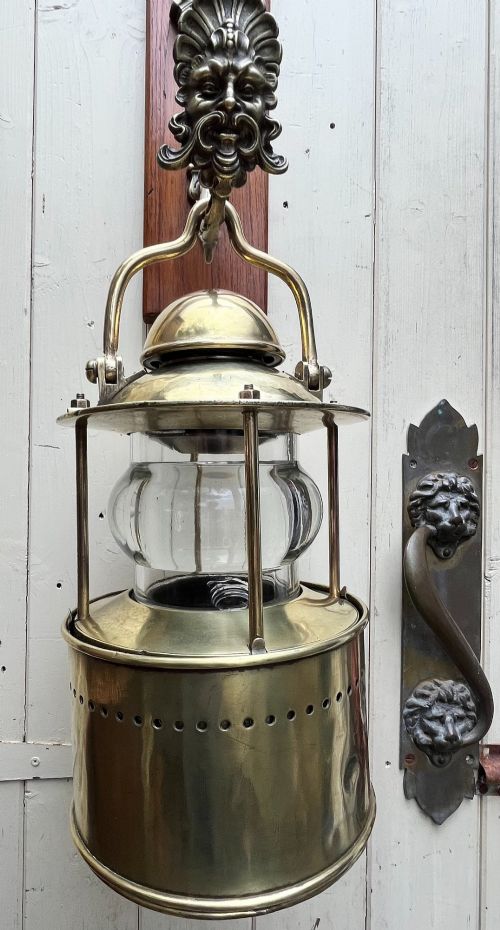
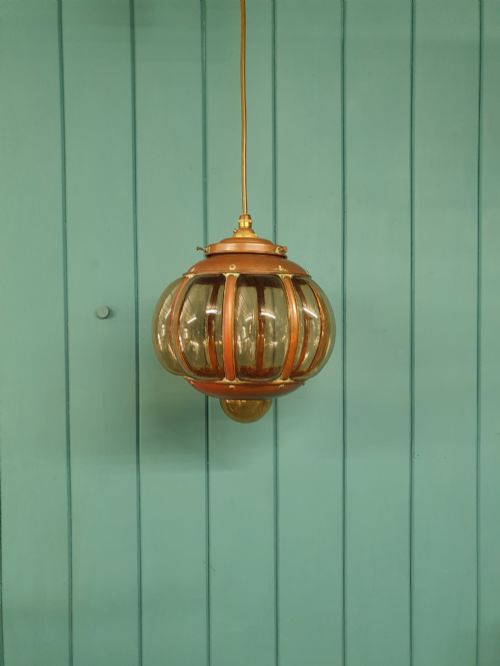
Gimbal lamps dominate the lighting forms, designed originally to stay level on rolling ships by swinging within a brass ring. Pendant lights and wall lanterns provide alternative illumination, often featuring smoked glass and heavy metal construction built to withstand marine environments.
Assessing Quality
Quality rests upon the weight of the metal and the integrity of the original components, distinguishing robust working hardware from lighter decorative items. Heavy gauge brass and thick copper plate denote pieces engineered for demanding maritime service rather than domestic imitation.
Subtleties of patination and maker markings separate standard production pieces from named workshop examples. Original gimballing mechanisms that move smoothly without excessive play demonstrate superior mechanical execution.
Alderson & Gyde Ltd·William McGeoch & Co
The Antique Nautical Lighting Glossary
- Gimbal
- A pivoted support that allows a lamp or compass to remain horizontal regardless of the vessel's motion. This mechanism is standard on shipboard lighting.
- Port Hole
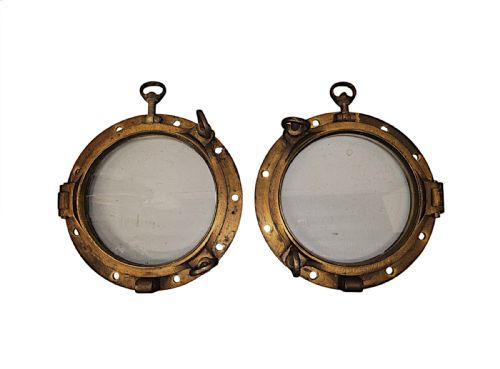
- A circular window used on ships to admit light and air. In salvage form, these heavy brass frames are often converted into mirrors or decorative fittings.
- Port and Starboard
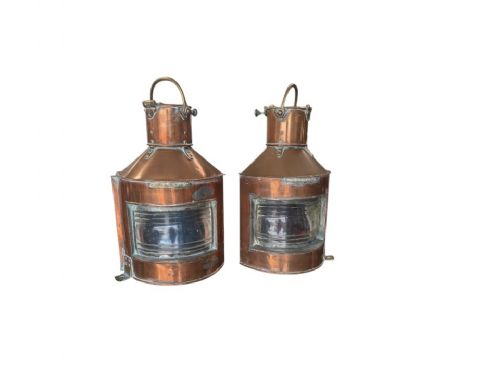
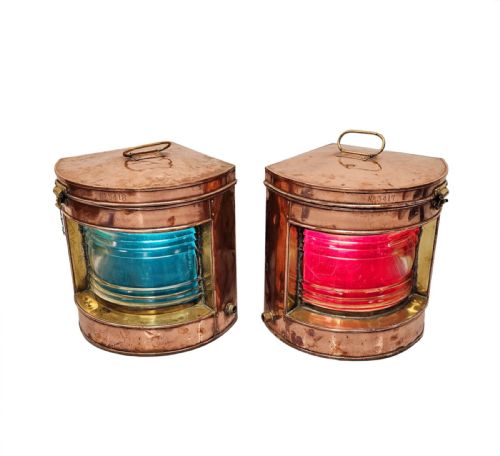
- Nautical terms designating the left and right sides of a vessel respectively. Lanterns carry specific red and green lenses or inscriptions indicating these directions.
- Bobbin Turned
- A method of woodturning that produces a series of rounded spheres resembling bobbins along a shaft. This decorative turning appears on specific wooden items associated with naval vessels.
- Architectural Salvage
- Building elements and fixtures rescued from structures slated for demolition. This category includes nautical fittings removed from older ships and waterfront buildings.
Antique Nautical Lighting: Frequently Asked Questions
What is a gimbal lamp?
A gimbal lamp uses a pivoting ring system that keeps the burner or bulb level while a ship rolls at sea. This clever engineering ensured steady illumination in rough weather.
Today, these pivoting brass and nickel fixtures mount easily to walls or sit on tables, retaining their original mechanical movement.
How do I identify port and starboard lanterns?
Port and starboard ship lanterns are marked with directional labels or fitted with distinct red and green glass lenses. Port indicates the left side and starboard the right side of a vessel.
These coloured lenses and brass plates helped prevent collisions by signalling a ship's heading to other mariners at night.
Where were these lights used?
These lights originated on commercial vessels, naval ships, and trains before finding their way into domestic settings as salvage. Working lamps illuminated cabins, companionways, and exterior decks.
Today, homeowners repurpose these heavy metal fixtures as functional pendant lights, wall lanterns, and distinctive table lamps.
How do I care for brass and copper?
Brass and copper surfaces develop a natural dark oxidation over decades of exposure to air and handling. Many collectors prefer to leave this authentic patination untouched.
If you choose to clean the metal, use a mild polish and a soft cloth to avoid removing the surface character accumulated over the years.
What periods do these pieces span?
The lighting and maritime objects on this page primarily date from the nineteenth century through the nineteen-twenties. Edwardian examples and Art Deco pieces from the nineteen-twenties appear frequently.
Earlier nineteenth-century survivals sit alongside mid-century salvage, reflecting over a century of maritime design and engineering.