





Antique Napoleon Figure
An antique napoleon figure captures the imperial likeness in bronze, porcelain, and earthenware across the nineteenth century.
Antique Napoleon Figure
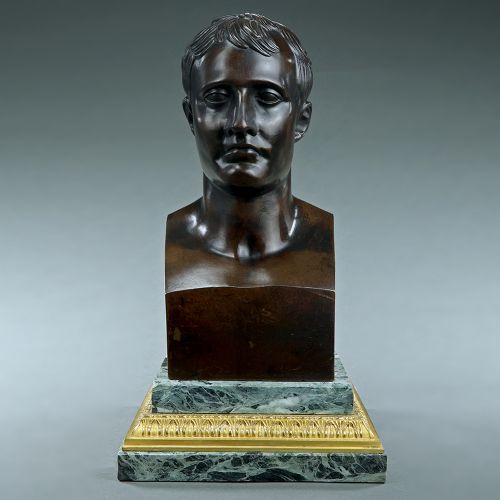
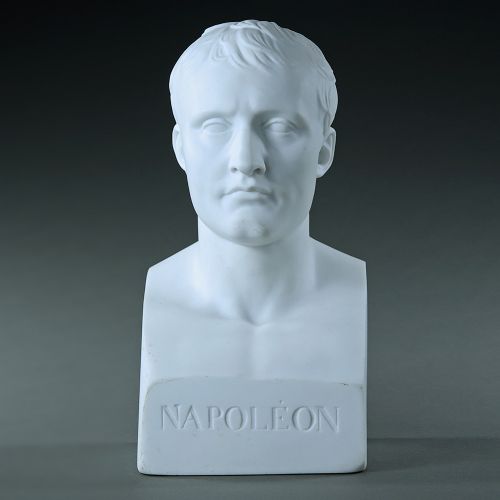
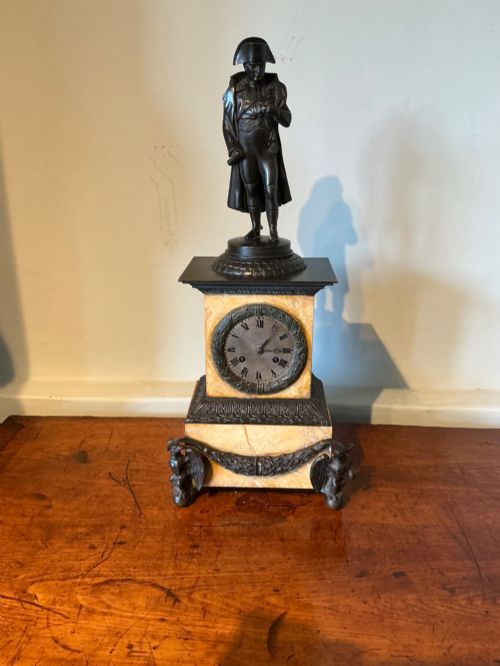
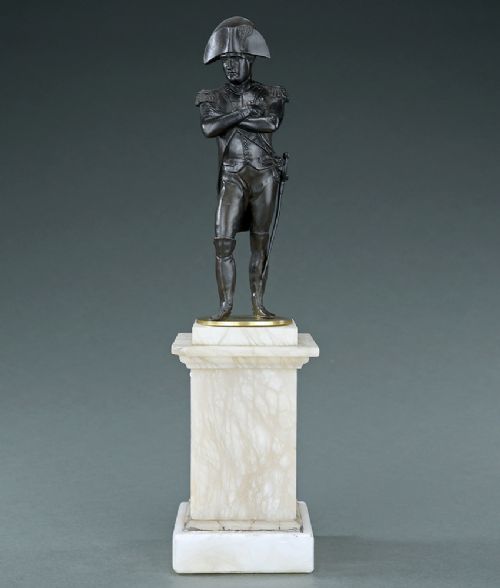
An antique napoleon figure encompasses sculptural representations, mantel clocks, and Staffordshire portrait ceramics produced during the nineteenth century. These pieces record the enduring fascination with the French leader through varied domestic objects.
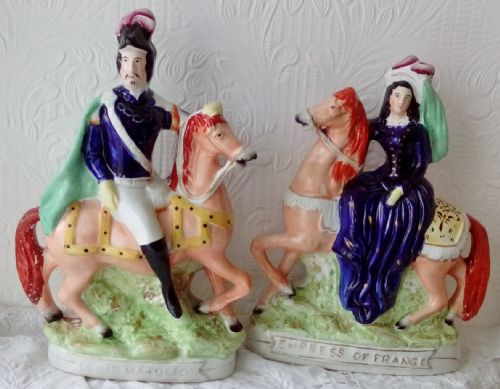
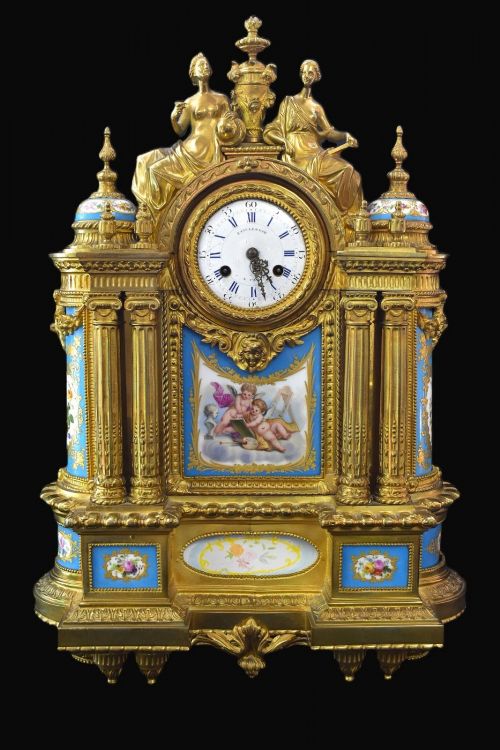
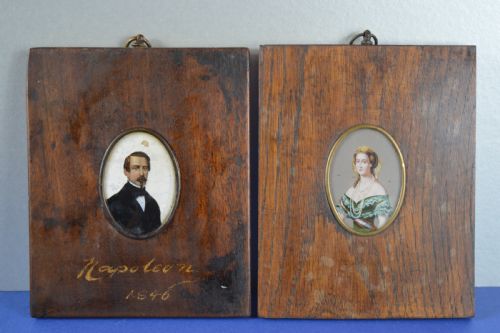
The versions most frequently encountered on this page originate from French workshops in bronze and ormolu, alongside English Staffordshire pottery portrait groups depicting Napoleon III and Empress Eugenie. Such items range from library busts to elaborate garniture clock sets.
Makers and foundries of the period utilised contemporary sculptural models, casting bronze figures on marble bases and hand-painting porcelain components to satisfy nineteenth-century demand for historical subjects.
Materials and Construction
Foundries cast bronze and ormolu with fine chasing, frequently mounting the heavier metal sculptures upon weighted marble bases for stability. Silvered bronze and gilt finishes provide the metallic contrast seen in centrepieces and inkstands.
Clockmakers integrated sculptural figures into architectural cases composed of marble, figured walnut, and porcelain panels. These mechanical housings combine cast bronze ornaments with precision dial work.
Antique Napoleon Figure Retail Price Guide 2026
Typical asking prices for napoleon figure among the pieces listed under this phrase on Sellingantiques today, from the lower quarter to the upper quarter. They describe what is for sale here now, not the wider market.
Listings feature items spanning the nineteenth century, with strong representation from the 1850s, 1860s, 1870s, and Victorian eras.
Distinctions in Quality
The refinement of the casting and the crispness of the chased detail separate standard foundry work from superior bronze and ormolu sculptures. Master modellers produced sharper facial expressions and more naturalistic drapery on the emperor's uniform.
Ceramic quality depends upon the precision of the hand-painted enamel work and the evenness of the lead glaze across Staffordshire portrait figures. Softer modelling and simpler painted lines denote commercial earthenware made for broader domestic markets.
Clock movements and garniture components reflect the skill of named makers and established Parisian workshops, where heavy marble cases and fire-gilt mounts demonstrate higher investment in materials.
Etienne Lenoir·Emile Guillemin·Phillipe H. Mourey·Lerolle Fres
The Antique Napoleon Figure Glossary
- Ormolu
- Gilded bronze produced by applying a mercury amalgam to the metal surface and heating it to drive off the mercury. This technique creates a durable golden finish seen on nineteenth-century clock mounts and decorative objects.
- Staffordshire Pottery
- Earthenware ceramics manufactured in the English Midlands region by numerous kilns. These factories produced moulded portrait figures and royal groups with underglaze and enamel decoration.
- Garniture
- A set of matching decorative objects, typically comprising a mantel clock flanked by matching vases or candelabra. They were designed to sit harmoniously upon a fireplace mantel or sideboard.
- Parian
- A type of fine biscuit porcelain developed in the nineteenth century to imitate carved marble. It possesses a smooth, unglazed surface well-suited for portrait busts.
- Tazza
- An ornamental shallow cup or bowl raised upon a stem and foot. Nineteenth-century examples in bronze served as decorative centrepieces.
Antique Napoleon Figure: Frequently Asked Questions
What materials make up these pieces?
The listings show items constructed primarily from cast bronze, ormolu, marble, and porcelain. Staffordshire pottery and earthenware also appear frequently among the English portrait figures.
Clock cases incorporate figured walnut alongside metal mounts, while individual busts utilise parian porcelain and enamel.
How do I date an antique napoleon figure?
Dating relies upon stylistic markers and material evidence from the nineteenth century, spanning the 1850s to the late 1800s. Victorian Staffordshire pieces often reference specific political alliances or family groups of Napoleon III.
French bronzes and clocks frequently correspond to the Second Empire period and carry foundry or maker attribution marks.
Where were these figures displayed?
Mantel clocks and garniture sets stood upon fireplace mantelpieces in nineteenth-century drawing rooms and libraries. Bronze sculptures and tazzas functioned as desk ornaments or centrepieces for formal tables.
Staffordshire ceramic groups decorated domestic mantel shelves and cabinets in middle-class English homes.
How do I distinguish French and English pieces?
French pieces predominantly utilise bronze, marble, and fine porcelain, often associated with Parisian clockmakers and bronze foundries. They display neoclassical or Second Empire styling with chased metalwork.
English pieces are typically Staffordshire earthenware pottery figures with lead glazes and hand-painted titles naming Napoleon III and Empress Eugenie.