
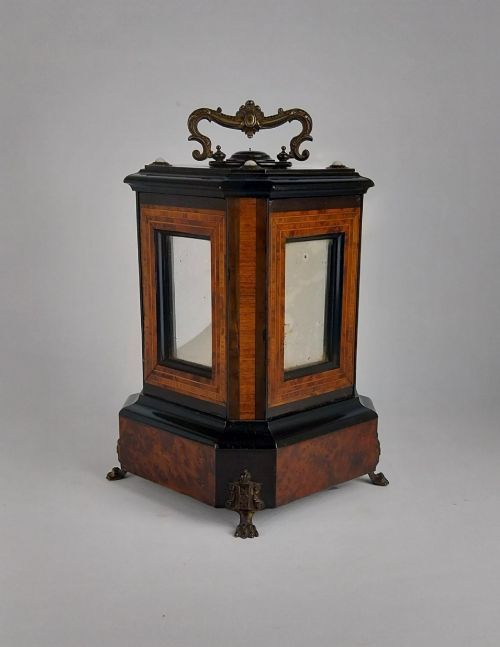


Antique Musical Box
An antique musical box brings the precise, clockwork charm of the Victorian parlour directly into a modern room.

What an antique musical box is
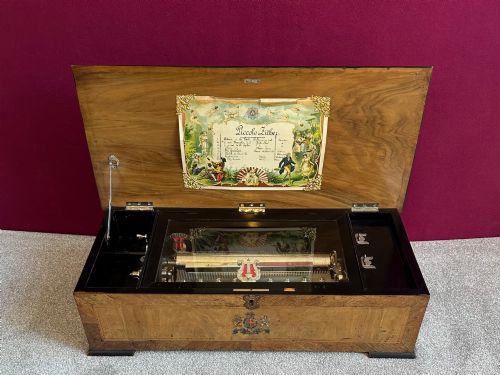
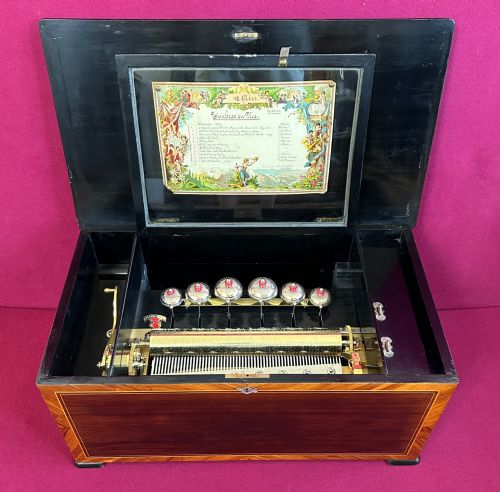
An antique musical box is a mechanical instrument that plays tunes automatically using pins on a rotating brass cylinder which pluck the tuned steel teeth of a comb. The selection on this page centres heavily upon Victorian examples from the nineteenth century, alongside earlier eighteenth-century items and diverse smaller receptacles.
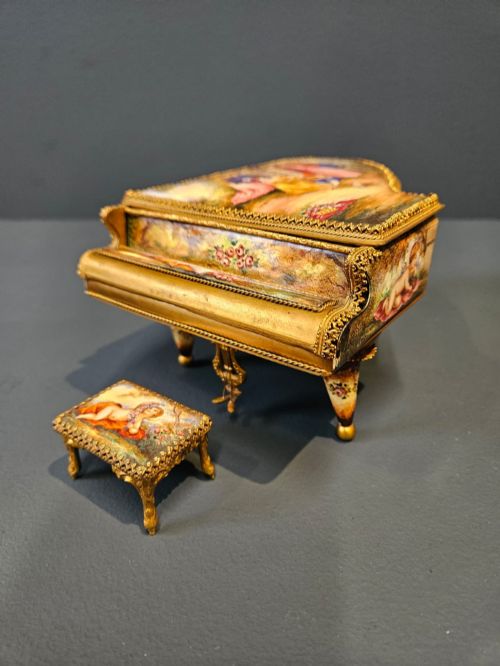
The most common form encountered here is the wooden table box, often housed in rosewood, walnut, ebonised wood or burr walnut, occasionally featuring decorative inlays and specialised mechanisms like bells, drums or mandolin effects. Alongside these stand smaller vanity and novelty containers, including silver pill boxes, scent bottle cases, coquilla nut treen and miniature novelties.
Origins span Swiss workshops, English cabinet-makers and continental silversmiths, reflecting a broad European tradition of mechanized luxury. Buyers select these pieces for their intricate internal engineering and the evocative, tinkling melodies they still produce after more than a century.
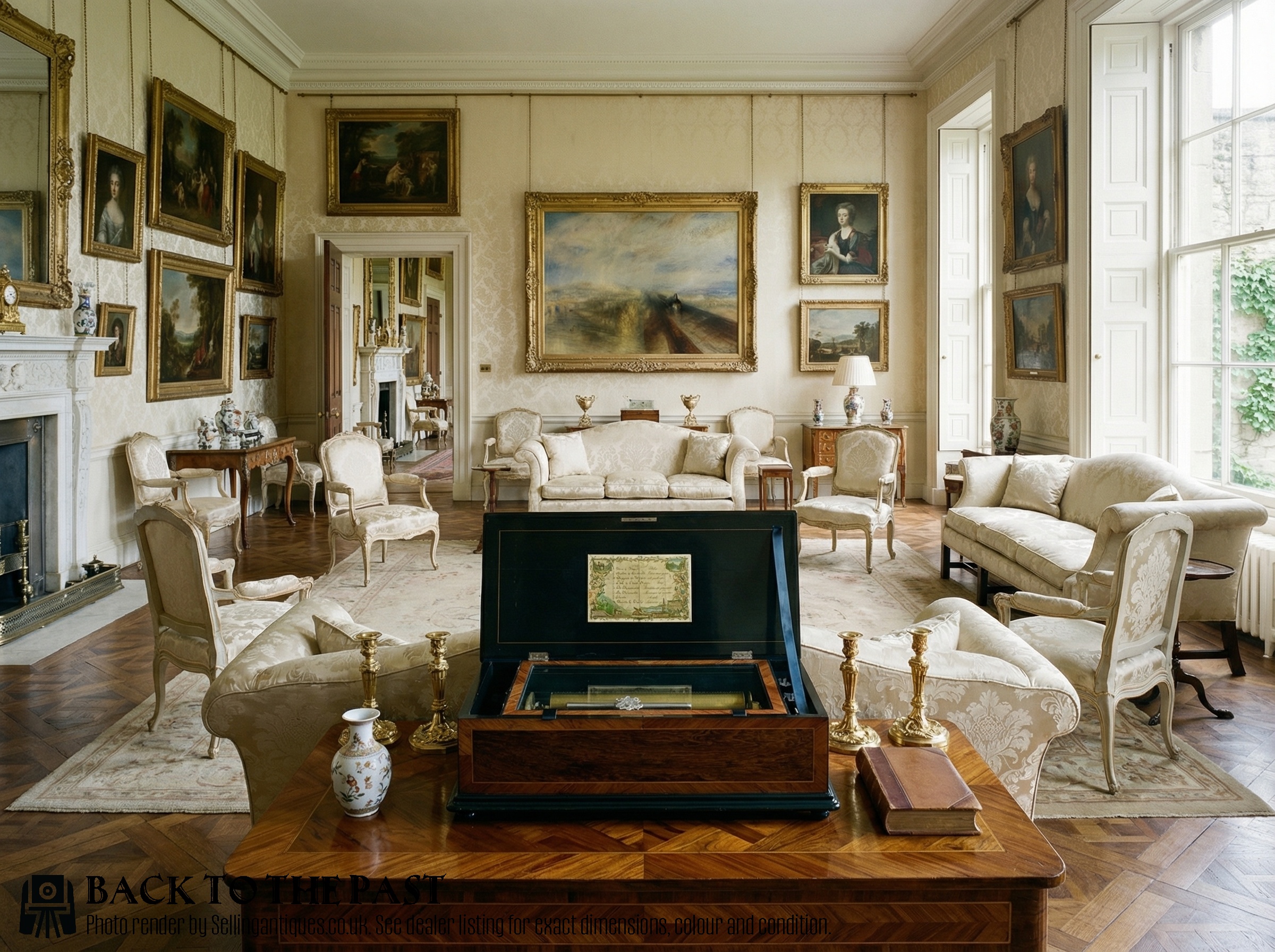
How they were made
The primary structure of a standard table model relies on solid or veneered carcases of rosewood, walnut, boxwood or ebonised wood, sometimes decorated with fine inlay work. Inside, the sound is generated by a heavy steel comb mounted to a cast bedplate, working in tandem with a brass cylinder driven by a spring-wound motor.
Miniature and novelty variants utilise precious materials such as solid silver, mother-of-pearl shell, glass bottles by makers like Baccarat, and turned coquilla nut treen. Each tiny pin on the brass cylinder must be hand-positioned and driven to strike the corresponding steel tooth at precisely the correct millisecond to form a recognisable tune.
Retail Price Guide 2026
Typical UK retail prices for musical box, calculated from the Sellingantiques database of over a million retail prices indexed since 2003. This retail price guide relies exclusively on Sellingantiques data; no external sources or auction records are used, so the figures do not describe the wider market.
Some nineteenth-century makers concealed musical movements inside silver cello containers and nut-shaped pill boxes.
What varies in quality
Quality in these mechanisms is dictated by the density and precision of the musical arrangement, moving from simple single-tune cylinders up to complex Swiss movements playing multiple airs and operating supplementary items like bells or drums. The density of the steel teeth on the comb and the clean execution of the pins determine the musical clarity.
Cabinetwork creates the other major distinction, ranging from plain functional housings to richly figured burr walnut, elaborate floral marquetry, and specialised silver or coquilla carvings. The preservation of original internal labels, tune sheets and intact glass dust lids further separates standard specimens from finer workshop productions.

B A Bremond·Langdorff And Fils
The Antique Musical Box Glossary
- Cylinder
- The rotating brass barrel set with hundreds of tiny hand-placed steel pins that pluck the comb. This component dictates the specific tunes the mechanism will play.
- Comb
- The tuned flat plate of steel containing individual vibrating teeth that produce the notes when struck by the cylinder pins. Its integrity governs the pitch and resonance of the sound.
- Air
- A single musical tune or melody recorded upon the cylinder. Boxes are frequently catalogued by the total number of airs they can perform consecutively.
- Treen
- Small handmade wooden household objects and decorative containers. Examples include turned coquilla nut boxes carved with musical motifs.
Frequently Asked Questions
Can missing tunes be repaired?
Repairing a damaged comb or replacing missing cylinder pins requires specialist horological restoration. A trained restorer can retune broken teeth or repin worn barrels.
Such work demands extreme precision under magnification to maintain the original pitch and mechanical timing of the piece.
How do I identify Swiss boxes?
Swiss movements are typically identified by tune sheets pasted inside the lid listing the specific airs in French or English, often alongside maker marks on the brass bedplate. Geneva and Sainte-Croix were the primary centres of this manufacturing tradition.
English and German iterations often appear instead within novelty silver containers, perfume bottle cases and specialised vanity boxes rather than standard rectangular housings.
Where should I place my box?
Position your musical box on a stable, level wooden surface away from direct sunlight, radiators and damp atmospheres. Temperature fluctuations can warp delicate wood veneers and rust internal steel components.
Placing the box on a hard surface also acts as a natural amplifier for the soundboard, enhancing the resonance of the comb.