
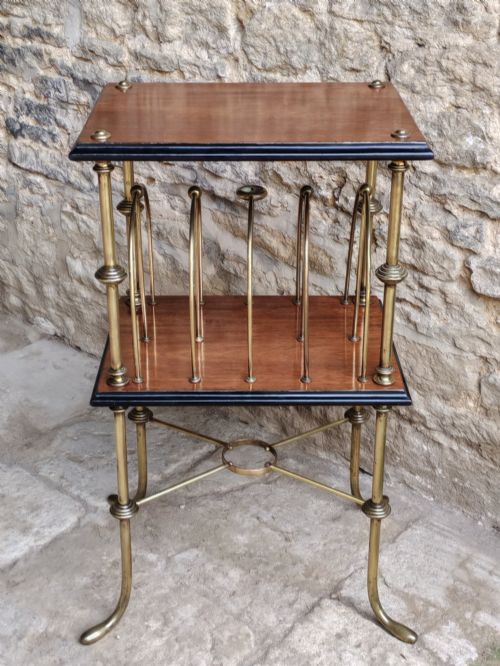
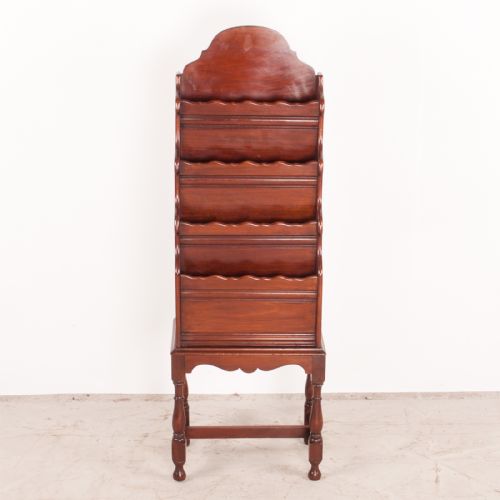
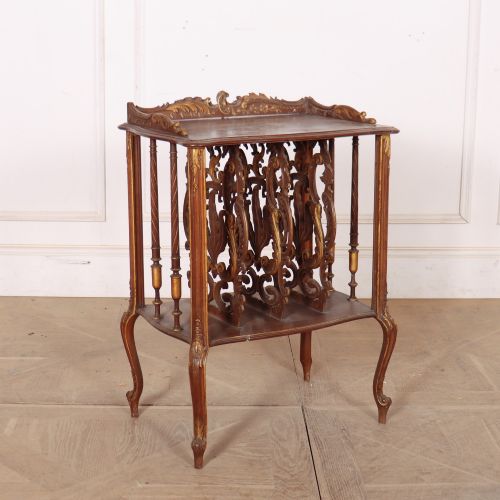


Antique Music Folio Stand
An antique music folio stand holds heavy scores and bound papers, bringing classical elegance and practical order to any room.
Antique Music Folio Stand
An antique music folio stand encompasses a range of refined library and drawing room furnishings designed to organise large paper sheets, sheet music, and literary volumes. These pieces appear across various periods, notably the Regency and Victorian eras, alongside later revivals.
Buyers encountering this category meet diverse forms such as mahogany magazine tables, rosewood canterburys, writing tables with integrated folio holders, and large country house cabinets. Mahogany and rosewood frequently emerge as primary timbers, often enhanced by brass details or satinwood inlay.
How they were made
Cabinet makers utilised dense hardwoods including mahogany, rosewood, walnut, and birds eye maple to construct durable frames capable of supporting heavy paper collections. Joinery methods relied on traditional cabinet-making techniques appropriate for each distinct period style.
Decorative enrichment involved brass mounts, fine gilt touches, marble elements, and intricate satinwood inlay work. Turned feet and original castors frequently supported larger items like side cabinets and country house canterburys.
Materials recorded across the inventory include brass, mahogany, rosewood, walnut, gilt, marble, satinwood inlay, and birds eye maple.
What varies in quality
The choice of timber underpins the overall calibre, with well-figured rosewood, mahogany, and birds eye maple marking superior examples. Finer pieces demonstrate precise inlay work and harmonious proportions rather than plain utility.
Original hardware such as brass fittings and functional castors elevate a piece's standing among collectors. Maker attribution also plays a role when documented workshops produced substantial library furnishings.
Collinson & Lock London
The Antique Music Folio Stand Glossary
- Canterbury
- A low stand featuring upright divisions, originally designed to hold sheet music or folios. These pieces often incorporate drawers or lower shelves.
- Folio
- A large sheet of paper folded once, or a book made from such sheets. Cabinets and stands were specifically built to store these oversized items flat or upright.
- Satinwood inlay
- A contrasting light wood veneer embedded into a darker primary timber for decorative effect. This technique frequently highlights drawer fronts and tabletops on Regency and Edwardian pieces.
- Regency style
- A design period spanning the early nineteenth century characterised by classical restraint and Grecian influence. Pieces from this era often employ dark timbers paired with brass mounts.
Antique Music Folio Stand: Frequently Asked Questions
What is an antique music folio stand used for?
These stands were originally built to store and display large sheets of music, maps, and unbound literary folios in drawing rooms and libraries.
Today, they serve equally well for organising modern periodicals, art books, and large documents while adding period character to a room.
How do I date an antique folio stand?
Dating relies on examining the timber species, construction methods, and stylistic cues such as Regency brass mounts or Victorian rosewood framing.
Secondary woods and hardware fastenings also provide reliable clues regarding whether a piece originates from the Georgian period or later revivals.
Are music folio stands and canterburys the same thing?
While both serve to organise paper and reading materials, traditional canterburys typically feature slatted upright dividers specifically for sheet music.
Folio stands and cabinets offer enclosed storage or flat compartments suited to larger, oversized bound volumes and loose paper collections.
What timbers were commonly used for these stands?
Cabinet makers predominantly selected dense, richly grained hardwoods such as mahogany and rosewood for their strength and visual appeal.
Exotic options like birds eye maple and walnut also appear, occasionally accented with satinwood inlay or brass details.