
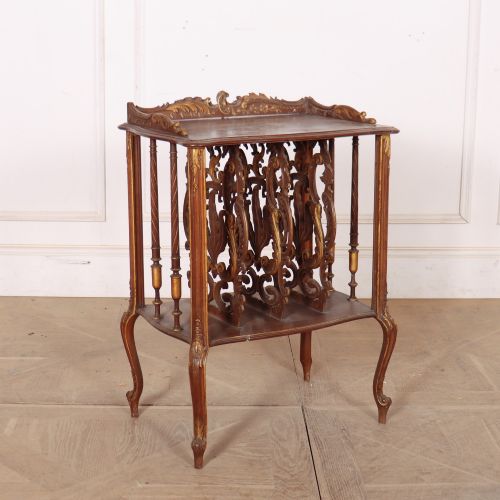


Antique Music Canterbury Table
An antique music canterbury table holds sheet music and periodicals close at hand, combining practical storage with fine cabinetwork.
Antique Music Canterbury Table
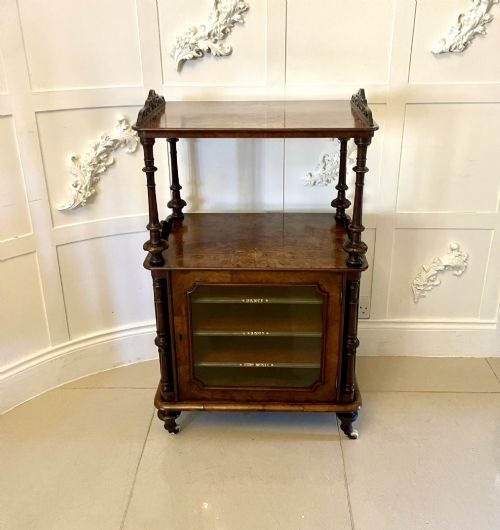
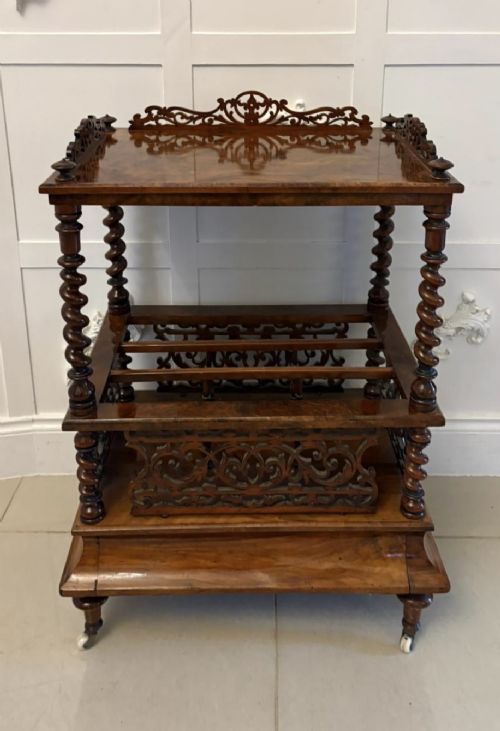
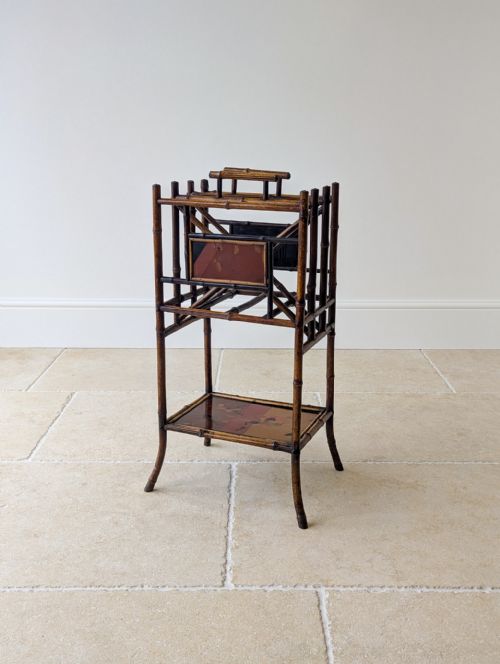
The antique music canterbury table brings together low tiered racks and compartmentalised divisions designed originally for keeping music sheets and journals tidy in the parlour. Most examples encountered here date from the Victorian era and the nineteenth century, though earlier Regency and Georgian pieces appear alongside later Aesthetic Movement designs.
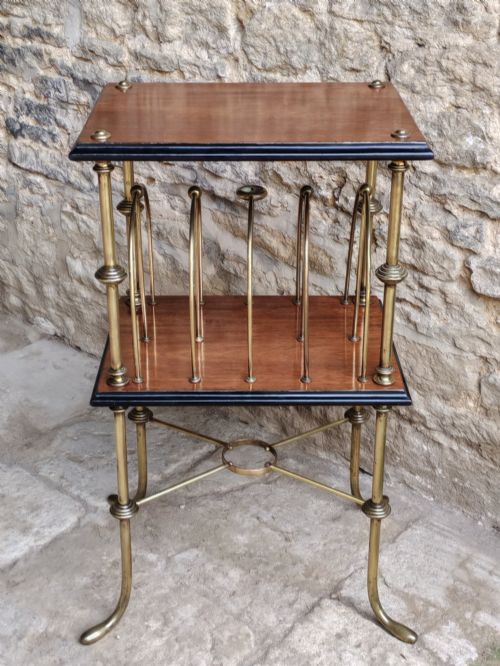
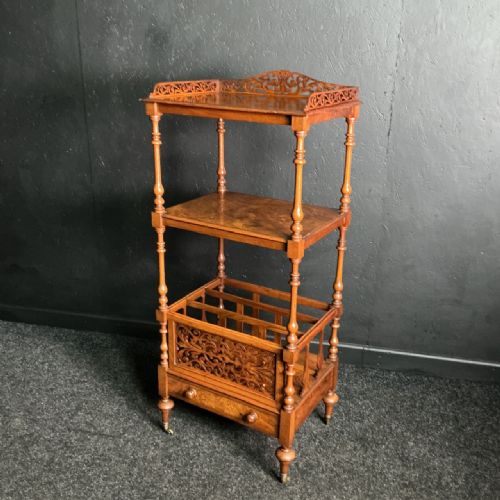
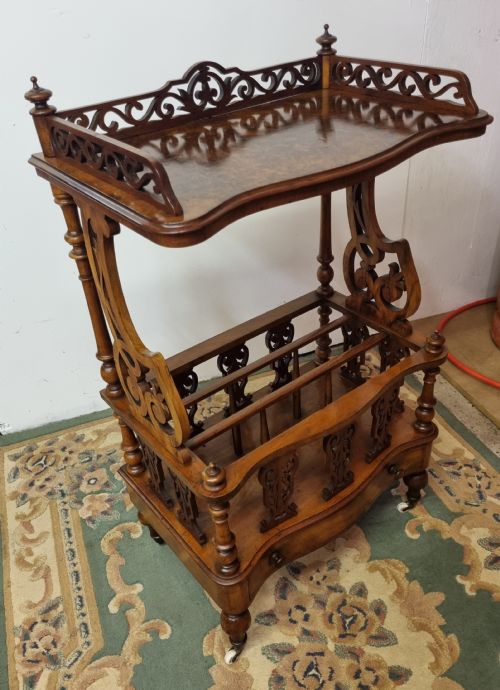
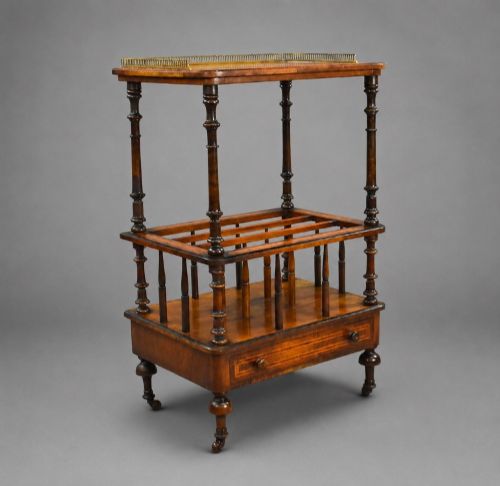
Makers shaped these pieces in various hybrid forms, frequently pairing the classic slated partition base with occasional tables, lamp tables, or upper whatnot tiers supported on slender turnings. Walnut and burr walnut dominate the selection, often enriched with boxwood inlay, alongside rich rosewood and mahogany alternatives.
Quality and execution
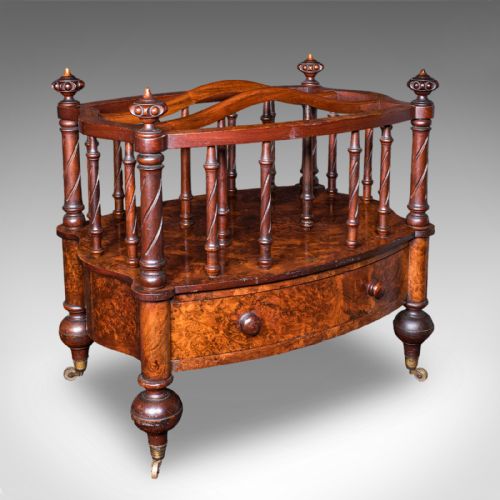
The distinction between standard workshop production and superior cabinetwork lies in the choice of timber veneer and the precision of the marquetry inlay. Finer pieces display carefully matched burr walnut grain across every surface and serpentine shaping that demands advanced woodworking skill.
Hardware details such as cast brass feet, ceramic castors, and integrated drawer construction separate simpler utility stands from multi-functional whatnot combinations. The crispness of carved wooden details and the structural integration of upper shelving tiers mark the upper tier of surviving examples.
Materials span native and exotic timbers including mahogany, rosewood, satinwood, and heavily figured burr walnut enhanced with ceramic and brass elements.
The Antique Music Canterbury Table Glossary
- Canterbury
- A low stand featuring vertical divisions designed to hold sheet music, newspapers, or periodicals. The form originated around the late eighteenth century and evolved into various occasional table formats.
- Whatnot
- A piece of freestanding furniture consisting of multiple open shelves used for displaying ornaments or holding books. They frequently incorporate a canterbury base in nineteenth-century designs.
- Burr Walnut
- Timber sliced from walnut tree growths, prized for its swirling, highly figured grain patterns. Cabinetmakers used it as a decorative veneer on prominent surfaces.
- Marquetry
- The art of applying decorative pieces of veneer to a structure to form intricate geometrical or floral designs. It appears frequently on Victorian and Regency furniture tops.
Antique Music Canterbury Table: Frequently Asked Questions
What is an antique music canterbury table used for?
These pieces served as dedicated storage for sheet music, folios, and newspapers beside pianos and seating areas in nineteenth-century drawing rooms.
Today, they function well as compact side tables, magazine racks, or display stands in contemporary living spaces.
How do I identify a Victorian canterbury?
Victorian examples frequently showcase figured burr walnut veneers, inlaid boxwood details, and combined whatnot shelving structures.
Earlier Regency and Georgian pieces lean towards solid mahogany or rosewood with cleaner architectural lines and fewer applied decorations.
Can I use a canterbury as an occasional table?
Many surviving pieces integrate flat upper surfaces, oval tops, or lamp table configurations specifically designed to hold small decorative items.
Their sturdy timber construction and comfortable height make them practical for everyday placement beside armchairs or sofas.
What woods were commonly used?
Makers relied heavily on rich hardwoods, with burr walnut and mahogany appearing most frequently across the listed selection.
Rosewood, satinwood, and occasional ebonised finishes also occur, sometimes accented with contrasting boxwood stringing and brass fittings.