

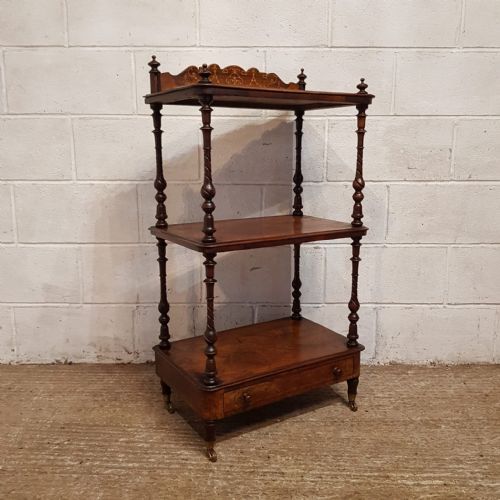
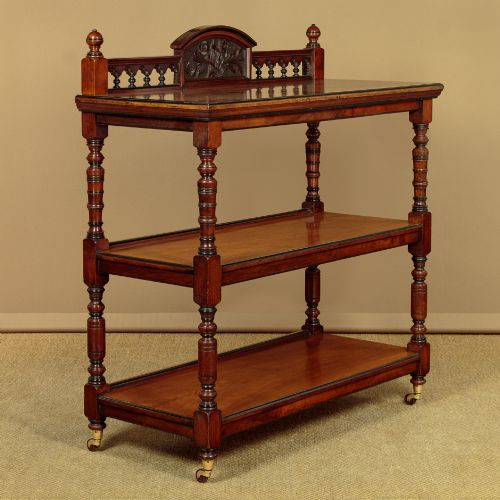
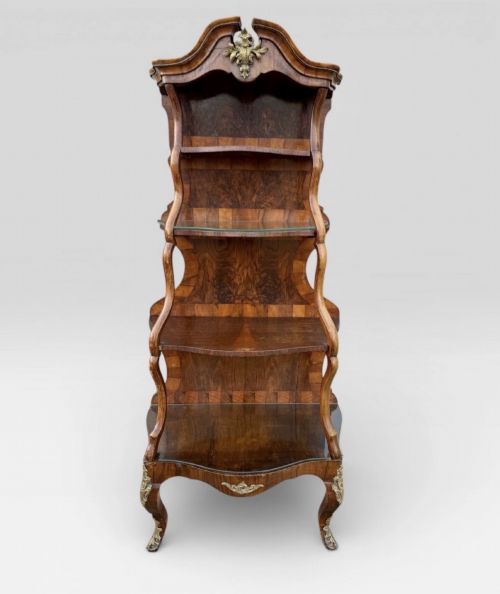
Victorian Walnut Tier Shelf
A victorian walnut tier shelf brings layered display space to a room, utilising rich wood grain and decorative turnings.
Victorian Walnut Tier Shelf
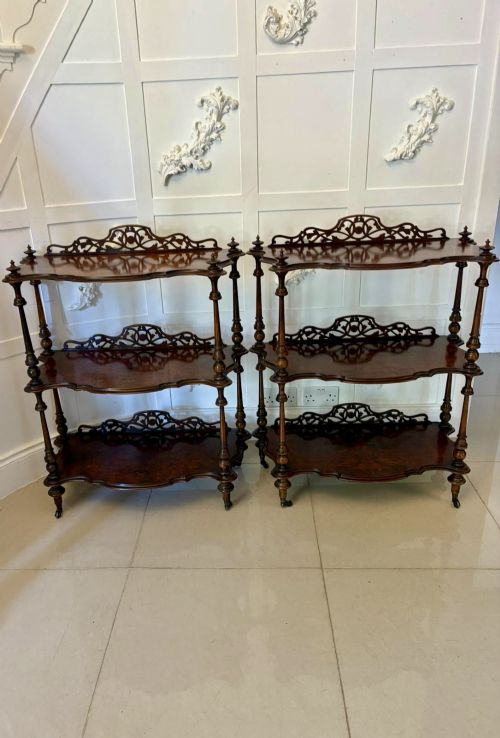
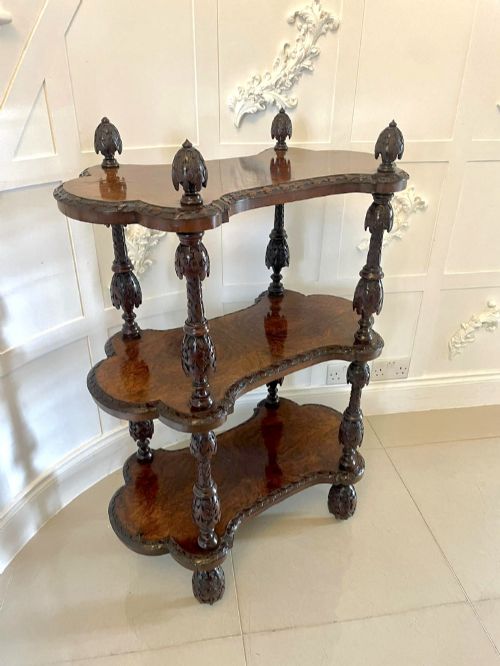
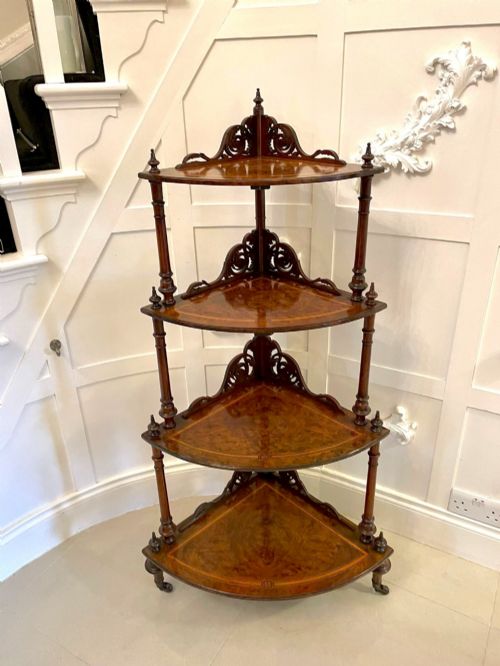
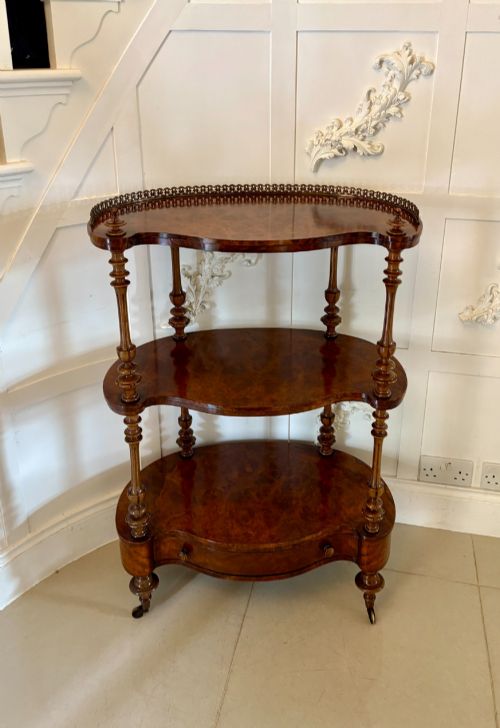
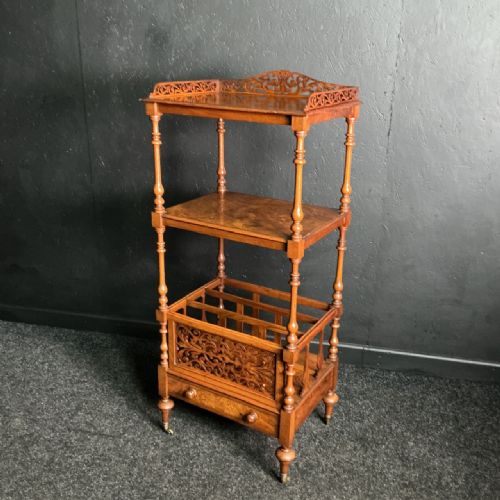
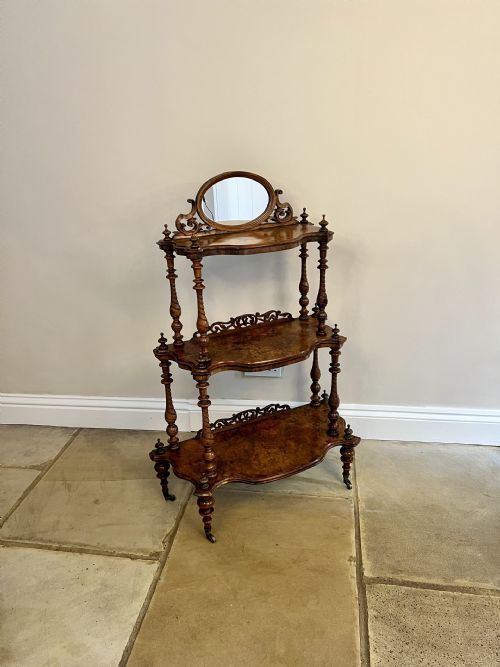
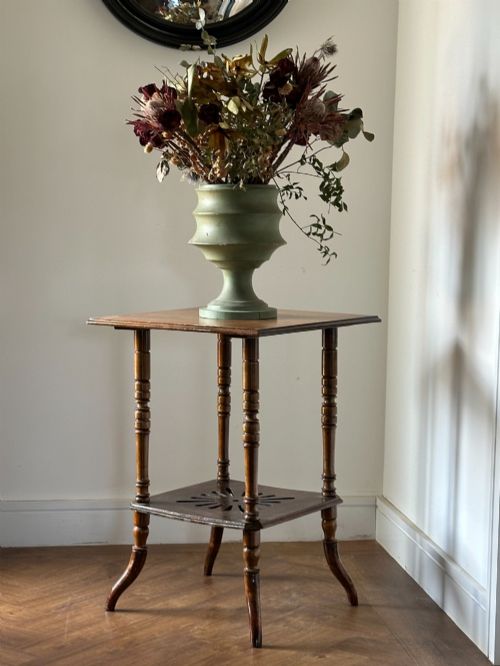
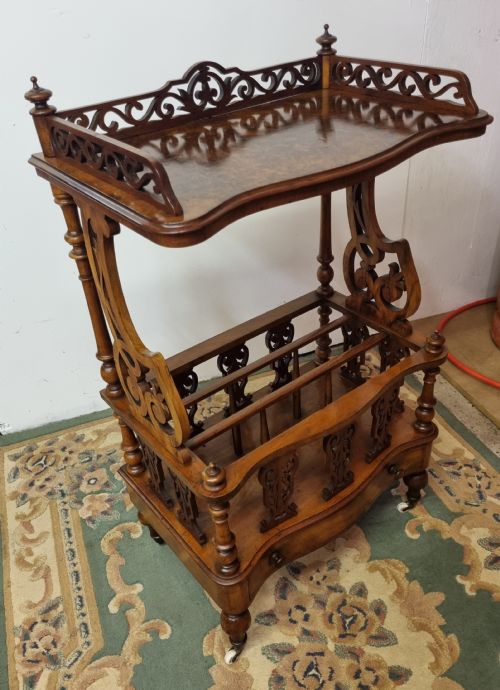
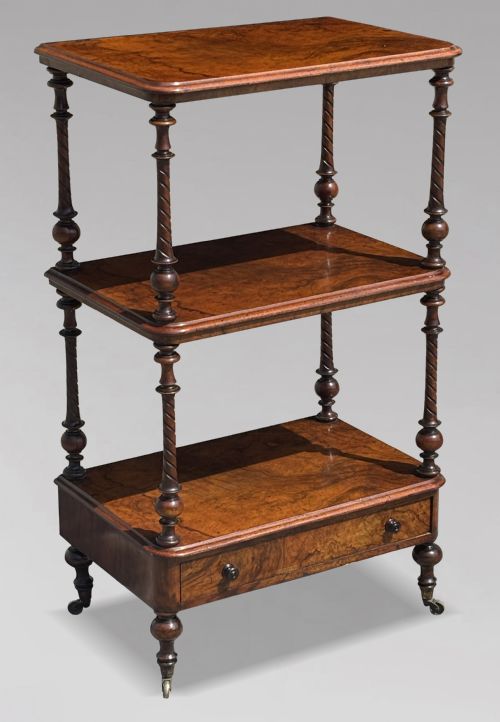
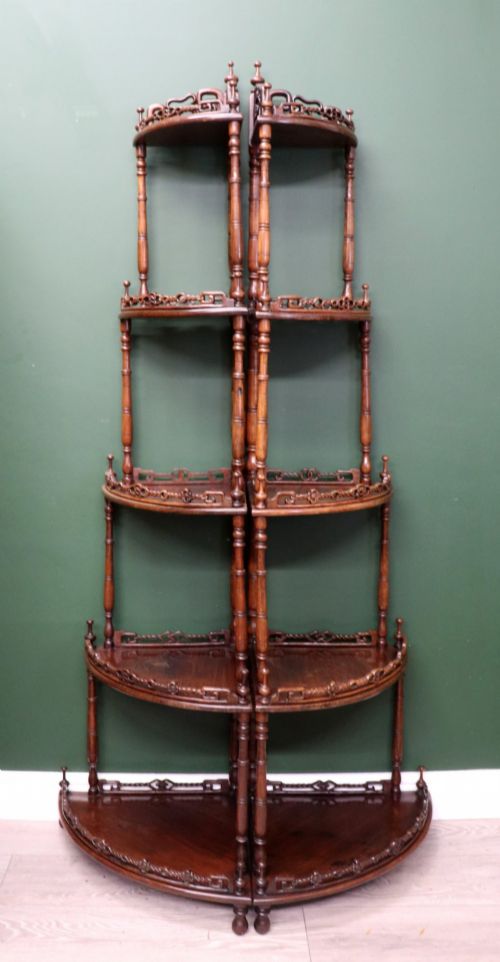
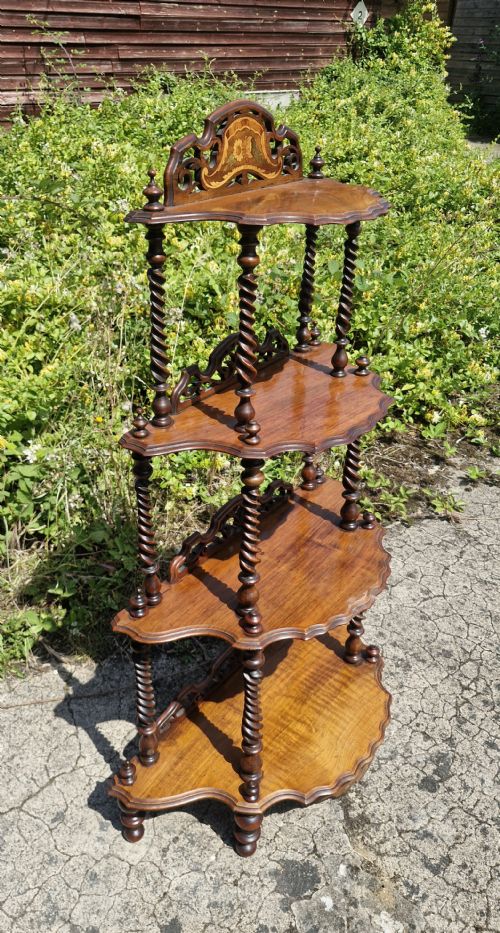
A victorian walnut tier shelf primarily takes the form of a whatnot or etagere, designed for displaying decorative objects across multiple open levels. These pieces appear in freestanding formats, serpentine shapes, and corner units suited for utilising tight spaces.
Makers produced these tiered stands throughout the nineteenth century, with many examples originating from the Victorian period alongside occasional pieces reflecting Aesthetic Movement or Rococo Revival tastes. The primary function involves holding books, ceramics, or small display items upon graduated platforms supported by slender uprights or columns.
Distinctions in quality
The refinement of the timber veneer and the complexity of the silhouette dictate the standing of an individual piece, with serpentine front profiles and exhibition-grade carving marking out superior examples. Plain walnut boards contrast with highly figured burr walnut selected by skilled cabinet makers.
Joinery execution and the crispness of applied boxwood inlay or brass mounts reveal the workshop standards behind the construction. Integrated storage elements like drawers or music compartments add mechanical complexity that separates basic utility items from elaborate salon pieces.
Some versatile specimens included fully adjustable shelves for when your collection of porcelain birds suddenly outgrew standard vertical spacing.
E.W Godwin
The Victorian Walnut Tier Shelf Glossary
- Whatnot
- An open piece of furniture featuring multiple tiers for displaying ornaments and small objects. It gained popularity during the Victorian era for parlour and drawing-room use.
- Etagere
- A French term for a set of tiered display shelves used for bric-a-brac. These items mirror the function of the English whatnot with lighter, often more decorative framing.
- Burr walnut
- A specialised wood cut from the growth warts of walnut trees, yielding highly figured and swirled grain patterns. Cabinet makers prized this veneer for high-status table tops and shelf surfaces.
- Canterbury
- A low tiered stand traditionally fitted with partitions for holding sheet music, books, or folios. Many Victorian examples combine this storage function with upper display shelves.
- Marquetry
- The art of applying decorative veneer pieces in wood, metal, or shell to form pictorial patterns on a solid ground. This technique decorates the top surfaces and doors of select display cabinets.
Victorian Walnut Tier Shelf: Frequently Asked Questions
What is a Victorian tier shelf used for?
These pieces serve as open display furniture for holding ceramics, books, and decorative objects in a parlour or drawing room. The multiple levels allow for the arrangement of small collectibles without cluttering tabletop surfaces.
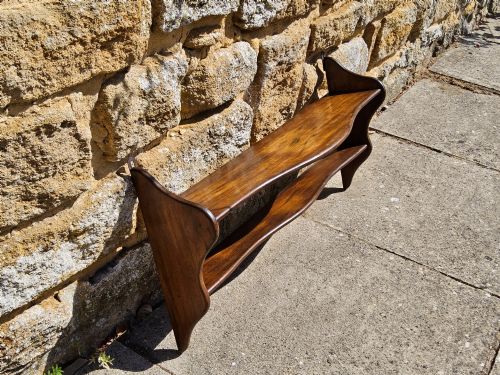
Freestanding versions stand against walls or in corners, while wall-mounted variations free up floor space entirely. Some specialised formats also incorporate lower cabinets or drawers for concealed storage.
How do you identify a Victorian walnut whatnot?
Look for the characteristic multiple tiers supported by turned wooden columns, typically constructed from walnut or highly figured burr walnut. Many examples date from the mid-to-late nineteenth century and incorporate brass galleries or ceramic castors.
Stylistic markers such as Aesthetic Movement lines, serpentine fronts, or marquetry inlay help confirm the period of manufacture. Corner configurations and wall-hanging formats are also common variations within this group.
Where should I place a tier shelf?
Corner units fit effectively into unused room angles, utilising vertical space where a standard rectangular table would obstruct traffic. Freestanding etageres work well against flat walls or as room dividers in spacious reception areas.
Wall-mounted shelves require secure fixing to studs or masonry to support the weight of the timber and displayed items safely. Keep them away from direct heat sources to protect the walnut veneer from drying out.
What is the difference between an etagere and a whatnot?
An etagere is a French-derived term for a tiered display stand, often possessing a lighter, more decorative frame designed for the salon. A whatnot is the traditional English equivalent, though the terms frequently overlap in antique descriptions.
Both types serve the same primary function of tiered display, but etageres more commonly feature French Revival styling, gilt metal mounts, or marquetry details.