


Antique Moonstone Pendant
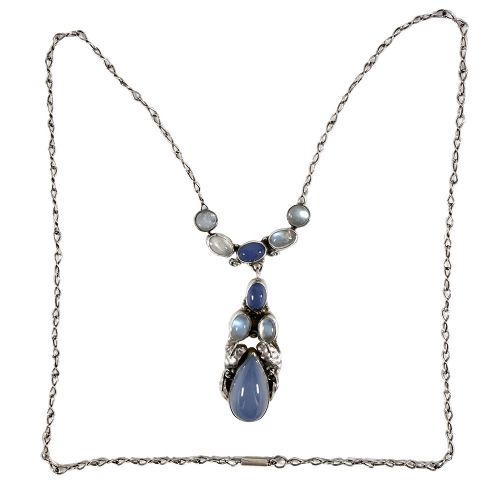
An antique moonstone pendant catches the light with a soft, ethereal blue adularescence, making these gem-set jewels enduring favourites for daily wear.
Antique Moonstone Pendant
The aesthetic vocabulary spans several distinct design movements, with Arts and Crafts and Art Deco interpretations appearing alongside delicate Edwardian work. Hand-hammered silver settings dominate the Arts and Crafts examples, whereas yellow gold and finer precious stones define the Edwardian and Georgian specimens. Buyers are most likely to meet silver and gold necklace combinations dating from the nineteen-tens and nineteen-twenties.
Origin and attribution play a significant part in the character of these items, with English makers represented alongside continental workshops. Pieces range from simple single-stone drops to elaborate festoon necklaces set with garnets, amethysts and coral. Each era brings its own mounting conventions, connecting the glowing feldspar stones to period chains and clasps.
Materials and Making
Makers set cabochon moonstones into closed or open-backed mounts of silver, nine-carat gold, fifteen-carat gold and eighteen-carat gold. The softer sheen of the moonstone is regularly contrasted with the sparkle of rose or old-cut diamonds, seed pearls and coloured gems like sapphires and chalcedony.
Metalsmiths utilised hand-fabrication techniques, particularly during the Arts and Crafts movement where visible bezel settings, granulation and wirework came to the fore. Silver components were frequently patinated or left with a matte finish to highlight the luminous quality of the central feldspar.
An eighteenth-century belief held that moonstones waxed and waned in brilliance alongside the lunar cycle.
Judging Quality and Execution
The strength and centring of the stone's adularescence dictates visual appeal, with superior moonstones displaying a clear, floating blue sheen across the dome. Cut height matters too; a well-proportioned cabochon captures and diffuses light more effectively than a flat or overly steep dome.
Setting execution distinguishes workshop production from standard commercial output, particularly in the precision of the bezel work and the integration of secondary gems like pearls and diamonds. Heavier gauge gold and substantial silver work indicate robust construction designed to survive decades of wear.
Mary Thew·Knoll and Pregizer·George Hunt·John Paul Cooper·Dorrie Nossiter·Amy Sandheim
The Antique Moonstone Pendant Glossary
- Adularescence
- The optical phenomenon where a milky, bluish light shimmers across the dome of a moonstone when rotated. This floating sheen is the defining optical characteristic sought by collectors.
- Cabochon
- A gem cut with a convex, rounded top and a flat or slightly curved base rather than faceted planes. This smooth surface style preserves and enhances the internal glow of feldspar stones.
- Lavaliere
- A pendant featuring a central drop suspended from a chain or necklet, popular during the Edwardian era. These assemblies often incorporate flowing garland motifs and articulated gemstone sections.
- Festoon
- A necklace design featuring draped chains or links of beads and gemstones that hang in curves across the neckline. They frequently combine moonstones with pearls, corals or amethysts.
- Bezel setting
- A method of holding a gemstone in place by means of a metal rim that wraps snugly around its perimeter. This technique protects the girdle of softer stones like moonstone.
Antique Moonstone Pendant: Frequently Asked Questions
How do I care for antique moonstone?
Moonstone possesses a moderate hardness and can scratch easily if stored alongside harder gems like diamonds. Clean gently with warm soapy water and a soft cloth, avoiding harsh ultrasonic cleaners.
Protect the piece from sharp impacts and sudden temperature changes to preserve the integrity of the stone and its historic metal mount.
Are these pendants worn on original chains?
Many pendants survive with period-appropriate chains, though replacements occur frequently over decades of circulation. Examine the jump rings and clasp construction to determine whether the chain shares the exact period of the pendant.
Matching the gold or silver tone of the pendant to a contemporary period chain ensures a harmonious appearance when worn.
How do I distinguish Edwardian from Art Deco pieces?
Edwardian mountings tend to feature delicate garland motifs, platinum-topped gold, and flowing curves set with pearls and diamonds. They emphasise romantic lightness and intricate wirework.
Art Deco designs lean towards geometric rigour, stylised symmetry, and clean lines, often pairing silver with moonstones and contrasting colourful gems.
What is moonstone glass?
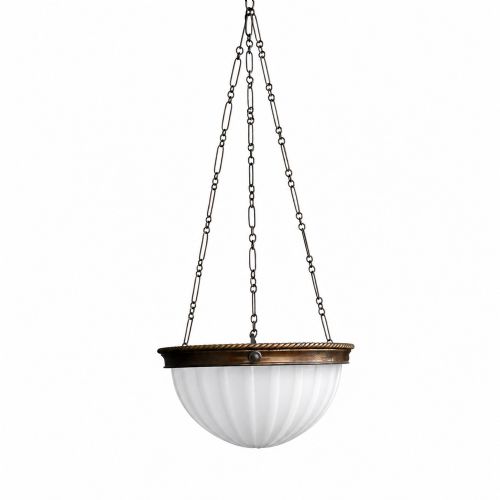
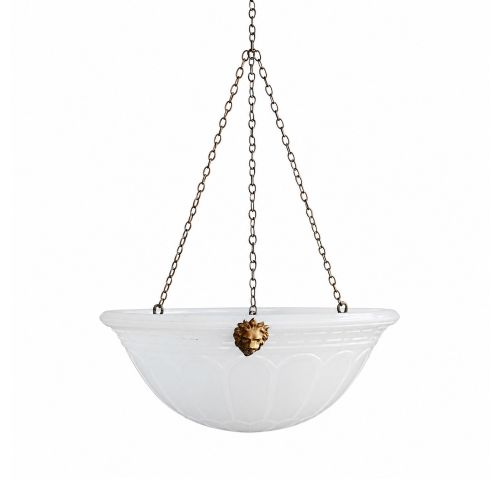
Moonstone glass is an opalescent art glass formulated to mimic the milky sheen and blue glow of natural feldspar. It appears in decorative lighting and larger pendant forms rather than fine jewellery.
This material captures light similarly to the mineral, creating a soft diffusion well suited to early twentieth-century interior illumination.