

Antique Monks Benches
These antique monks benches combine seating and storage in heavy timber, offering solid utility and traditional craftsmanship.
Antique Monks Benches
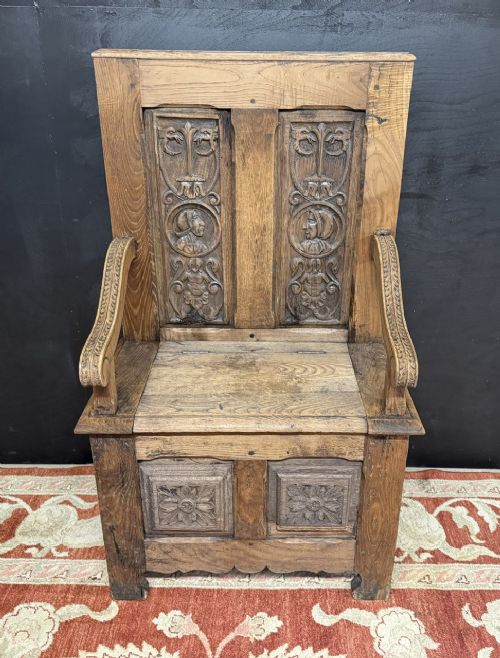
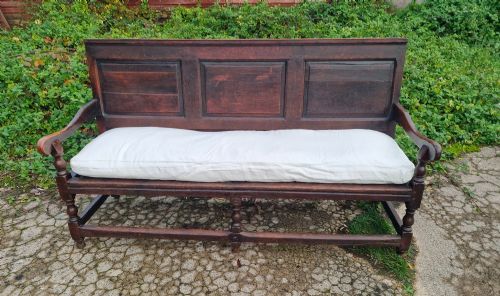
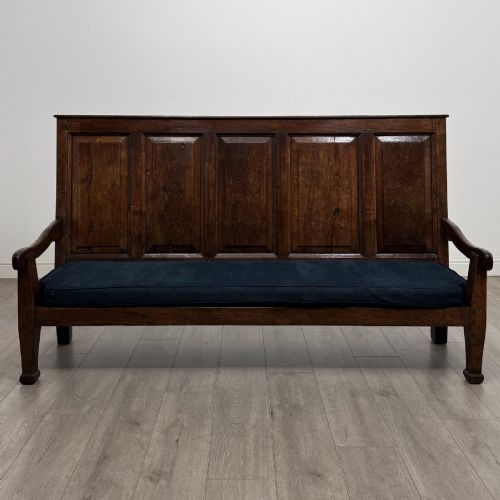
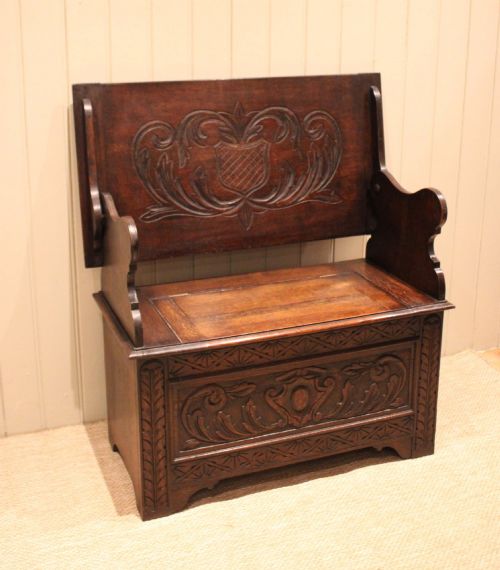
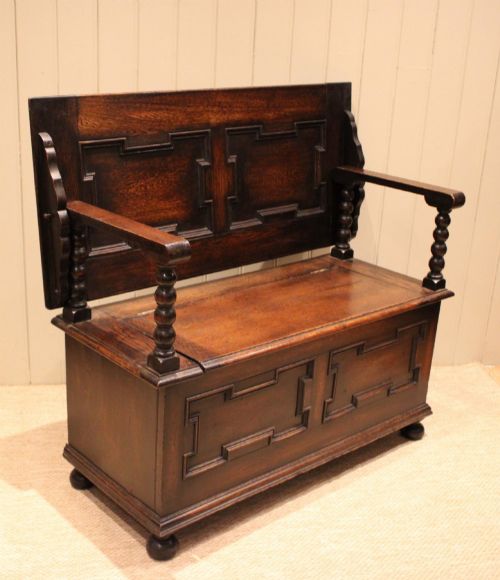
When someone searches for antique monks benches, they encounter multi-purpose seating forms that often feature lift-up lids or fold-over tops to double as tables or storage chests. These pieces span centuries of domestic and tavern use, originating primarily as robust timber settles before later revival forms emerged.
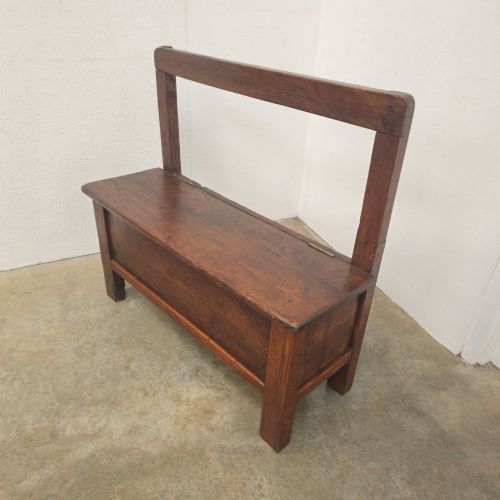
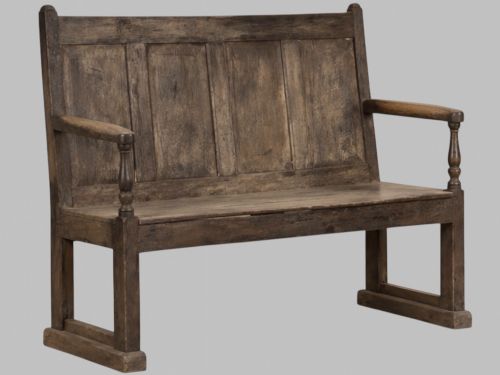
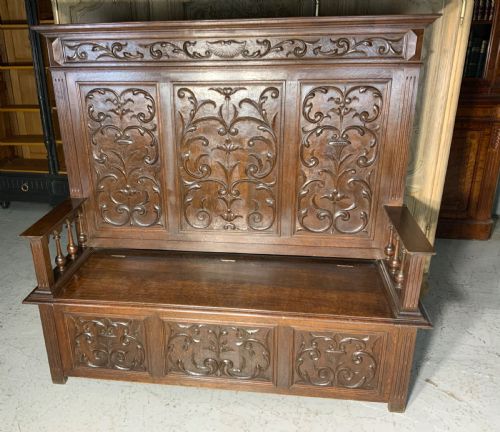
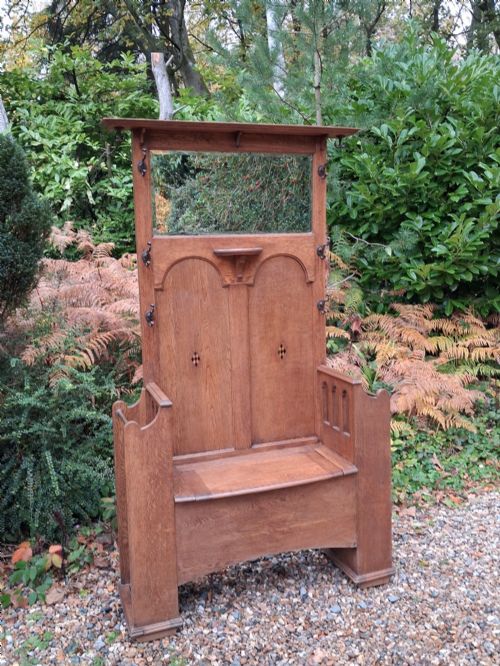
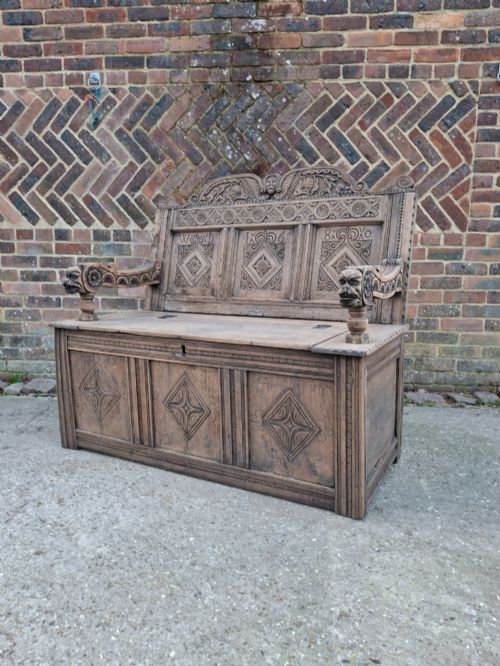
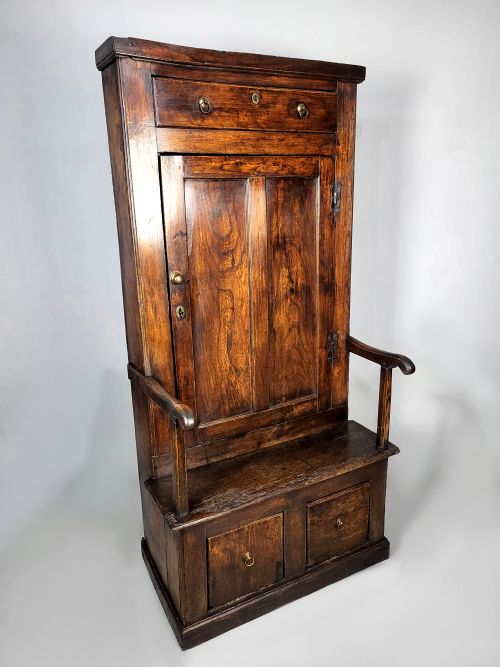
The versions most common on this page are constructed from oak and pine, taking shapes such as high-back settles, box settles, and compact hall seats. Examples range from vernacular 17th and 18th-century country pieces to later Victorian Gothic and Arts and Crafts interpretations.
Many of these designs originate from English country houses or northern workshops, alongside imported continental forms such as Hungarian painted pine benches. Their primary functions remain seating and concealment of household belongings within integrated box bases.
How they were made
Carpenters constructed these items predominantly from solid oak and pine planks, joined using traditional framing techniques and held together with wooden pegs or iron fixings. Surfaces were often finished with wax, paint, or left as plain timber depending on the period and regional workshop traditions.
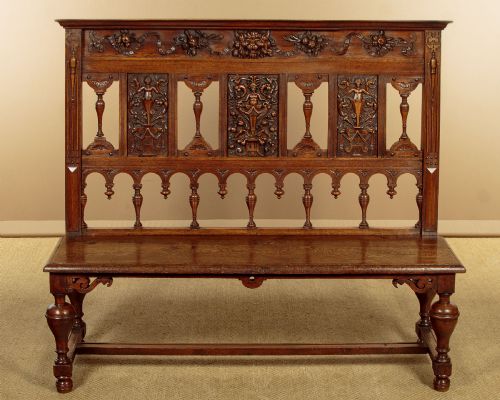
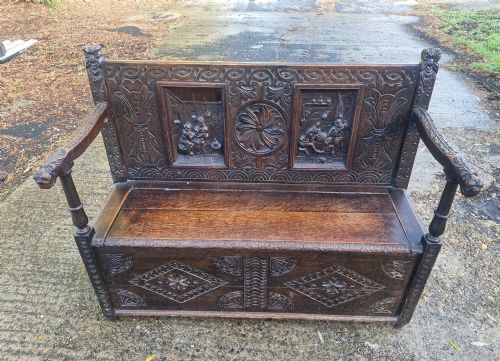
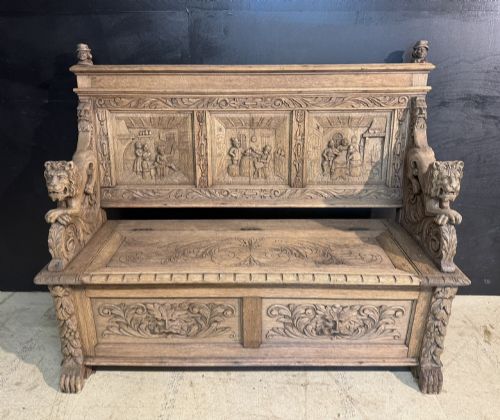
Decorative detailing relies on hand carving, panelled construction, and occasional marquetry inlay, particularly on later revival or Arts and Crafts pieces. Iron and brass hardware appear on hinges and lift-up lids, while some examples incorporate fabric or leatherette seating upholstery.
Antique Monks Benches Retail Price Guide 2026
Typical asking prices for monks benches among the pieces listed under this phrase on Sellingantiques today, from the lower quarter to the upper quarter. They describe what is for sale here now, not the wider market.
Many of these sturdy wooden seats survived centuries of daily use simply because they were too heavy for anyone to bother throwing away.
What varies in quality
The standard of an individual piece rests upon the weight of the timber, the crispness of the hand-carved panels, and the integrity of the original joints and board seats. Heavy, solid oak construction from earlier centuries generally commands more attention than lighter pine or later revival pieces.
Gradations also depend on the survival of original surfaces, such as early waxed finishes or period paint, rather than stripped or heavily restored timber. The complexity of the joinery, especially around fold-over mechanisms and storage box compartments, marks the distinction between vernacular utility and finer cabinet work.
Liberty·Shapland and Petter
The Antique Monks Benches Glossary
- Settle
- A wooden bench with a high back, solid arms, and frequently a box compartment beneath the seat for storage. This form provides protection from draughts in older rooms.
- Box settle
- A heavy seat featuring a hinged lid that opens to reveal a deep storage well. These items functioned as multi-purpose furniture in farmhouses and halls.
- Jacobean revival
- A 19th-century stylistic movement that reinterprets 17th-century geometric carving and heavy oak framing. Pieces in this manner show deep relief work.
- Marquetry inlay
- The technique of fitting contrasting pieces of wood veneer into a primary timber surface to form decorative patterns. This work appears on select decorative examples.
- Hall bench
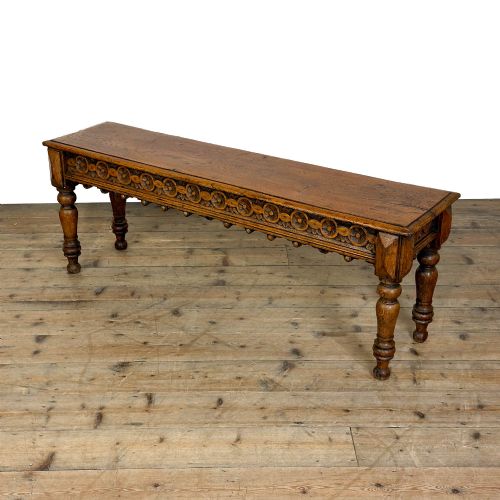
- A narrow seating form placed in entranceways, often incorporating coat hooks, umbrella stands, or lift-up storage. These items accommodate visitors in domestic settings.
Antique Monks Benches: Frequently Asked Questions
What is a monks bench?
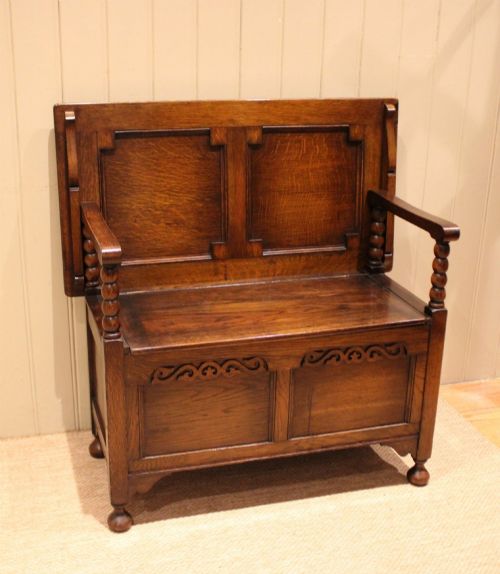
A monks bench is a traditional wooden seat that incorporates a hinged top or back, allowing the piece to transform between a chair and a small table.
Most examples also feature a box compartment beneath the seat for storing household goods, combining seating, storage, and surface space into one item.
How old are these benches?
The pieces listed span from the 17th century through the Georgian and Victorian eras up to the early 20th century.
Earlier examples are typically constructed from solid oak with vernacular panel work, while later versions often reflect revival styles or originate as pine country furniture.
How were they used historically?
These benches were placed in entrance halls, farmhouses, and taverns to provide seating away from cold draughts while keeping everyday items concealed inside the base.
The fold-over top allowed occupants to use the piece as a dining or writing surface when space was limited.
Where should I place one?
These benches suit entrance halls, boot rooms, or living spaces where their narrow profile and built-in storage provide practical utility.
They pair well with traditional interiors, acting as focal seating while offering concealed space for shoes, blankets, or household items.