



Antique Mirrored Sideboard Unit
An antique mirrored sideboard unit brings reflective glass and rich timber together to brighten a dining room or hallway.
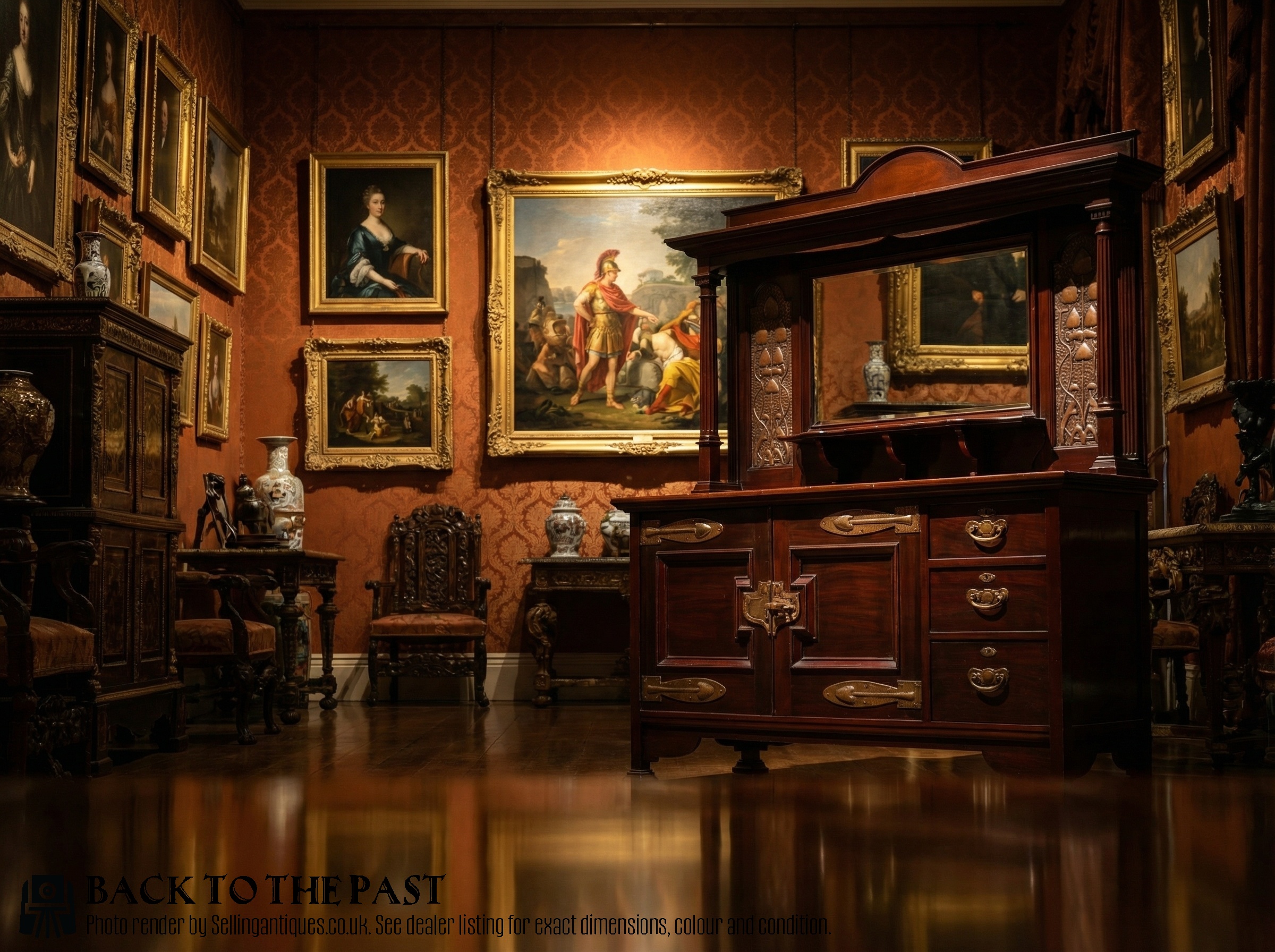
Antique Mirrored Sideboard Unit
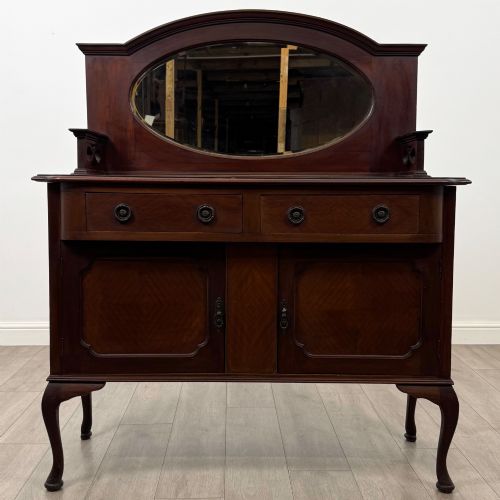
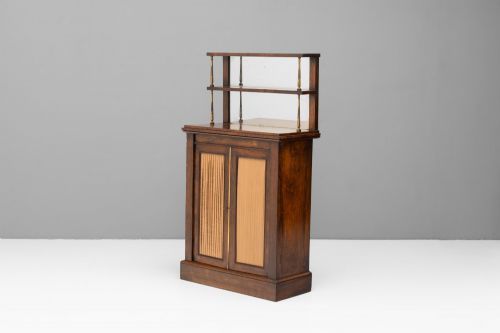
An antique mirrored sideboard unit combines timber storage with reflective glass panels, appearing across Victorian, Edwardian, and early twentieth century periods. Sideboards, chiffoniers, dressers, and washstands form the primary furniture types found within this selection.
Makers utilised woods such as mahogany, oak, rosewood, and walnut to build these storage pieces. Stylistic influences span Arts and Crafts, Art Nouveau, Art Deco, and Dutch Marquetry traditions.
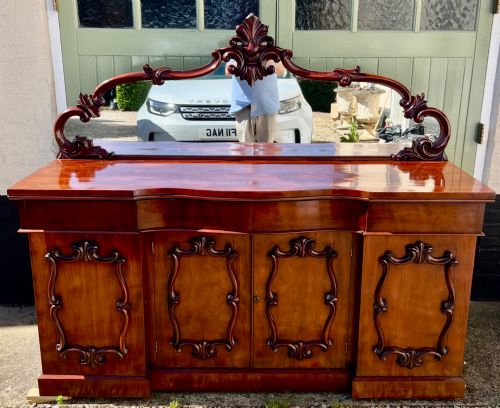
Buyers most frequently encounter mirror back sideboards from the Edwardian and Victorian eras. These designs integrate glass plates above timber tabletops to reflect light into interior spaces.
How they were made
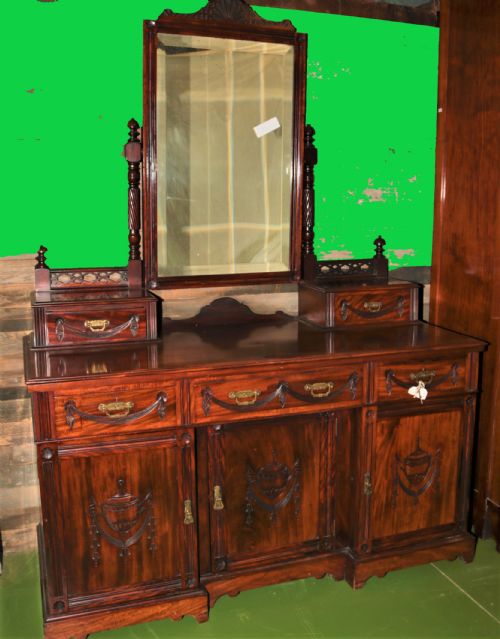
Cabinet makers constructed these units using solid hardwoods like mahogany and oak, frequently adding brass hardware for handles and fittings. Glass and mirror plates were set securely into timber frames above the main storage surface.
Craftsmen applied traditional joinery methods and surface carving, visible particularly in Art Nouveau and Arts and Crafts examples. French polish or waxed finishes were used to protect the rosewood, walnut, and mahogany surfaces.
A washstand in the selection proves that even early morning splashing was once done in serious style.
What varies in quality
The sophistication of the timber grain and the precision of the joinery distinguish finer examples from standard production pieces. Carved details and integrated brass fittings show the maker's hand more clearly on superior items.
The clarity and original condition of the mirror glass influence the integrity of the piece. Matching timbers across the cabinet doors and drawer fronts also indicate higher manufacturing standards.
Shapland & Petter
The Antique Mirrored Sideboard Unit Glossary
- Chiffonier
- A low sideboard or cabinet with shelves or drawers, popular during the nineteenth century. This form offers compact storage for dining rooms.
- Art Nouveau
- A stylistic movement characterised by flowing, organic lines and natural motifs. Pieces from this period often feature distinctive carved woodwork.
- Arts and Crafts
- A design movement emphasising hand craftsmanship and simple structural honesty. Furniture from this tradition highlights natural timber qualities.
- Marquetry
- The art of applying pieces of veneer to a structure to form decorative patterns. Dutch examples frequently employ this technique on mahogany surfaces.
Antique Mirrored Sideboard Unit: Frequently Asked Questions
What periods do these units come from?
These items date primarily from the Victorian and Edwardian eras, with examples extending into the early twentieth century around nineteen hundred and nineteen twenty.
Design styles range from traditional nineteenth century forms through to Art Nouveau, Arts and Crafts, and Art Deco movements.
Which woods were used to build them?
Cabinet makers built these storage pieces using durable timbers such as mahogany, oak, rosewood, and walnut.
Brass fittings and glass mirror plates are integrated alongside fabric and iron elements depending on the specific style and period.
How do mirror back sideboards function in a room?
The mirrored glass set above the sideboard reflects natural and artificial light to brighten dark dining spaces or hallways.
At the same time, the base cabinet provides enclosed storage for tableware, linens, or dining accessories.
How do I identify an Arts and Crafts sideboard?
Arts and Crafts pieces emphasise solid construction in oak or mahogany, often featuring hand-carved details and simpler structural lines.
These designs avoid excessive ornamentation in favor of celebrating the natural qualities of the timber and traditional craftsmanship.