



Antique Mirror Shelf Unit
An antique mirror shelf unit brings together reflective glass and open display tiers, offering both a practical ledge and a bright focal point for a room.
Antique Mirror Shelf Unit
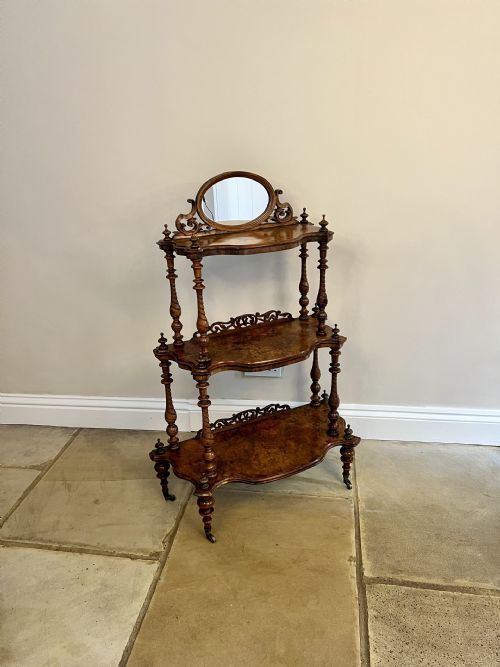
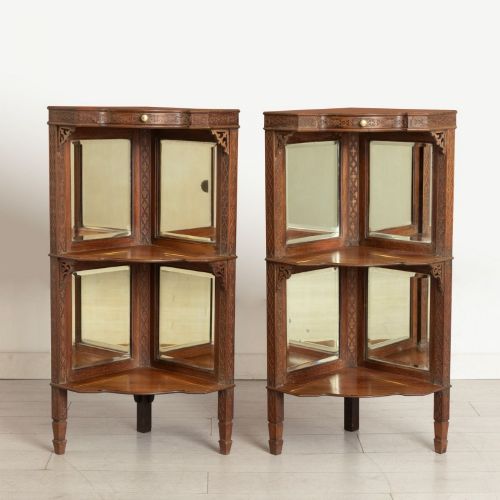
When you search for an antique mirror shelf unit, you encounter pieces that combine wall shelving or floor-standing whatnots with integrated mirror glass. These forms include Victorian burr walnut whatnots, mahogany wall shelves, and corner cabinets that utilise reflective panels behind tiers of timber.
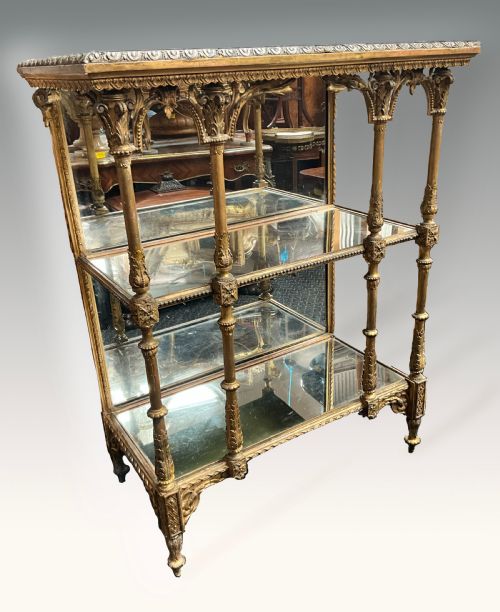
The surviving pieces on this page span the nineteenth century, including Victorian, Regency, and Edwardian eras, alongside Aesthetic Movement and Rococo Revival styles. They range from compact wall-hanging cloakroom ledges with mirrors to multi-tiered display stands and bookcases featuring mirrored backs.
How they were made
Cabinet makers utilised dense hardwoods such as mahogany, rosewood, burr walnut, and oak to construct the frames and shelving tiers of these units. These timbers were selected for their rich grain patterns, durability, and ability to hold fine marquetry inlay or brass detailing.
Silvered mirror glass was set into the timber backplates, often secured within carved gesso frames, gilt wood, or brass mounts. Turned supports, barley twist columns, and ormolu mounts were integrated to provide structural stability and ornamental depth to the display surfaces.
Some Victorian pieces feature hollow barley twist columns, proving that nineteenth-century craftsmen could not resist making even a shelf support look deliciously edible.
What varies in quality
The grade of an antique mirror shelf unit rests on the choice of timber veneer, such as figured burr walnut or select rosewood, and the crispness of any marquetry inlay or carved gesso ornament. Superior examples display careful timber selection where grain patterns match harmoniously across the tiers and backboards.
Construction methods also distinguish finer workshops, evident in the tight joinery of multiple tiers, the weight and clarity of the mirror glass, and the precision of brass or ormolu mounts rather than simpler cast replacements.
Edwards & Roberts
The Antique Mirror Shelf Unit Glossary
- Marquetry
- Decorative patterns formed by the insertion of small pieces of veneer into a wood foundation. It creates intricate pictorial or geometric designs on cabinet surfaces.
- Gesso
- A plaster-like mixture applied to wood surfaces as a base for gilding or painting. It allows craftsmen to mould sharp, ornate relief decoration around mirrors and frames.
- Ormolu
- Gilded bronze used for decorative mounts and furniture ornamentation. It provides a bright metallic contrast against dark hardwoods like mahogany and rosewood.
- Barley twist
- A turned wooden column carved in a spiral shape resembling a twisted barley stalk. This decorative turn is frequently found supporting the tiers of Victorian furniture.
Antique Mirror Shelf Unit: Frequently Asked Questions
What is an antique mirror shelf unit used for?
These units were traditionally placed in parlours, hallways, and drawing rooms to hold decorative ceramics, small books, and cabinet porcelain while reflecting light into the space.
The integrated mirror plate brightens darker corners, making these pieces equally suited for modern living rooms, cloakrooms, or bedrooms as display ledges.
How do I date an antique mirror shelf unit?
Dating relies on identifying the prevailing timber fashions, construction techniques, and stylistic markers such as Victorian burr walnut, Regency rosewood, or Edwardian inlaid satinwood.
Secondary woods used in the backs and drawer linings, along with the method of silvering the mirror glass, offer further clues to the decade of manufacture.
Are wall hanging and floor standing units different?
Wall-hanging versions are lighter constructions designed to be secured directly to wall studs, often featuring a single mirror plate with a small ledge for bathroom or cloakroom use.
Floor-standing pieces, such as whatnots and open bookcases, rest on the ground and incorporate multiple tiers and larger vertical mirror backs to anchor a room layout.
How do I care for the mirror glass and timber?
The timber surfaces benefit from occasional application of quality wax polish to maintain the natural lustre of mahogany, walnut, or rosewood without building up a heavy residue.
Mirror glass should be cleaned sparingly with a soft cloth and neutral cleaner, taking care to prevent moisture from seeping behind the silvered backing or into the wooden frame joints.