




Antique Middle Eastern Copper
These antique middle eastern copper pieces and related metalwork bring hand-engraved warmth and historic domestic utility straight into a modern room.
Antique Middle Eastern Copper
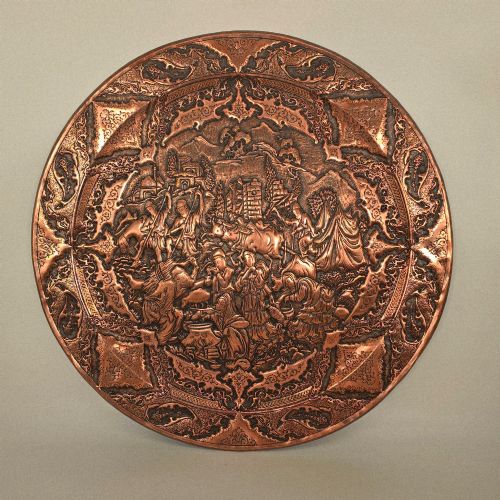
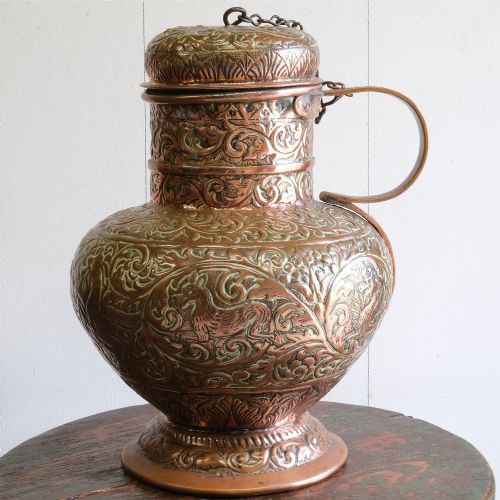
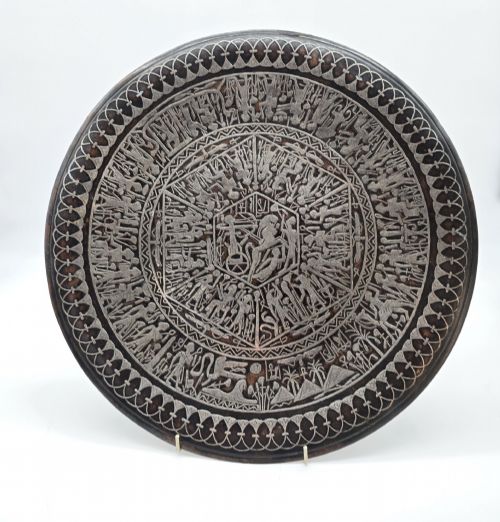
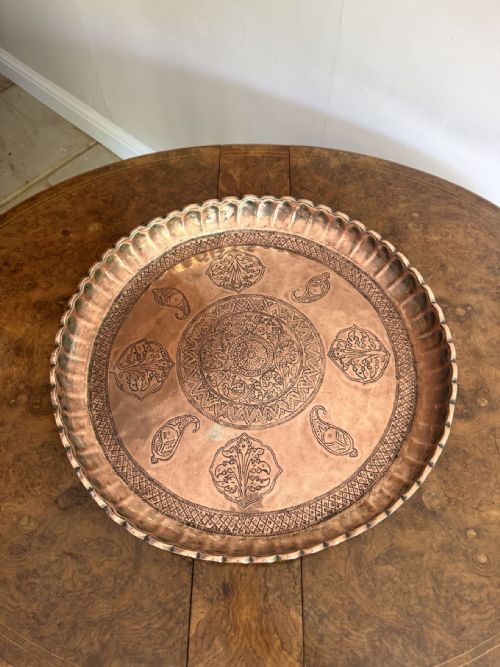
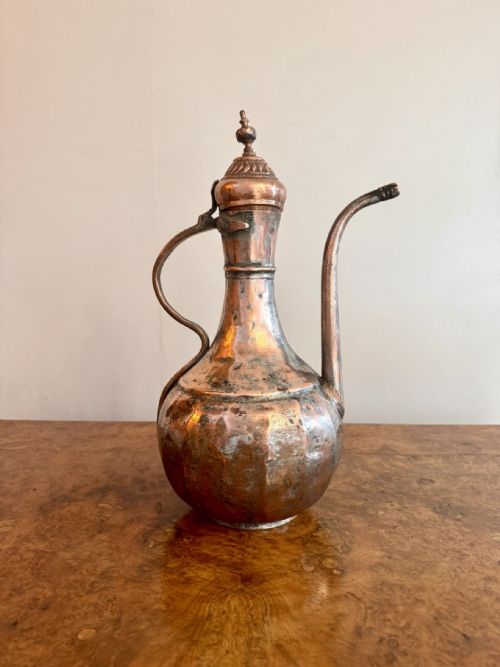
When you search for antique middle eastern copper, you encounter a diverse range of metalwork spanning household utensils, ceremonial vessels, and decorative furnishings. The selection encompasses practical forms such as coffee pots, ewers, and wash bowls alongside display items like chargers and trays.
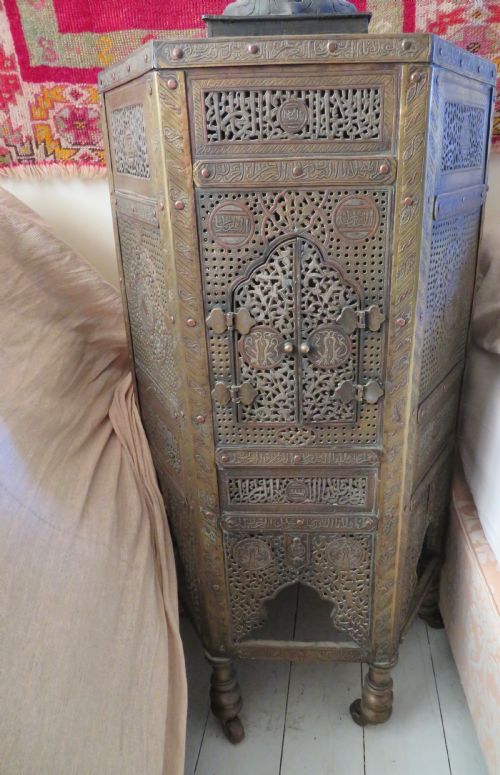
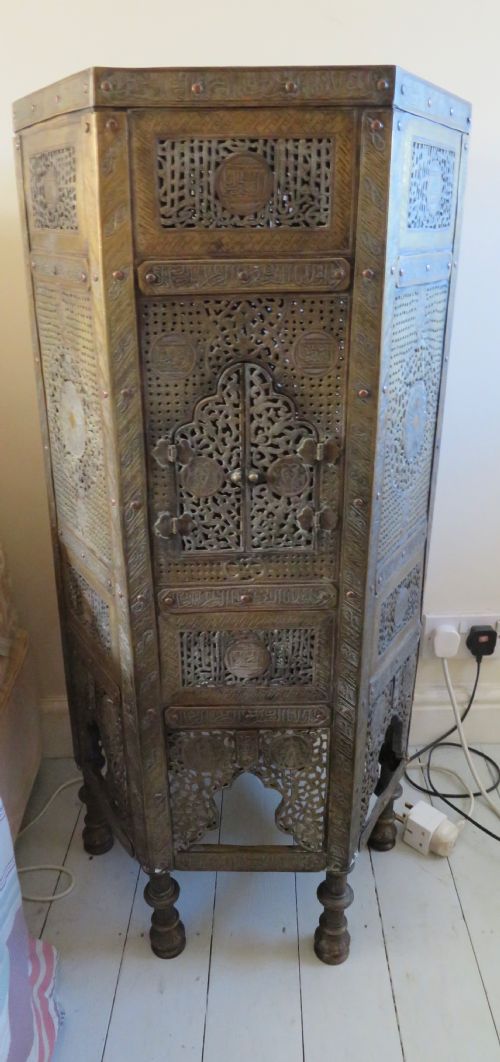
Occasional tables, known as kursi, and hanging lanterns also feature prominently among these items. Pieces frequently showcase regional revivals including Mamluk, Egyptian, and Moorish styles created across the nineteenth and early twentieth centuries.
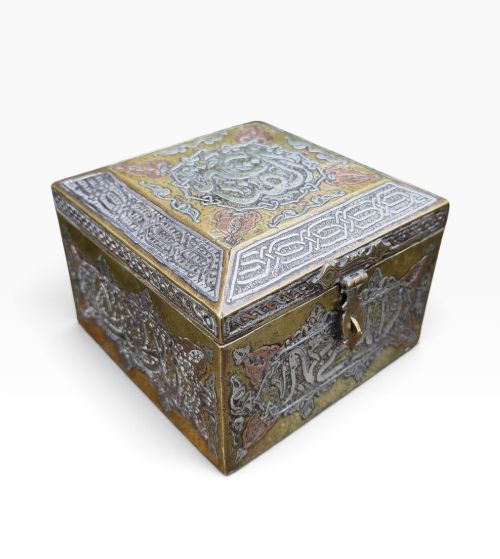
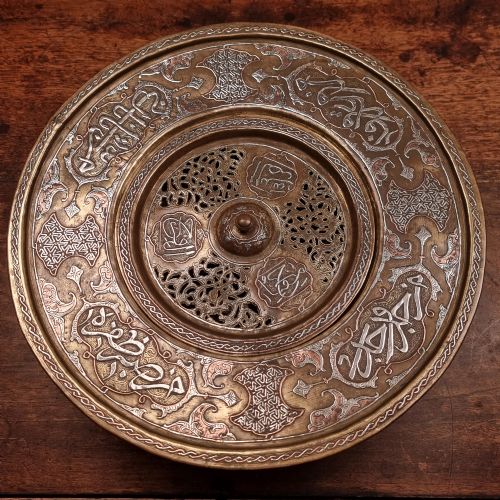
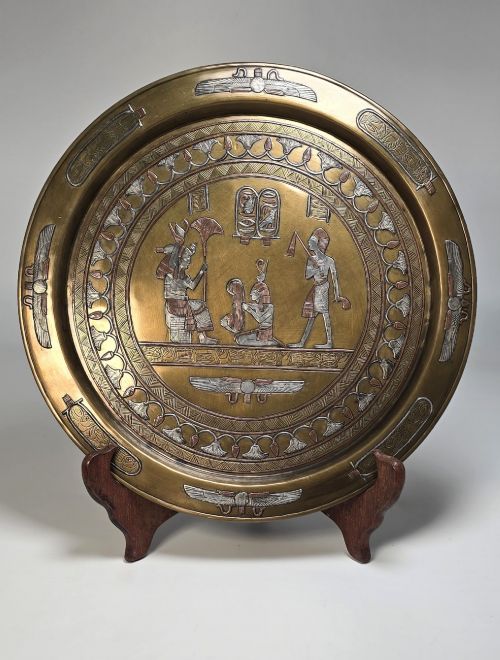
Copper appears both on its own and as a base metal for intricate inlay work alongside brass, bronze, and white metal. Domestic vessels from Persia, Syria, and Egypt dominate the current selection, reflecting traditional metalworking hubs.
Indicators of quality
Quality rests in the precision and depth of the hand engraving and the complexity of the mixed metal inlay. Pieces featuring dense silver and copper wirework demand greater artisanal skill than simpler surface etchings.
The structural integrity of large forms, such as heavy copper jugs, monumental chargers, and hexagonal occasional tables, dictates desirability. Well-preserved patination and crisp detail on repousse work separate standard utilitarian items from exceptional decorative pieces.
Materials span plain and patinated copper, brass, bronze, white metal, and silver inlay, reflecting varied workshops from Damascus to Cairo.
The Antique Middle Eastern Copper Glossary
- Cairo Ware
- Metalware originating from nineteenth-century workshops in Egypt, typically characterised by brass or bronze bodies heavily inlaid with silver and copper.
- Kursi
- A traditional low hexagonal occasional table or Quran stand, often constructed with openwork panels and inlaid metal decoration.
- Repousse
- A metalworking technique where the artist hammers the metal from the reverse side to form a raised design in relief on the front.
- Aftaba
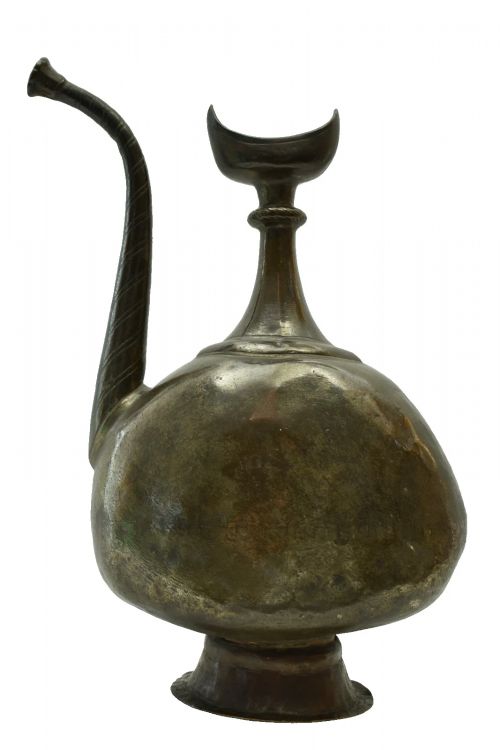
- A traditional Middle Eastern ewer or pitcher used for ritual washing, typically featuring a slender spout and curved handle.
- Mamluk Revival
- A nineteenth-century design movement that emulates the rich brass inlay and calligraphic ornamentation of medieval Mamluk metalwork.
Antique Middle Eastern Copper: Frequently Asked Questions
What are antique middle eastern copper items used for today?
These vessels and trays function effectively as decorative wall chargers, centrepieces, or functional occasional tables in contemporary interiors.
Larger items like basins and trays add rich texture when displayed on stands or hung on walls, while coffee pots and ewers sit well on open shelving.
How can I distinguish Egyptian Cairo ware from Persian metalwork?
Cairo ware typically employs a brass or bronze ground densely inlaid with silver and copper wire in intricate Islamic geometric motifs.
Persian and Syrian pieces frequently utilise pure copper or patinated bronze with fine engraved repousse work, focusing on figural scenes, floral scrolls, and Persian poetry.
How do I clean antique copper and inlaid metalwork?
Gentle dusting with a dry microfibre cloth is generally sufficient to protect the delicate patination and inlay.
Avoid abrasive metal polishes or chemical dips, which can strip the historic patina and damage silver or copper wire inlaid into the brass or bronze surfaces.
Are these items marked with maker signatures?
Makers' signatures or workshop marks are uncommon on nineteenth-century pieces, though some incorporate Arabic calligraphy or maker inscriptions into the design.
Attribution typically relies on regional decorative motifs, material composition, and traditional manufacturing techniques rather than stamped hallmarks.