




Embossed Metal Vase
An embossed metal vase brings texture and warmth to a room, offering distinct tactile interest through raised surface decoration.
Embossed Metal Vase
When you search for an embossed metal vase, you encounter vessels shaped from materials such as brass, copper, pewter, and silver, spanning periods from the Victorian era into the early twentieth century. These pieces encompass forms ranging from church altar garnitures and two-handled trophy vessels to large decorative cylinders and miniature urns.
The aesthetic range draws heavily on the flowing organic lines of Art Nouveau and Jugendstil, alongside the formal symmetry of French Rococo Revival and Victorian Gothic designs. You also find cultural expressions including Anglo-Indian repoussé work, Chinese Republic Period brassware, and Jewish ceremonial items featuring Hebrew text.
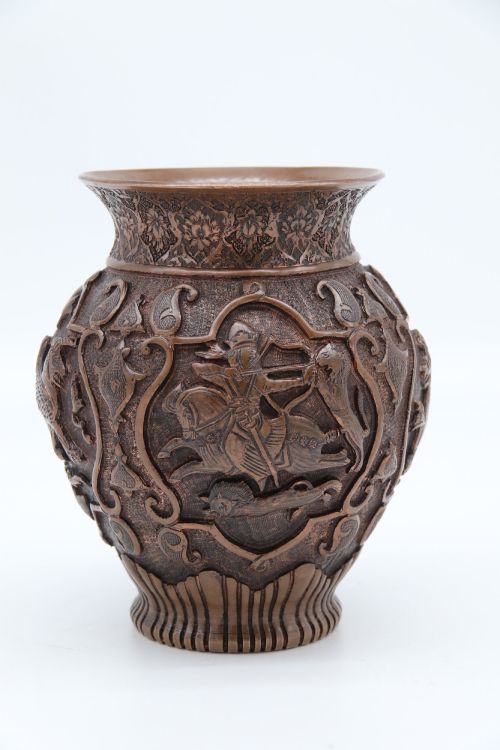
The version you are most likely to meet on this page is a late nineteenth-century French or Indian copper or brass vessel, often displaying intricate hand-hammered relief work. These objects served both functional roles as flower holders and purely decorative functions on sideboards and mantelpieces.
How they were made
Metalworkers formed these vessels by shaping sheet brass, copper, pewter, and silver through hammering, spinning, or casting, depending on the desired weight and silhouette. Many pieces rely on repoussé techniques, where craftsmen hammered the design from the reverse side to push the metal outward into high relief.
Surface detailing was often refined by chasing, a process of working the metal from the front with punches and small chisels to sharpen the contours of the raised motifs. Pewter overlay was also applied directly onto glass vessels, uniting different materials within a single decorative scheme.
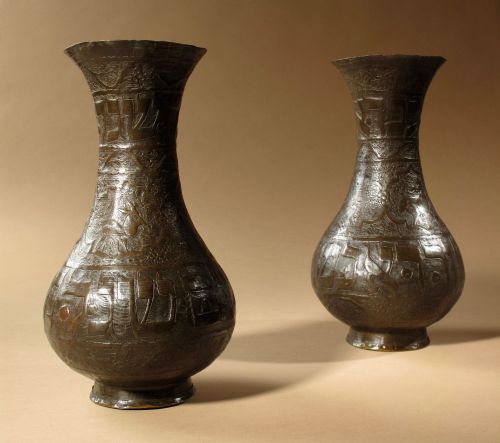
Some copper vessels bear Hebrew text, reminding us that metal can speak through poetry as well as pattern.
What varies in quality
The distinction between standard production and finer examples lies in the depth and crispness of the raised ornament, particularly in repoussé and chased work where hand-tooled precision creates sharp, legible detail. Superior vessels exhibit balanced proportions and harmonious integration of handles, pedestal bases, and body forms.
Material thickness and finishing also dictate quality, as heavier gauge metals and well-finished patinas indicate more substantial craftsmanship. The sophistication of the design style, from fluid Art Nouveau curves to carefully executed regional motifs, further separates ordinary utilitarian items from masterworks.
The Embossed Metal Vase Glossary
- Repoussé
- A metalworking technique where the artisan hammers a design from the reverse side to create a raised pattern on the front. This method gives vases a tactile, three-dimensional surface texture.
- Jugendstil
- The German variant of Art Nouveau, prominent around nineteen hundred. It is characterised by sinuous, organic lines and stylized floral motifs often seen on metalware.
- Pewter
- A malleable metal alloy consisting primarily of tin, used for forming vessels or applied as an overlay upon glass. It provides a dull grey lustre and accepts low-relief casting exceptionally well.
- Jardiniere
- A large ornamental pot or vase designed to hold live plants or floral arrangements. They frequently feature wide openings and sturdy brass or copper construction.
- Garniture
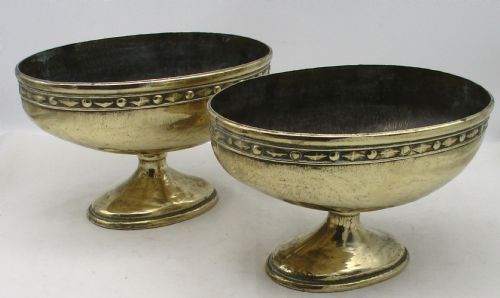
- A set of matching decorative vessels, such as vases or urns, intended to be displayed together on a mantelpiece or sideboard. They often include pedestal bowls designed for church or domestic display.
Embossed Metal Vase: Frequently Asked Questions
What metals were used for these vases?
Makers utilised brass, copper, pewter, and silver to fashion these decorative vessels, sometimes combining them with cobalt glass.
These materials defined the weight and colour of the piece, ranging from the bright warmth of polished brass to the muted grey tone of pewter.
How do I date an embossed vase?
Dating relies on stylistic clues, such as the flowing organic motifs characteristic of Art Nouveau or the heavier Revival forms typical of the nineteenth century.
Manufacturing techniques like hand-hammered repoussé work also offer context regarding the period of production.
Were these vases meant for flowers?
Many of these vessels served practical roles as flower holders, while others functioned as ornamental trophy vases, miniature urns, or church altar garnitures.
Some large forms, such as jardinieres, were specifically built to house potted plants rather than cut stems.
How do I care for antique metal?
Maintaining these pieces involves dusting gently and avoiding harsh chemical polishes that can strip away historic patinas.
Allowing the metal to age naturally preserves the character developed over the centuries.