






Antique Metal Trunk
When you seek an antique metal trunk, you find heavy utilitarian containers forged in iron, steel, and tin to survive rough travel.
Antique Metal Trunk
An antique metal trunk encompasses diverse storage forms, from Victorian silver chests and campaign cases to steamer trunks and tin deed boxes. You encounter pieces originating from British, European, American, and Indian workshops spanning the sixteenth century through the early twentieth century.
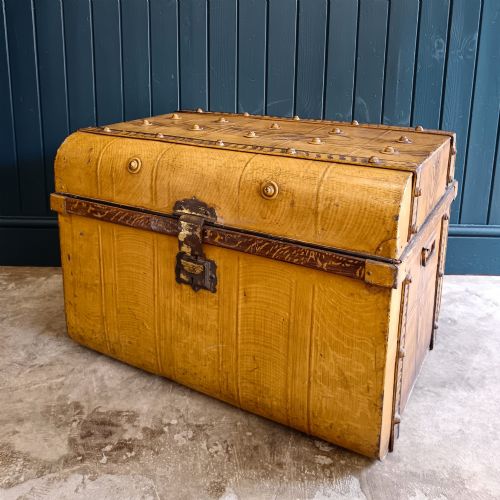
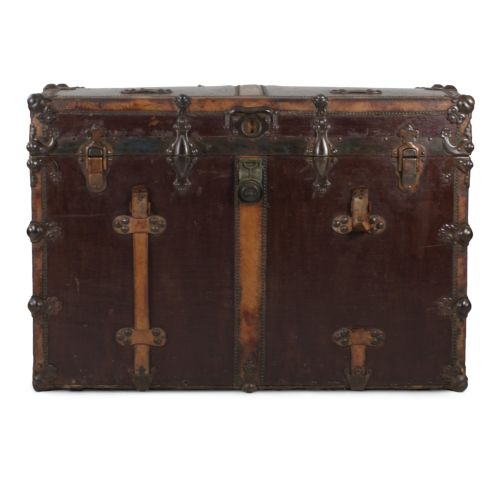
The selections range from robust iron-banded timber coffers and zinc-lined travel chests to lightweight aluminium shipping chests and toleware hat boxes. Heavy oak and pine construction appears frequently bound in iron or steel for maximum protection during transit.
Domestic and travel utility dictated the construction, leading to specialised configurations like fitted wardrobe trunks, fall-front deed boxes, and domed travel receptacles. Many specimens display original hardware, locks, and painted finishes reflecting their period of active service.
Materials and Technique
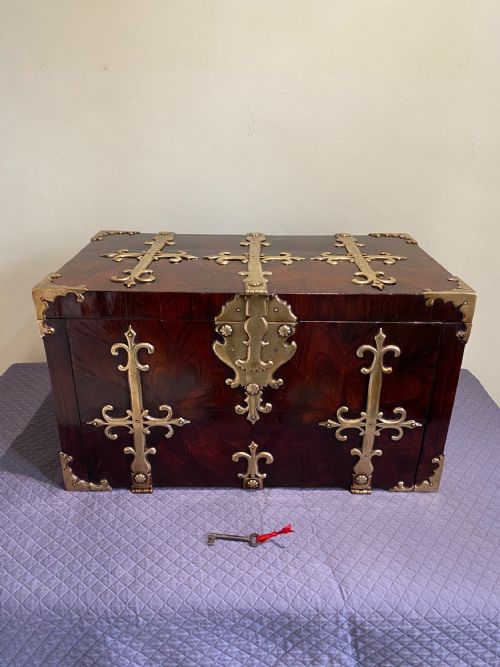
Maker construction combines sturdy timber carcases in oak, pine, mahogany, and fruitwood with structural reinforcement from iron, steel, brass, and aluminium bands. Surfaces receive protective treatments including leather binding, canvas covering, faux-wood painting, or scrumbled finishes.
Joinery relies on heavy rivets, corner brackets, and metal straps fixed to wood panels to absorb the severe impacts of nineteenth-century journeys by rail, ship, and stagecoach. Interiors frequently incorporate zinc linings, papered compartments, or fitted wooden trays to safeguard contents from moisture and movement.
Several travel trunks preserve their original red or patterned paper interiors, offering a cheerful contrast to the battered iron exteriors.
Standards of Craftsmanship
Quality reveals itself in the integrity of the original hardware, the thickness of the protective metal plating, and the precision of the corner strap work. Superior examples retain working locks with keys, intact internal linings, and untouched structural timber beneath the exterior coverings.
Execution of secondary details, such as dovetailed carcase joints, hand-forged iron handles, and specialised maker plaques, separates standard utility receptacles from elite campaign and shipping pieces.
Samuel Pratt·Seaward·Allen of London·Seabrook of St Pauls·Jones Bros·Hartman Luggage Co
The Antique Metal Trunk Glossary
- Steamer trunk
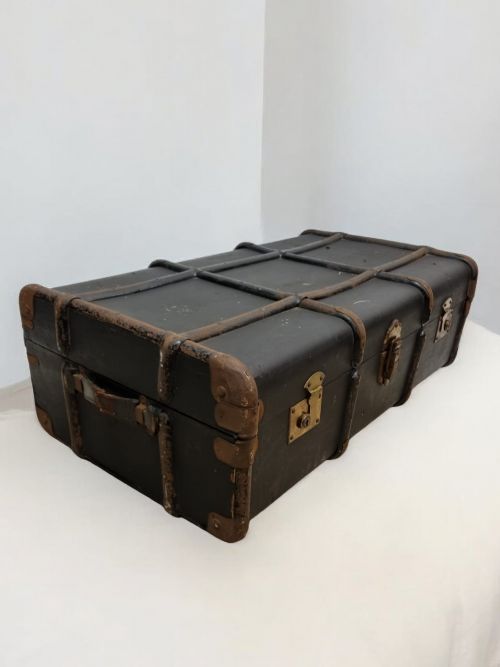
- A low-profile travel trunk designed to fit beneath a passenger ship berth. These pieces became common during the late nineteenth and early twentieth centuries.
- Campaign case
- Portable military furniture and luggage made for officers on active service. They often feature robust handles, reinforced corners, and specialised internal compartments.
- Toleware
- Lacquered or enamelled metalware, typically tinplate, finished to resemble Japanese lacquer. It frequently appears in military hat boxes and deed containers.
- Silver chest
- A heavy timber box lined with baize or felt and reinforced with metal bands. Designed specifically to store and transport valuable silverware.
- Armada chest
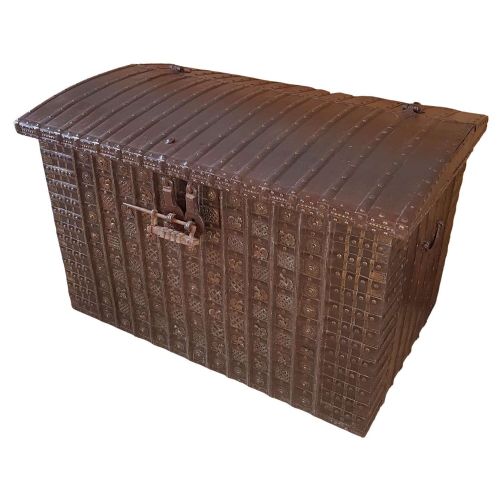
- A heavy iron-bound strongbox originating in the sixteenth or seventeenth century. These containers typically feature elaborate internal locking mechanisms operated by a single key.
Antique Metal Trunk: Frequently Asked Questions
What is a steamer trunk?
A steamer trunk is a lower-profile travel container built specifically to slide beneath the sleeping berths on ocean liners.
These pieces emerged as mass travel expanded, requiring compact storage that could withstand maritime conditions.
How were silver chests used?
Silver chests were constructed with thick timber walls and internal baize linings to protect heavy silver tableware during transport.
Wealthy households utilised them both on large country estates and during extended travel to secure family valuables.
What is campaign luggage?
Campaign luggage consists of durable travel containers built for military officers and officials on active service overseas.
These pieces feature reinforced corners and sturdy carrying handles designed to endure rough handling by pack animals and ships.
How do I date a metal trunk?
Dating relies on observing construction materials, lock types, exterior coverings like canvas or leather, and maker stamps.
Earlier pieces from the sixteenth to eighteenth centuries utilise heavy hand-forged iron bands, while nineteenth and twentieth-century examples incorporate machine-rolled steel, aluminium, and patented hardware.