


Antique Iron Money Box
An antique iron money box is a small, secure repository for savings, built to withstand tampering and endure through generations.
Antique Iron Money Box
An antique iron money box covers a diverse group of objects designed to store coins securely, ranging from mechanical banks to heavy domestic safes. The pieces available span several eras, with nineteenth-century examples and Victorian designs forming the most common encounters on this page.
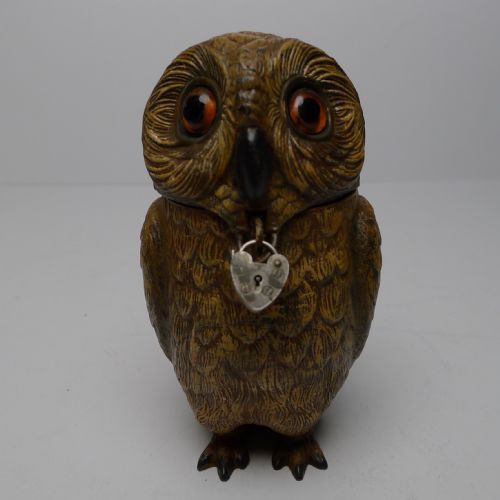
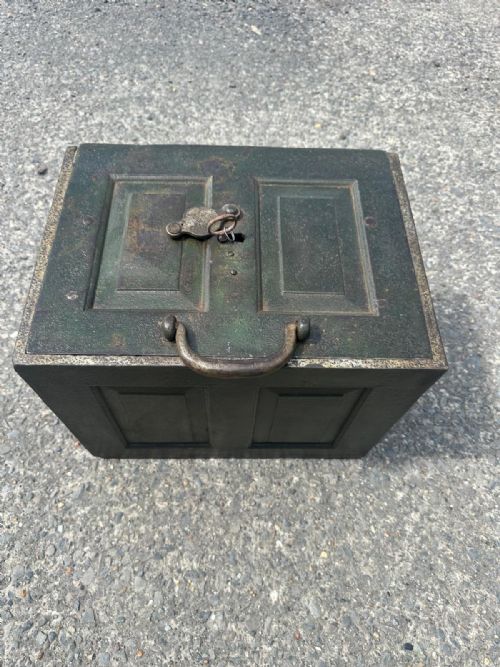
Forms vary significantly, encompassing simple cast iron banks alongside complex strongboxes, coffers, and combination safes fitted with original keys or dials. Regional variations include Scandinavian green painted boxes, Japanese zenibako, and English patent lock boxes.
Materials and construction methods
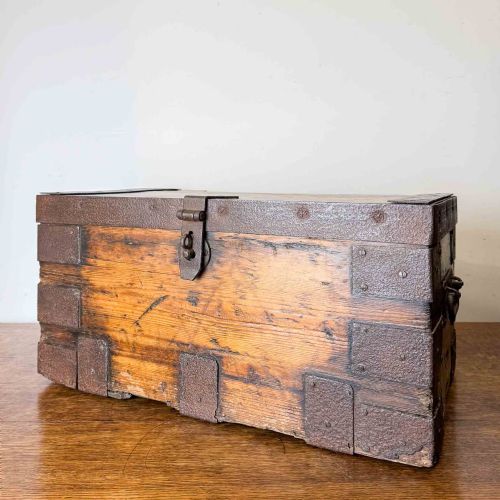
Cast iron and wrought iron provide the primary structural integrity for these pieces, often paired with secondary woods like elm and pine in strongboxes and coffers. Paint finishes, sometimes in original colours, cover many of the metal and wooden surfaces.
Makers utilised brass for internal locking mechanisms, hinges, and dials, whilst spelter appears in decorative figural money banks from the early twentieth century. Construction techniques combine heavy casting, smithing, and iron banding to secure wooden chests against theft.
Some Victorian mechanical banks demand a kick from a cast iron footballer to swallow your penny.
Assessing quality and authenticity
Quality rests upon the preservation of original finishes, such as early paint and patination, alongside the operational integrity of locks, keys, and combination dials. Pieces retaining their original functional components command greater interest from collectors.
The refinement of the casting and smithing work differentiates standard utility boxes from superior examples, particularly in mechanical banks and heavy patented safes. Maker attribution, through stamped names or distinct regional styles, further distinguishes notable specimens from unmarked utility pieces.
John Harper Co.·Milners of Liverpool
The Antique Iron Money Box Glossary
- Armada chest
- A heavy iron strongbox disguised as a wooden chest, produced in seventeenth-century Europe and secured by intricate internal locking mechanisms beneath the lid.
- Cast iron
- Molten iron poured into a mould to form rigid shapes and decorative figures, widely utilised for nineteenth-century money banks and safes.
- Spelter
- A zinc alloy used as a substitute for bronze or brass in decorative castings, frequently painted to simulate other metals on early twentieth-century pieces.
- Zenibako
- A traditional Japanese wooden merchant box featuring iron hardware and secret compartments, utilised for holding currency.
- Strongbox
- A secure container built from heavy metals or reinforced wood, designed to protect valuables and currency from fire and theft.
Antique Iron Money Box: Frequently Asked Questions
How do I use an old iron money box?
Most antique money boxes and strongboxes function through coin slots on the lid or front, feeding currency into a locked internal compartment. Access to the accumulated savings typically requires the original key, a working combination dial, or a mechanism operated by lever.
Care should be taken not to force vintage locks if the key is lost, as the internal levers are often delicate. Regular light dusting preserves the surface paint and iron patination.
Are keys usually included with these safes?
Some surviving strongboxes and cash boxes retain their original keys or combination dials, whilst others are offered without working keys. Safes fitted with complex mechanisms or three-dial combinations occasionally require professional assistance if the combination is lost.
When a piece lacks a key, it remains a decorative object or a secure display piece rather than a functional safe. Collectors often value the presence of the original key as a marker of completeness.
How do I date an antique iron box?
Dating relies on stylistic clues, manufacturing techniques, and materials such as cast iron, painted spelter, or pine reinforced with wrought iron. Seventeenth-century Armada chests display hand-forged strapwork and large central locks, whereas Victorian pieces often feature industrial casting and patent nameplates.
Patent dates stamped into the metal and the presence of makers' names provide precise chronological markers. Painted surfaces and decorative motifs also align with the prevailing tastes of periods such as the Edwardian era or the nineteenth century.
What is the difference between a bank and a safe?
Money banks are generally smaller containers, sometimes mechanical, designed specifically for saving coins through a slot. Strongboxes and cash boxes are heavier security containers built with robust locking mechanisms to protect currency and documents.
Safes incorporate thick iron walls and complex internal mechanisms, whereas banks prioritise accessible interaction or decorative appeal. Both categories overlap in materials like cast iron but serve distinct domestic functions.