





Antique Metal Mantel Clock
An antique metal mantel clock anchors a room with mechanical precision and decorative weight, bringing brass, gilt bronze and marble together on the shelf.
Antique Metal Mantel Clock
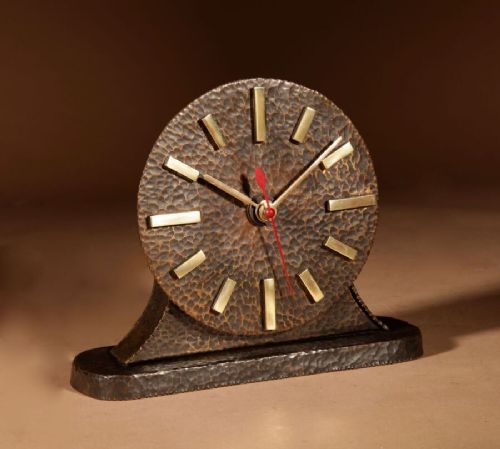
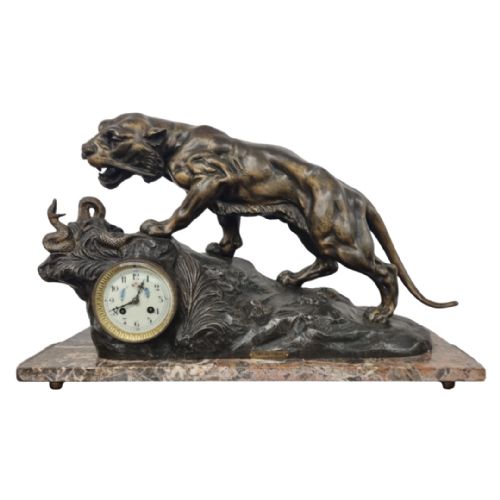
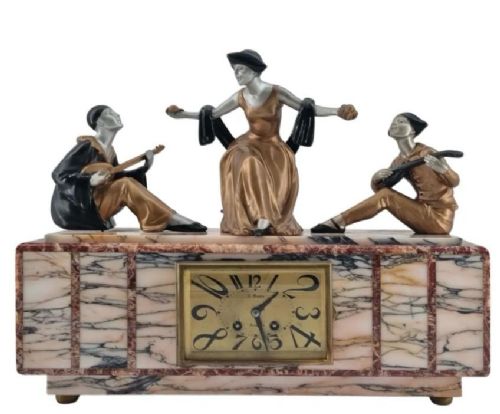
When you search for an antique metal mantel clock, you encounter timepieces shaped by nineteenth-century French workshops, Victorian domestic tastes and twentieth-century design movements. These objects range from heavy gilt bronze and ormolu clock garnitures to brass carriage clocks and Art Deco figural pieces.
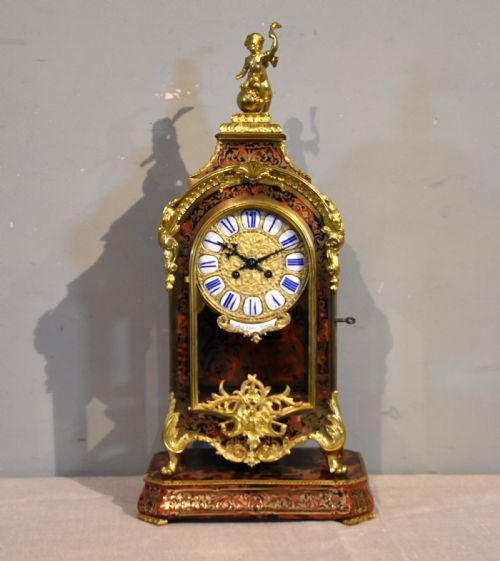
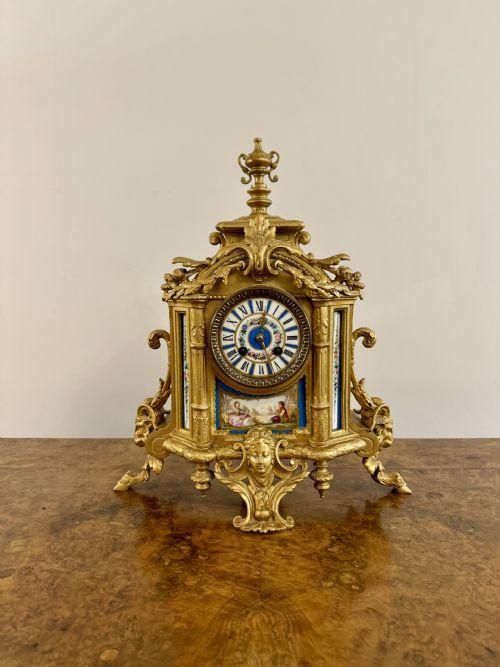
The version you are most likely to meet on this page is a nineteenth-century French mantel clock cast in gilt metal or brass, often paired with porcelain panels and enamel dials. Many of these pieces arrive alongside matching garniture sets, extending the decorative scheme across the mantelpiece.
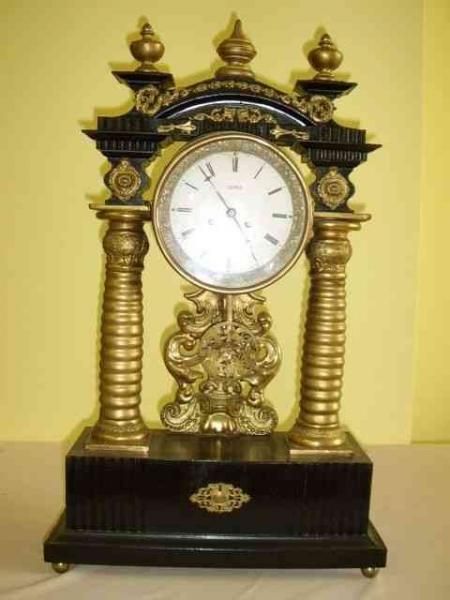
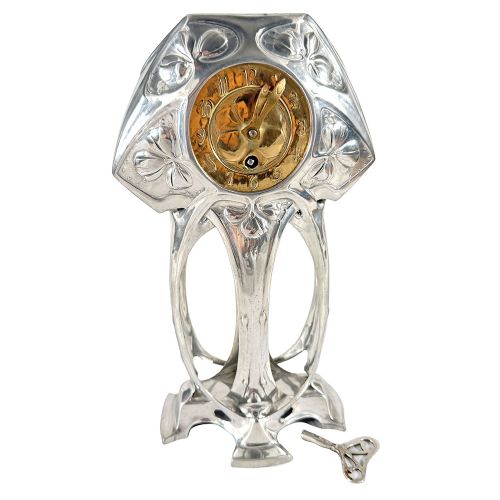
Beyond the French models, the selection includes English fusee mantel clocks, German brass lantern clocks and striking Art Deco designs from the early twentieth century. Each form reflects the prevailing architectural and ornamental style of its period, from Rococo Revival curves to clean geometric lines.
How they were made
Foundry workers shaped the primary housings using bronze, brass, pewter or gilt metal, employing casting and chasing techniques to achieve elaborate Rococo scrolls, neoclassical columns or clean Art Deco profiles. Ormolu application required mercury gilding on bronze, creating a durable golden surface that catches the light differently than modern plating.
Clockmakers fitted these metal cases with mechanical movements driven by springs and weights, incorporating platforms like eight-day trains, fusee movements and striking mechanisms with bells or gongs. Dials were formed from white enamel with painted Roman or Arabic numerals, frequently protected behind bevelled glass panes.
Many designs integrated contrasting materials directly into the metal armature, setting hand-painted porcelain plaques, marble bases or onyx columns into the structural frame. Artisans assembled these complex components by hand, ensuring the heavy cast cases properly supported the delicate gear trains within.
The archive and active inventory demonstrate a strong representation of nineteenth-century French horology, including complex carriage clocks and decorative garniture sets.
What varies in quality
The crispness of the cast ornamentation separates standard production from superior examples, as finer metalwork displays sharp undercutting, deep chasing and hand-finished details rather than soft edges from worn moulds. High-grade pieces maintain original fire-gilt surfaces with consistent tone, whereas lesser items show patchy plating wear or clumsy later refinishing.
Movement sophistication distinguishes the tier of a timepiece, marked by signed brass backplates from notable makers, complex quarter-striking gear trains and intact escapements. The integration of high-quality components, such as fine Sevres-style porcelain panels and heavy marble plinths, elevates the overall execution of the clock set.
R Varnier·Friedrich Adler for Osiris·Japy Frères·Leon Message·Jollet et Cie·Smiths Clockmakers·John Barwise of London·PH Mourey·Leroy & Fils·Mathias Bauerle
The Antique Metal Mantel Clock Glossary
- Ormolu
- Gilt bronze produced by applying a mercury and gold amalgam to a cast bronze object before heating to drive off the mercury. This technique creates a rich, durable golden finish characteristic of fine French mantel clocks.
- Garniture set
- A decorative ensemble consisting of a central clock flanked by matching side ornaments such as urns, candelabra or vases. These sets were designed to create a balanced display across a mantelpiece.
- Fusee
- A conical pulley used in mechanical clocks to maintain constant torque on the gear train as the mainspring unwinds. This mechanism improves timekeeping accuracy across the duration of the wind.
- Enamel dial
- A clock face made by fusing powdered glass to a copper or metal base at high temperatures. The resulting glossy white surface provides a durable ground for painted numerals.
- Carriage clock
- A portable, spring-driven timekeeper with a glazed brass case and a folding handle on top. Originally designed for travel, these clocks feature robust lever escapements.
Antique Metal Mantel Clock: Frequently Asked Questions
How do I wind an antique metal mantel clock?
Most mechanical clocks use a specialised winding key inserted into the dial holes to tension the internal springs. Turn the key gently until you feel resistance, taking care not to overwind the movement.
Ensure you identify which arbor controls the timekeeping train and which controls the strike train before winding. Keeping the clock on a level surface helps the pendulum beat evenly once power is restored.
What is a clock garniture set?
A clock garniture set comprises a central mantel clock accompanied by two matching side pieces, such as decorative urns or candelabra. These matched assemblies were created as unified decorative centrepieces for formal rooms.
The side pieces share the same metalwork, porcelain panels and stylistic vocabulary as the main clock body. Placing them together recreates the symmetrical aesthetic intended by nineteenth-century designers.
How do I tell different periods apart?
Periods reveal themselves through a combination of case materials, decorative motifs and structural forms. For instance, nineteenth-century French pieces often favour gilt bronze and Rococo Revival curves, while 1930s examples lean towards geometric brass and bakelite.
Examining the dial construction, backplate signatures and mounting screws also helps establish the era of manufacture. Stylistic indicators like Art Deco figures or Empire portico frames provide clear chronological markers.
Are these clocks suitable for daily use?
Mechanical mantel clocks function reliably as daily timekeepers provided they receive proper setup and periodic mechanical servicing. Because they rely on traditional gear trains and escapements, regular running keeps the lubricants distributed.
Positioning the clock away from direct sunlight, heat sources and damp walls protects the delicate metal surfaces and wooden or marble cases. Professional cleaning every few years ensures the internal brass components avoid excessive wear.
How do I care for gilt metal surfaces?
Gilt metal and ormolu require gentle dusting with a soft, dry brush to prevent the accumulation of grit in recessed chasing. Avoid chemical polishes and abrasive cloths, which strip away the thin layer of gold or patinated bronze.
Handling the metal cases with clean cotton gloves prevents skin oils from tarnishing vulnerable brass and bronze areas. Keeping the surrounding environment stable protects both the exterior metalwork and the internal movement.