

Antique Menu Cards
Antique menu cards and holders anchor a formal dinner table, offering a glimpse into the elaborate dining customs of the Victorian, Edwardian and later periods.
Antique Menu Cards
Antique menu cards and their associated silver holders served to inform guests of the courses to follow during formal dining occasions. The items found here span the Victorian, Edwardian, George V and later twentieth-century eras, reflecting changing social habits at the dinner table.
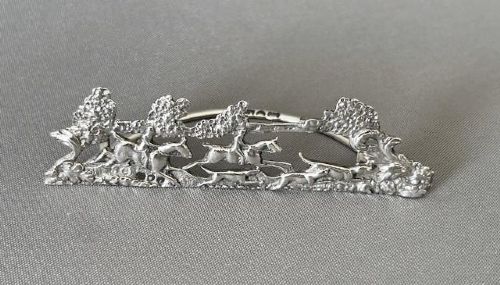
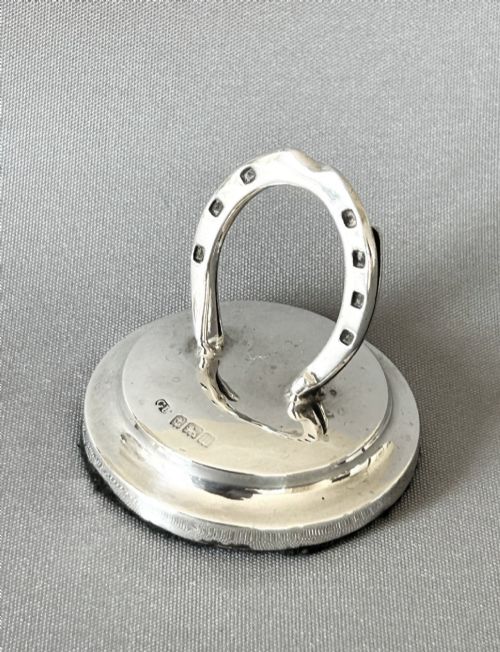
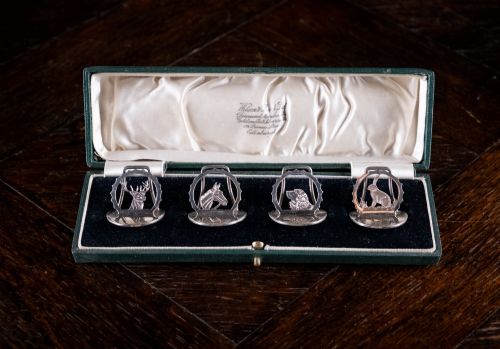
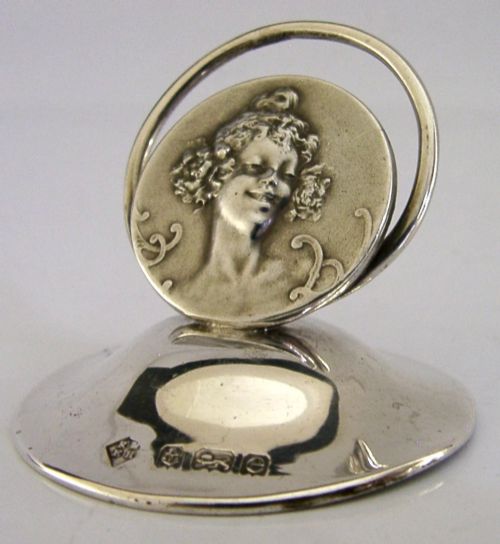
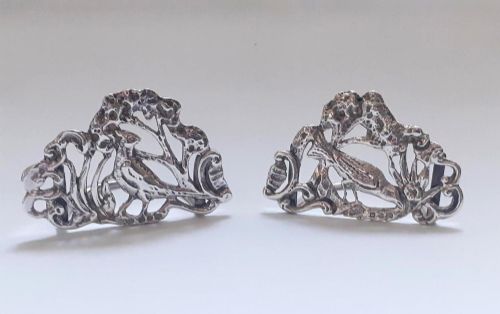
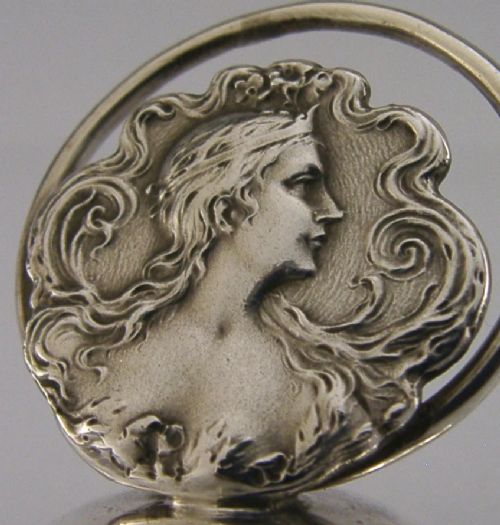
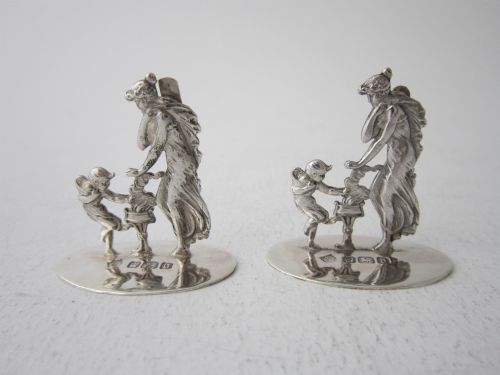
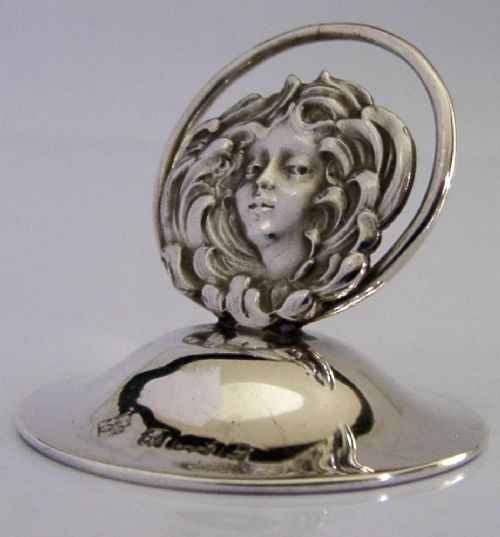
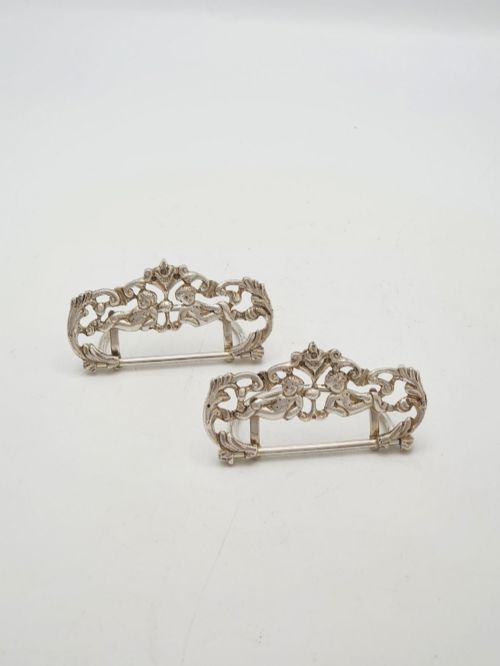
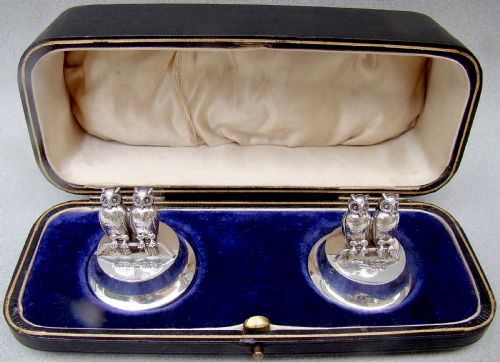
The primary forms encountered are rigid menu holders and place card holders, often fashioned in figural or animal subjects. Makers drew inspiration from nature, literature and military themes, producing matching sets and pairs for table service.
Materials extend beyond plain card stock to include sterling silver, silver plate, enamel, leather, velvet and silk. These functional table accessories survive as miniature sculptures that illustrate the decorative tastes of past centuries.
How they were made
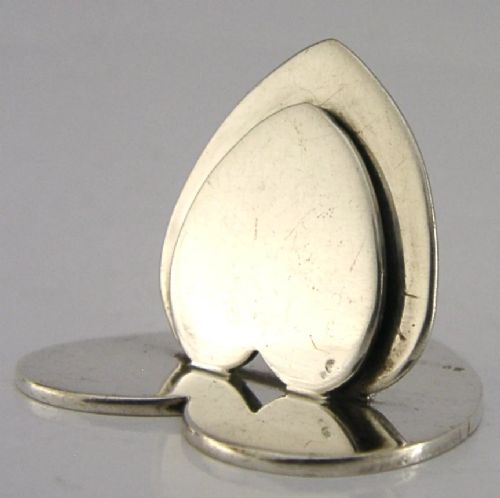
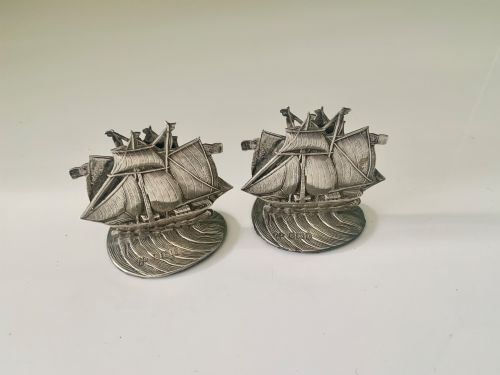
Silversmiths utilised sterling silver and silver plate through casting, stamping and hand-chasing to create detailed figural subjects such as owls, foxes, galleons and human figures. The resulting metal stands were weighted or fitted with slotted clips to support thin cards upright on the table.
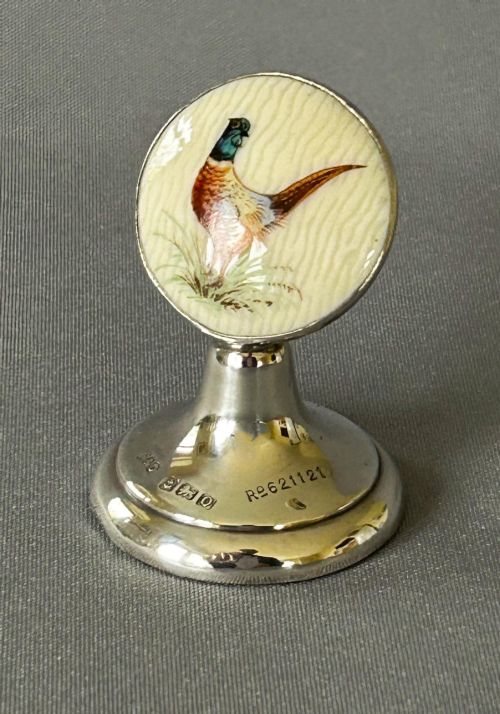
Enamel work frequently added colour to metallic surfaces, particularly in military flags and decorative motifs requiring vibrant pigments fired onto a metal base. Textile elements such as silk, velvet and leather provided backing or framing for paper menus within portfolio-style covers.
Antique Menu Cards Retail Price Guide 2026
Typical asking prices for menu cards among the pieces listed under this phrase on Sellingantiques today, from the lower quarter to the upper quarter. They describe what is for sale here now, not the wider market.
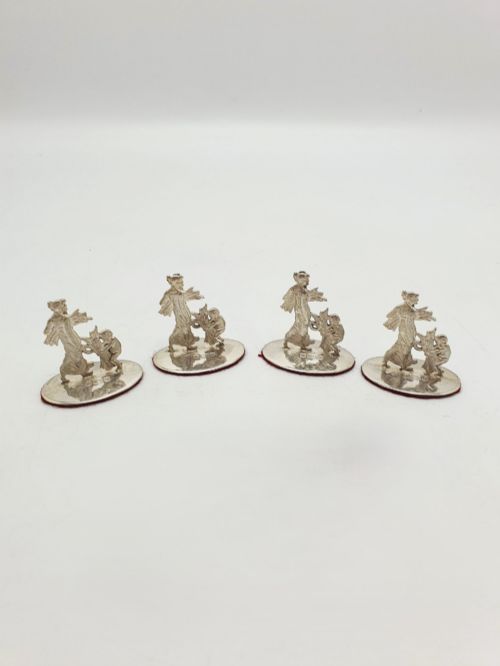
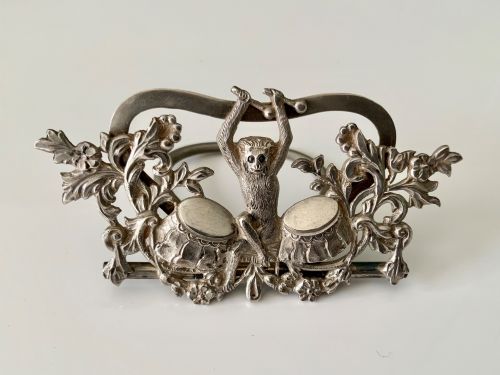
Dinners must have been lively with a monkey playing drums and Alice in Wonderland characters standing guard beside the soup.
What varies in quality
Maker attribution and completeness of sets strongly influence distinction, with signed pieces from notable workshops commanding greater recognition. Original cased sets and matching groups of four or more items retain a higher degree of historical integrity than assembled pairs or single survivors.
Sampson Mordan·Levi and Salaman·A Wilcox·Grey and Co·Asprey·Liberty
The Antique Menu Cards Glossary
- Menu Holder
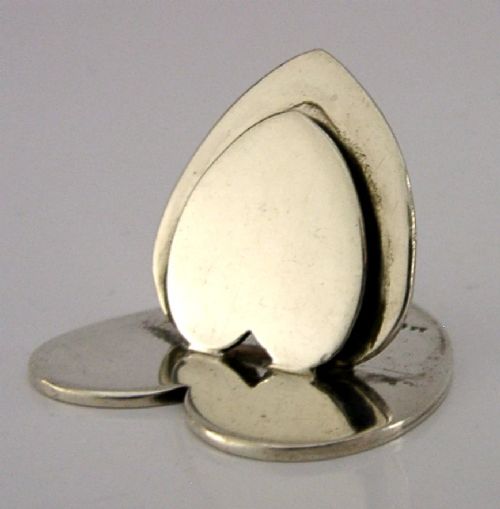
- A weighted or footed stand equipped with a vertical slot or clip designed to display a dinner menu card upright on a dining table.
- Place Card Holder
- A miniature tabletop accessory used to hold a guest's name card, often matching the design of accompanying menu stands in a table setting.
- Figural Silver
- Metalwork modelled into the three-dimensional shape of animals, human figures or objects rather than abstract geometric forms.
- Sterling Silver
- A silver alloy containing 92.5 percent pure silver and 7.5 percent other metals, typically copper, used widely for British tabletop items.
- Silver Plate
- A base metal substrate coated with a thin layer of pure silver through electroplating or older fusion methods.
Antique Menu Cards: Frequently Asked Questions
How were menu holders used at the table?
Hosts placed menu holders at intervals along long dining tables so guests could read the sequence of courses planned for the evening. They were often matched with companion place card holders bearing the names of invited guests.
These pieces formed part of an elaborate tablescape that reflected the host's social standing and attention to dining etiquette.
How do I care for silver menu holders?
Silver menu holders require gentle cleaning with a soft cloth to remove dust and tarnish without abrading fine hand-chased details. Avoiding harsh chemical dips preserves any original patina or delicate enamel work.
Storing them in dry conditions or lined boxes protects the metal from excessive atmospheric oxidation when not displayed on a table.
How are different periods identified?
Makers' marks and Birmingham, Chester or London assay office hallmarks stamped into the silver provide precise dates of manufacture. Stylistic shifts from Victorian floral motifs to Edwardian whimsy and Art Nouveau lines also help date individual pieces.
Design themes such as military badges or specific literary characters connect items to particular decades of the twentieth century.