





Antique Mechanical Reclining Chair
An antique mechanical reclining chair is a nineteenth-century seat designed for adjustable comfort, combining ingenious iron and brass mechanisms with mahogany or leather.
Antique Mechanical Reclining Chair
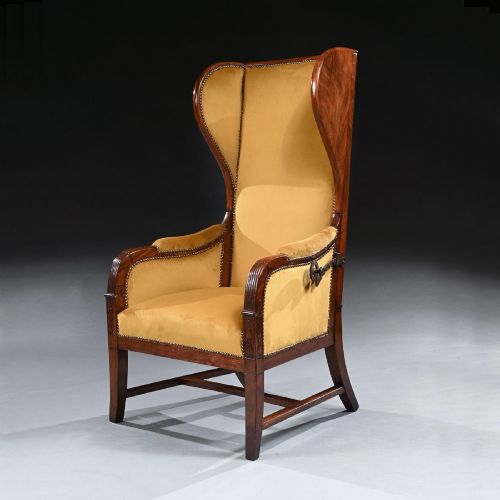
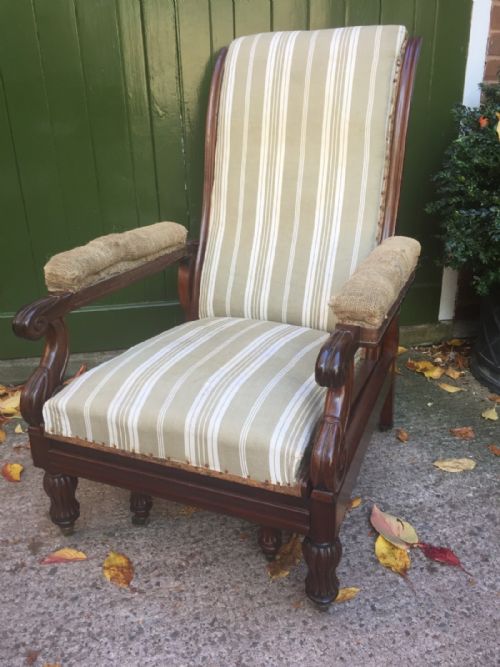
When you search for an antique mechanical reclining chair, you are looking at nineteenth-century seating that uses internal linkages or ratchets to alter the angle of the back and seat. These pieces span George III, Regency, William IV, and Victorian periods, alongside French Empire and Second Empire designs.
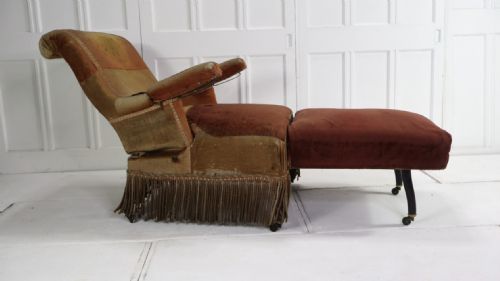
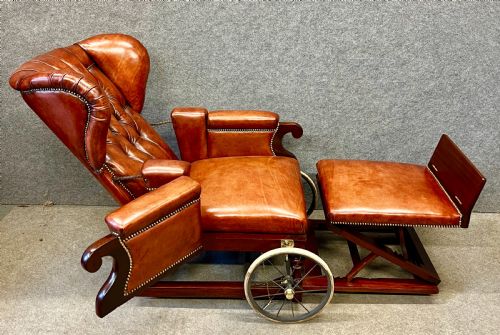
The forms on this page include armchairs, daybeds, chaise longues, library chairs, and invalid wheel chairs. Mahogany and oak dominate the timber frames, while leather, velvet, and fabric cover the sprung or padded upholstery.
You are most likely to meet Victorian and nineteenth-century examples involving patent mechanisms by makers like Minter, J Foot & Son, or John Ward. These designs often double as reading chairs or convalescing seats.
How they were made
Makers constructed the structural frames from dense timbers like mahogany, oak, and elm, sometimes utilising ebonised finishes. These solid woods supported the weight of the user and the stresses placed upon the moving joints.
Concealed iron and brass mechanisms provided the mechanical movement, allowing the backrest to tilt and the footrest to extend. Upholsterers then finished the pieces with buttoned leather, velvet, or fabric over traditional stuffing.
Listings span the nineteenth century, featuring oak, mahogany, elm, and brass materials across armchairs and daybeds.
What varies in quality
The sophistication of the mechanical patent separates standard seating from high-end library and invalid chairs. Smooth operation of the brass and iron ratchets indicates superior original engineering.
The choice of timber and quality of cabinetmaking also dictate the grade of the piece. Finely figured mahogany frames and intact original leather upholstery mark the upper tier of surviving examples.
Minter·J Foot & Son·John Ward·Robert Daws
The Antique Mechanical Reclining Chair Glossary
- Metamorphic chair
- A piece of furniture designed to transform into another form, such as a chair converting into a daybed or incorporating a footstool.
- Patent design
- An innovative mechanical system protected by a nineteenth-century registration, often associated with specific makers like Minter or Foot and Son.
- Library chair
- A heavy armchair designed for prolonged reading, frequently equipped with adjustable backs and reading accessories.
- Convalescing chair
- An invalid seat built for sickrooms or recovery, often featuring wheels and complex reclining adjustments.
- Wing back
- An upholstered armchair with side panels designed to shield the user from draughts.
Antique Mechanical Reclining Chair: Frequently Asked Questions
How do these reclining mechanisms work?
Most of these chairs utilise concealed brass and iron ratchets, screws, or lever systems operated by shifting body weight or turning handles. These internal components allow the backrest and sometimes a footrest to lock securely at various angles.
Over time, dust and dried lubrication can stiffen the movement. Gentle cleaning and appropriate oiling usually restore smooth operation to the nineteenth-century ironwork.
Were these chairs used in libraries or sickrooms?
Makers designed these seats for both intellectual study and medical recovery. Library chairs focused on adjustable comfort for reading, while invalid and convalescing chairs served patients needing prolonged reclining support.
Many examples combine reading desk attachments or wheels with the reclining action to suit sedentary or bedridden users.
How do I identify a George III or Victorian period chair?
George III and Regency pieces from around eighteen hundred tend to feature cleaner architectural lines in mahogany, often following early patent designs. Victorian examples frequently display heavier proportions, buttoned leather, and more complex mechanical adjustments.
Stylistic cues in the woodwork and the complexity of the patent mechanism generally point toward the correct nineteenth-century decade.
Can I use an antique mechanical chair daily?
These pieces function well for regular seating provided the internal iron and brass mechanics receive gentle handling. Regular users should test the latches carefully to avoid straining nineteenth-century joints.
Leather and fabric upholstery may require occasional conditioning, but the solid mahogany and oak frames remain robust for everyday use.