
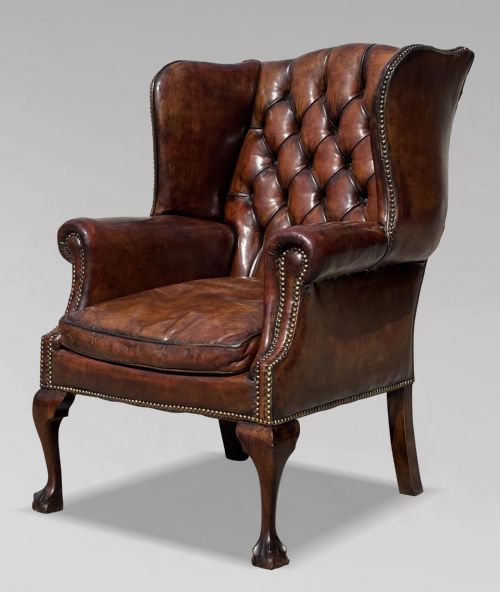
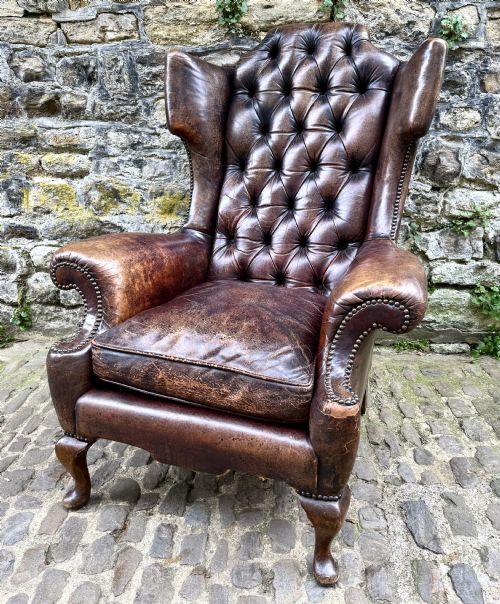


Buttoned Leather Winged Chair
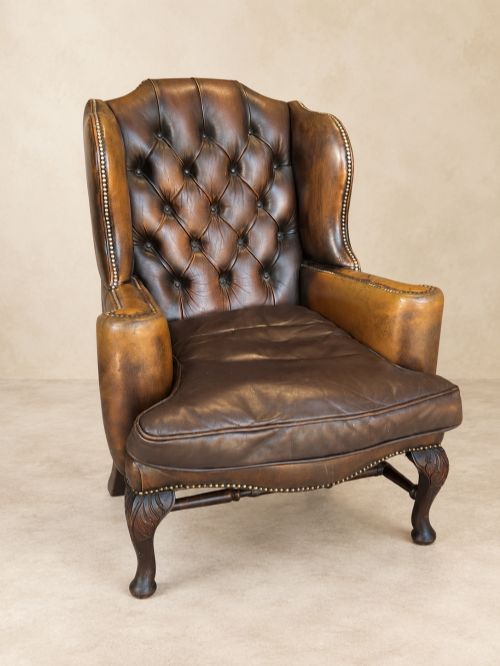
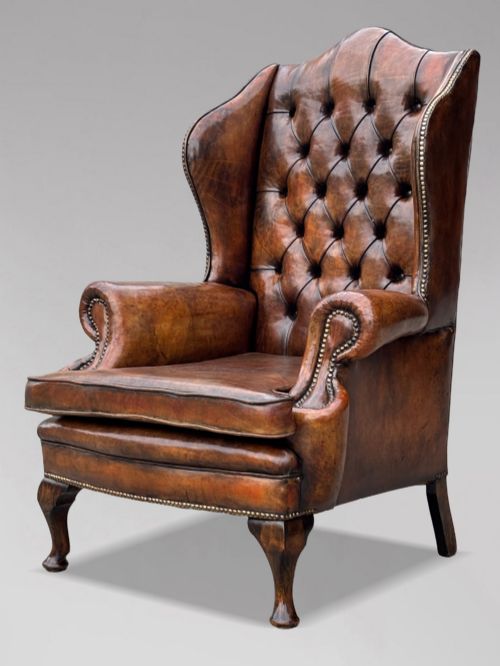
A buttoned leather winged chair brings deep upholstery and draught-defying wings to a fireside, offering comfort shaped over centuries.
Buttoned Leather Winged Chair
A buttoned leather winged chair combines high upholstered sides with a deep seat and tufted back, designed to keep warmth around the head and shoulders in draughty rooms. Surviving examples span eras from the eighteenth century to the twentieth, incorporating periods such as Victorian, Georgian, and Regency.
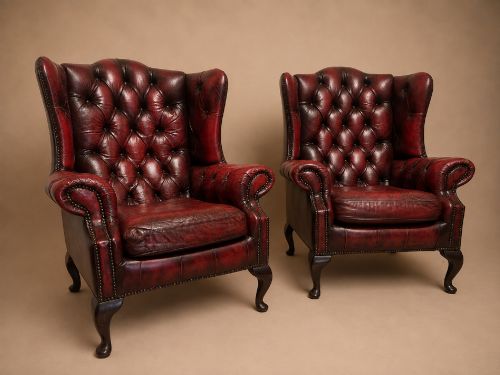
Most pieces seen on this page date from the nineteenth and early twentieth centuries, alongside revival interpretations styled after earlier periods. These range from standard armchairs and pairs of Chesterfield wing chairs to larger library armchairs and porters chairs.
Makers and designers from history utilised mahogany, oak, and other hardwoods for frames, mounting them on timber structures that support substantial leather upholstery secured with brass detailing.
How they were made
Traditional construction relies on sturdy hardwood frames of mahogany, oak, or timber, built to bear the heavy load of deep upholstery and frequent use. Joinery is concealed within the structural core to maintain stability across the arms, legs, and high back wings.
Upholstery involves fitting durable leather over internal padding, secured and tensioned through buttoning techniques that create the characteristic tufted surface. Brass studs are frequently driven along the seams to anchor the hide securely to the wooden framework.
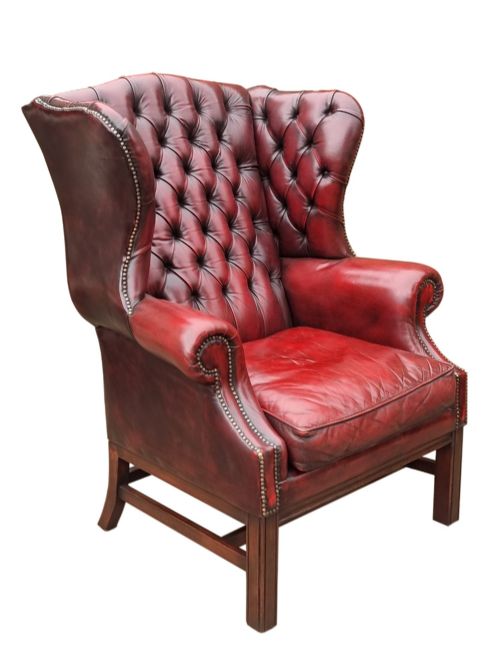
Materials recorded across the inventory include brass fittings, timber frames, and hand-dyed leathers in tan, brown, burgundy, and oxblood shades.
What varies in quality
The integrity of the internal wooden frame and the quality of the hide determine the distinction between average and exceptional pieces. Heavier hardwoods like mahogany and oak provide enduring stability, whereas lesser timber frames may show structural fatigue over time.
The suppleness and finish of the leather upholstery separate standard examples from finer specimens. Hand-dyed hides that retain natural patination and uniform buttoning demonstrate superior craftsmanship compared to heavily corrected or stiff modern replacements.
John Ward·Gillow
The Buttoned Leather Winged Chair Glossary
- Wingback
- An armchair style featuring projecting side panels designed to shield the occupant from draughts. These wings merge directly into the armrests.
- Buttoned
- An upholstery technique where indentations are formed across the leather surface by pulling threads through padding to secure buttons. This method keeps the internal stuffing evenly distributed.
- Chesterfield
- A traditional form of upholstered seating characterised by arms and back of the same height. In chairs and sofas, this style incorporates deep buttoning and leather covering.
- Porters chair
- A heavily enclosed armchair originally designed to protect hall porters from cold drafts in large entranceways. They often feature hooded domed tops and fully enclosed sides.
- George III style
- A design aesthetic reflecting the neoclassical and Palladian tastes prevalent during the reign of George III. Pieces in this manner often utilise mahogany and classical proportions.
Buttoned Leather Winged Chair: Frequently Asked Questions
What is a buttoned leather winged chair?
A buttoned leather winged chair is a traditional seat featuring high protective side panels, a tufted back secured with buttons, and leather upholstery over a solid timber frame. These chairs were originally designed to trap heat around the head and torso by blocking cold draughts in large rooms.
Today, they function as substantial statement seating in studies, libraries, and living spaces. Their design evolved across multiple design periods, retaining a distinct silhouette through the centuries.
How do I identify a Georgian buttoned leather winged chair?
Identifying a Georgian buttoned leather winged chair involves looking at the timber species, frame proportions, and leg style. Pieces from this era typically employ solid mahogany or oak and exhibit restrained, classical joinery without excessive ornamentation.
Revival pieces from later centuries often imitate these eighteenth-century characteristics. Close inspection of the construction methods and wood ageing helps distinguish original period examples from later interpretations.
How should I care for antique leather upholstery?
Caring for antique leather involves keeping the hide nourished with appropriate balms and protecting it from direct sunlight and heat sources. Regular dusting with a soft cloth prevents abrasive particles from settling into the buttoned creases.
Avoiding harsh chemical cleaners ensures the natural patina remains intact. Maintaining a stable room humidity prevents the underlying timber frame and the leather from drying out.
What is the difference between Victorian and Edwardian wing chairs?
Victorian wing chairs generally feature darker, heavier proportions with dense mahogany or walnut frames and deep, dark leather. They often emphasise robust construction and formal presence.
Edwardian examples tend to introduce lighter woods, varied leather shades such as faded green or oxblood, and slightly more relaxed proportions. Both eras utilise buttoning and winged sides, but the overall visual weight shifts noticeably.