



Antique Meat Dome
An antique meat dome protects joints of meat at the dining table while locking in heat, appealing to collectors of fine nineteenth-century serveware.
Antique Meat Dome
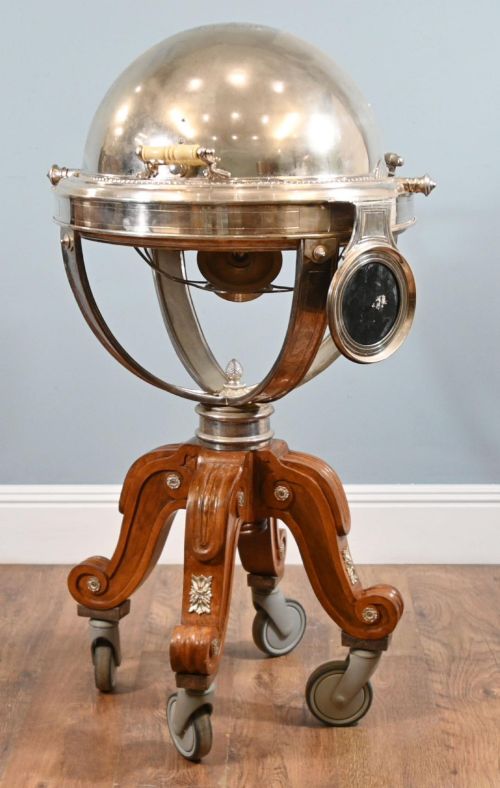
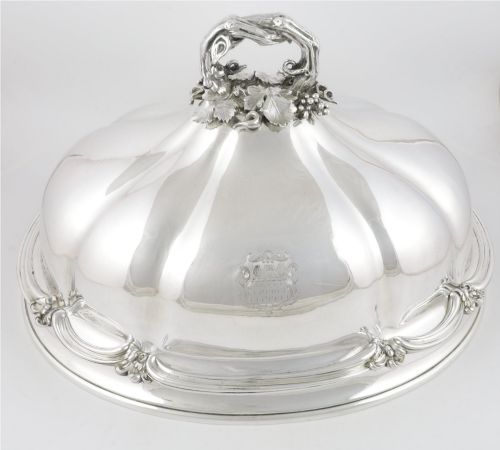
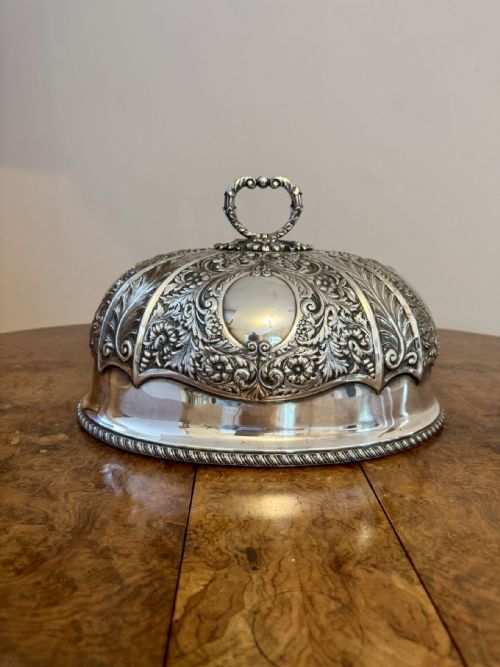
An antique meat dome is a large, domed cover designed to sit over a joint of meat or poultry on a platter, keeping the food warm between the kitchen and the dining table. These covers appear in forms such as meat domes, serveware, meat covers, dish covers, and cloches. Examples span the Georgian, Regency, William IV, Victorian, Edwardian, and French Restoration periods, dating from around 1800 through 1900.
How they were made
Silversmiths and manufacturers formed these domes using silver plate, Old Sheffield Plate, EPNS, and copper over a base metal core. Old Sheffield Plate involves fusing a thin sheet of silver to a thicker copper ingot through heat and pressure, a method visible where the underlying copper shows through wear along high points.
Handles and borders require cast ornamentation soldered to the main body, while crests and armorials are hand-engraved onto the surface.
Antique Meat Dome Retail Price Guide 2026
Typical asking prices for meat dome among the pieces listed under this phrase on Sellingantiques today, from the lower quarter to the upper quarter. They describe what is for sale here now, not the wider market.
One surviving dome once kept the Duke of Somerset's dinner warm, proving that even roast beef deserved aristocratic architecture.
What varies in quality
The distinction between ordinary utility items and exceptional pieces rests upon the thickness of the original plating, the weight of the metal, and the crispness of the chased or applied handles. Heavier gauge metal retains heat better and resists denting during centuries of service.
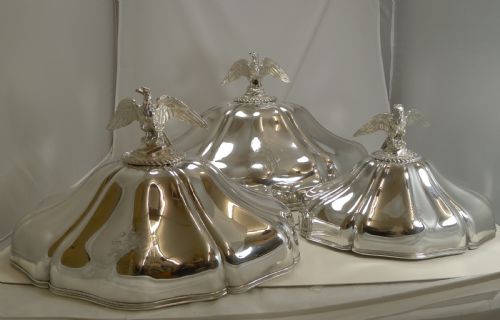
Design sophistication also sets examples apart, ranging from plain functional domes to refined specimens featuring cast crests, engraved coats of arms, or matching graduated sets by noted makers like Boulton or Durand.
Roberts Cadman·Henry Wilkinson·Boulton·Durand Paris
The Antique Meat Dome Glossary
- Old Sheffield Plate
- An early fusing technique where silver is fused to copper before shaping. This process creates a rich, layered material distinct from later electroplating.
- Cloche
- A bell-shaped cover used in food service. The term often describes French or Regency period variants of the standard meat dome.
- EPNS
- Electroplated Nickel Silver. A mid-nineteenth-century method that replaced Old Sheffield Plate by depositing a silver layer via an electrical current.
- Graduated set
- A group of matching domes in diminishing sizes. These sets allowed hosts to cover joints, poultry, and smaller game dishes harmoniously on the same table.
Antique Meat Dome: Frequently Asked Questions
What is an antique meat dome?
An antique meat dome is a large, vaulted metal cover placed over a platter of roast meat to retain heat and keep food warm in transit from the kitchen to the dining table. These pieces served grand households during the Georgian and Victorian eras.
Today, they function primarily as decorative display items or impressive serving accessories for formal dining rooms, reflecting the high standards of nineteenth-century hospitality.
How do I tell Old Sheffield Plate from silver plate?
Old Sheffield Plate was made by fusing silver and copper together before hammering or forming the object, which often reveals a faint reddish copper glow along high friction edges where the silver layer has thinned. Later silver plate and EPNS use an electrical current to bond silver over a base metal like nickel silver.
Examining the edges and interior surfaces under good light helps reveal the underlying copper characteristic of the older fusion method.
Were these domes used every day?
These domes belonged to substantial households where multi-course formal dinners required meat to travel significant distances from subterranean kitchens to the dining table. They maintained serving temperatures in drafty country houses.
Lower-income households relied on simpler earthenware or pewter, leaving these plated metal domes to prosperous estates and formal dining rooms.
How do I live with a meat dome?
Meat domes make striking focal points on sideboards, dining tables, or mantels, especially when polished or left with a gentle patinated surface. Their substantial scale demands adequate surface space for display.
Cleaning requires mild silver care to preserve the original plating and any engraved armorials or family crests without stripping the historical finish.