


Antique Marriage Coffer
An antique marriage coffer is a traditional storage chest once given as a wedding gift, prized today for its regional folk art and sturdy construction.
Antique Marriage Coffer
An antique marriage coffer is a large storage chest historically associated with dowries and weddings across Europe and Asia. The examples seen on this page span from the seventeenth century through to the Victorian era, taking forms such as dome-top coffers, mule chests, and cassones.
How they were made
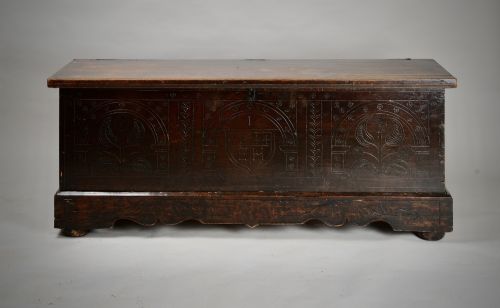
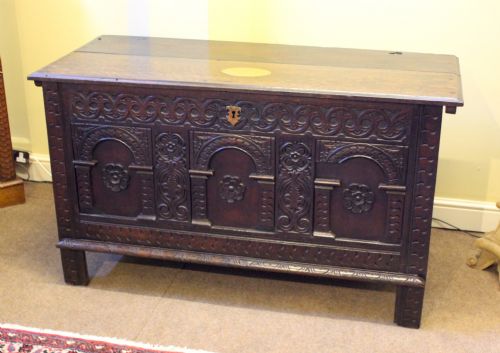
Joinery methods rely on solid timbers such as oak, pine, and walnut, shaped by hand-carving and panel construction. Iron, wrought iron, and brass provide structural hardware, hinges, and corner plates.
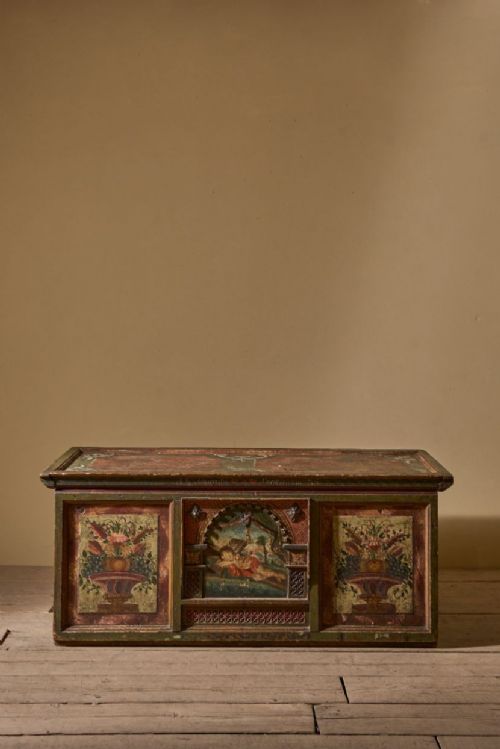
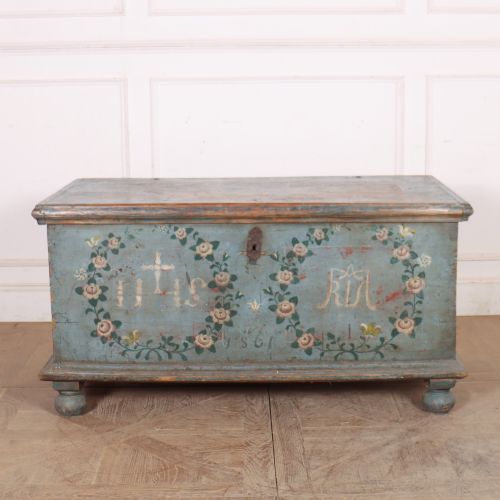
Surfaces are finished with pigment, paint, and lacquer, displaying regional decoration techniques like floral hand-painting, gilding, and intricate inlay.
Listings feature periods spanning from the seventeenth century through to Victorian times, utilising pine, oak, walnut, and wrought iron.
What varies in quality
Quality rests in the survival of original painted surfaces, pigments, and folk art details, which distinguish simpler utility boxes from significant ceremonial pieces. The depth and skill of hand-carving on oak and walnut structures also set finer examples apart.
Proportion, regional character, and the integrity of period hardware dictate the distinction between standard storage chests and exceptional marriage coffers.
The Antique Marriage Coffer Glossary
- Cassone
- A traditional Italian chest, often carved or painted, historically used for holding a bride's trousseau. These large receptacles frequently employ walnut or beech.
- Mule chest
- A storage chest fitted with one or more drawers at the base beneath the main compartment. This form emerged in seventeenth and eighteenth-century England.
- Chinoiserie
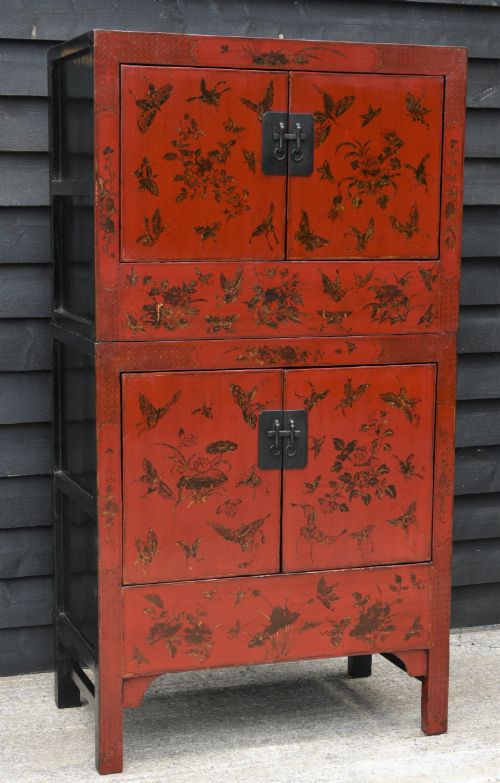
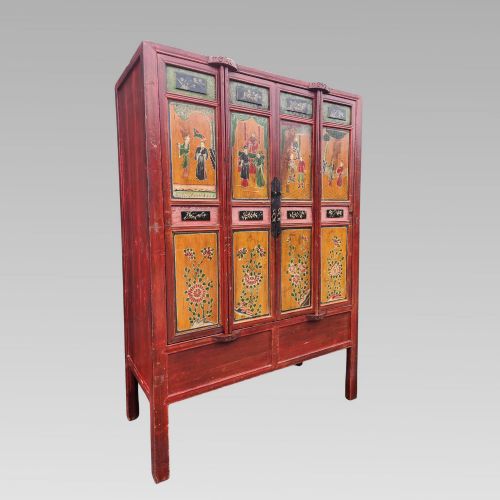
- European decorative style reflecting Chinese artistic traditions, visible on storage cabinets from the nineteen hundreds. It involves ornate painted or lacquered surfaces.
- Folk art
- Traditional decorative work produced within a specific regional culture, prominently seen on nineteenth-century Scandinavian pine coffers. These pieces utilise distinctive hand-painted motifs.
- Inlay
- A technique where pieces of contrasting material are inserted into a recessed surface to form a pattern. Walnut coffers frequently employ this method for decorative enrichment.
Antique Marriage Coffer: Frequently Asked Questions
What was a marriage coffer used for?
A marriage coffer served to hold a bride's dowry, including textiles, linens, and personal valuables, before being transported to the couple's new home.
Following the wedding, the chest remained in the household as a principal storage piece for domestic goods.
How do I identify a Swedish painted coffer?
Swedish coffers from the nineteenth century typically feature hand-painted floral or geometric folk art across a pine carcase. Dome-top variants and shaped boxes on stands are particularly common regional forms.
The paintwork often exhibits a dark or patinated finish developed over generations.
Are these chests made of solid oak?
Many seventeenth and eighteenth-century examples utilise solid oak, frequently featuring hand-carved panels and traditional joinery. British mule chests and early coffer forms rely heavily on this timber for durability.
Later continental pieces introduce softer woods like pine alongside walnut.
What is the difference between a coffer and a cassone?
A coffer is a general term for a heavy storage chest, whereas a cassone specifically denotes an Italian marriage chest. Cassones from the Renaissance and later periods often display elaborate carving or gilt decoration on walnut and beech.
Northern European coffers lean more toward folk art painting on pine.