




Antique Marine Instrument
These antique marine instruments are functional survivals of navigation and timekeeping at sea, prized by collectors for their precise engineering and historic brass and mahogany construction.
Antique Marine Instrument
Every antique marine instrument represents a tool used by sailors and explorers to navigate the open ocean, read the weather, or keep precise time aboard ship. When you search for an antique marine instrument, you encounter objects built for utility on the water, ranging from pocket compasses to massive chronometers and stick barometers.
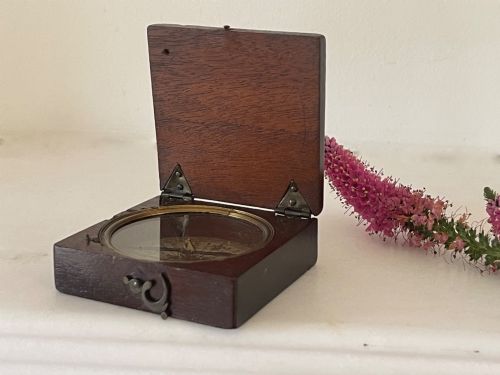
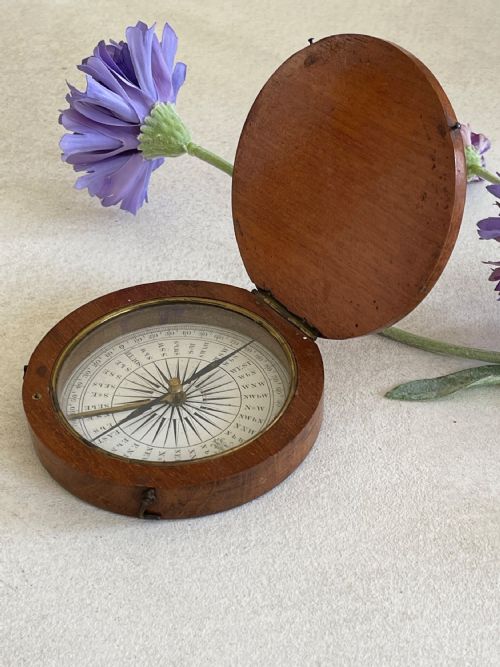
The pieces on this page span the Georgian, Regency, and Victorian periods, reflecting shifts in maritime technology over two centuries. You will find items housed in mahogany cases, pocket-sized brass spyglasses, and substantial desk barometers that once hung in ships' cabins.
Common forms include marine chronometers, stick barometers, extending telescopes, and compasses. These objects combine scientific necessity with the rich patination of aged wood and polished metal.
Materials and construction
Makers relied heavily on brass for its resistance to corrosion and its ability to hold precise mechanical tolerances. This metal is frequently paired with dense hardwoods such as mahogany and rosewood, which withstood the damp conditions of sea travel without warping.
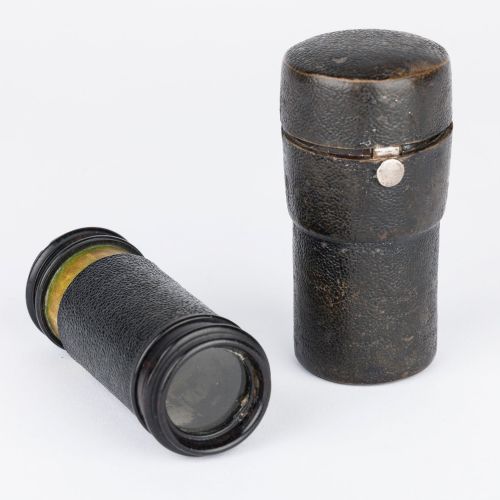
Optics required clear glass lenses fitted into extending brass draws, sometimes wrapped in leather for a secure grip during stormy weather. Dials were constructed from engraved paper or silvered metal, protected behind heavy glass bezels to endure heavy vibration on board a vessel.
Barometers and chronometers appear alongside pocket compasses and multi-draw telescopes by English and European makers.
Factors determining quality
Quality rests in the reputation of the maker and the precision of the mechanics, as seen in signed dials from established workshops. Superior examples retain their original gimbals, mercury tubes, or complex gear trains without replacement parts.
The choice of materials and the crispness of the engraving also separate ordinary pieces from exceptional ones. Denser timbers, thick cast brass mounts, and clear maker signatures indicate workshop production of the highest order.
Elliott Brothers·Thomas Mercer·Litherland Davies·A Hurlimann Paris·Charles Baker·Gowland London
The Antique Marine Instrument Glossary
- Sympiesometer
- A type of marine barometer that uses oil and gas to measure atmospheric pressure. It offers a more sensitive reading than traditional mercury instruments during heavy seas.
- Binnacle
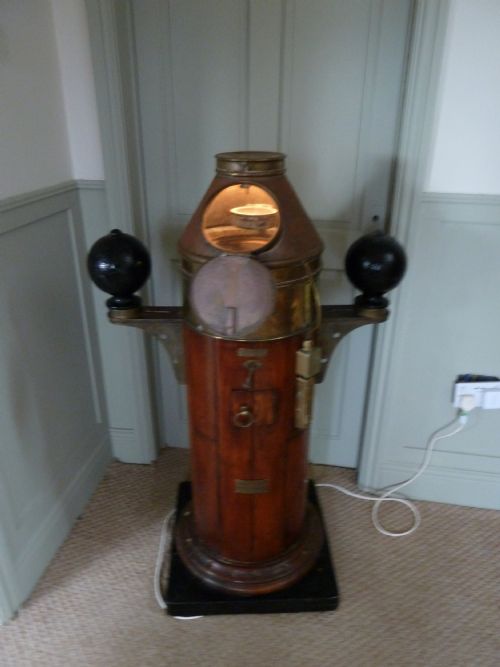
- A wooden or metal housing positioned in front of the ship's wheel to hold the steering compass and its lighting. It protects the instrument from weather and iron interference.
- Chronometer
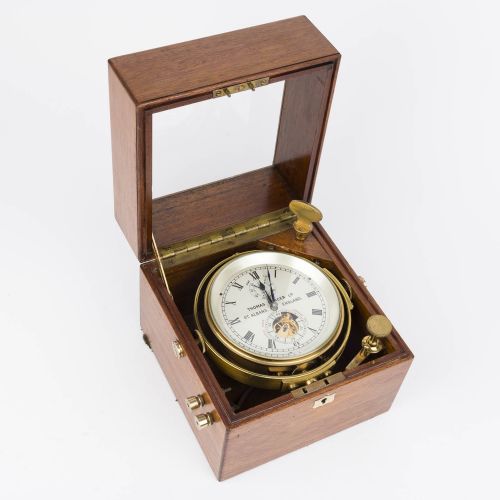
- A highly accurate marine clock used to determine longitude at sea by keeping Greenwich Mean Time. These movements are typically mounted in brass gimbals to keep the dial level.
- Spyglass
- A compact, multi-draw refracting telescope used for spotting land or other vessels. Regency and Victorian examples often feature leather-wrapped brass barrels.
Antique Marine Instrument: Frequently Asked Questions
How do I read a marine barometer?
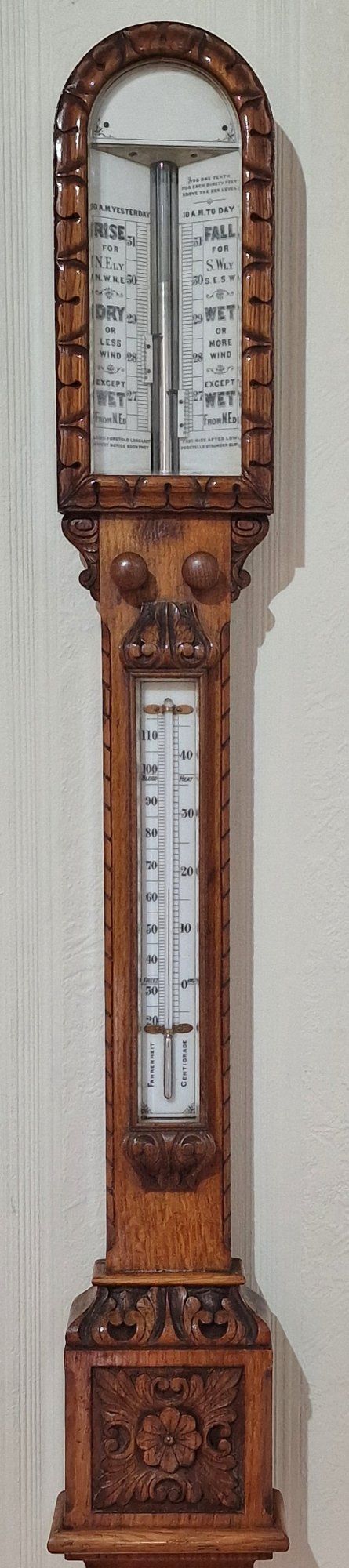
Marine barometers use a column of mercury or alternative fluids to measure atmospheric pressure changes. Rising levels indicate improving weather, while falling readings warn of approaching storms.
Most nautical examples feature sliding vernier scales on the brass face to track subtle shifts. They are typically mounted on gimbals to remain vertical as the ship rolls.
Were these instruments used on ships?
Yes, instruments such as chronometers, binnacles, and stick barometers were essential equipment for navigation and weather forecasting at sea. Captains and officers relied on them daily to calculate position and avoid hazards.
Smaller items like pocket compasses and spyglasses were often personal property purchased by officers for their own use. Their survival shows the practical utility demanded by life on the water.
How should I care for brass and mahogany?
Keep these pieces away from direct sunlight and extreme humidity changes to protect the wood and prevent the brass from tarnishing too quickly. A dry microfiber cloth is sufficient for removing dust from polished surfaces.
Avoid using harsh chemical polishes on aged brass, as this removes the historic patination accumulated over generations. Treat mahogany cases with occasional applications of neutral wax to preserve the grain.
Why do some telescopes have leather wraps?
Leather provides a secure, non-slip grip for sailors operating telescopes in wet and windy conditions on deck. It also protects the brass barrel from minor bumps and scratches during daily use.
These wrapped tubes are often referred to as day or night spyglasses. The textured grip is a practical feature typical of 19th-century maritime equipment.