

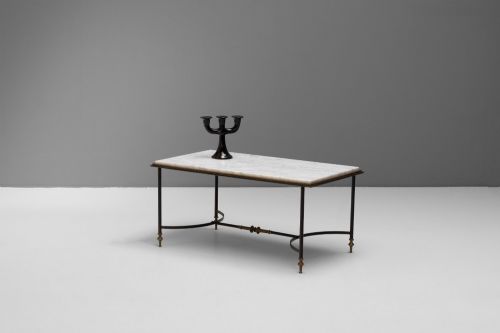
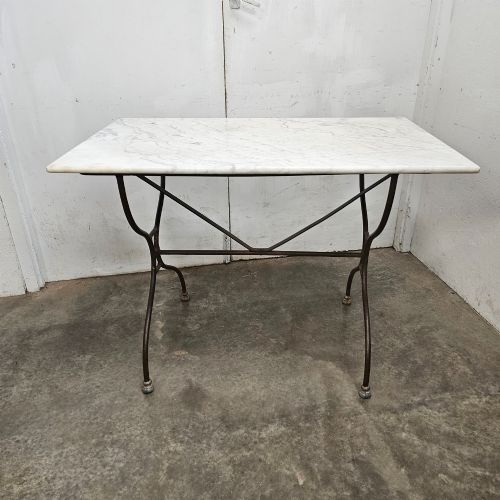
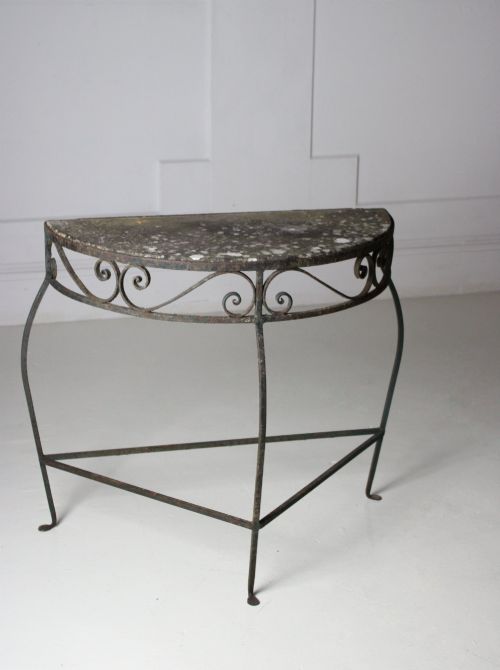
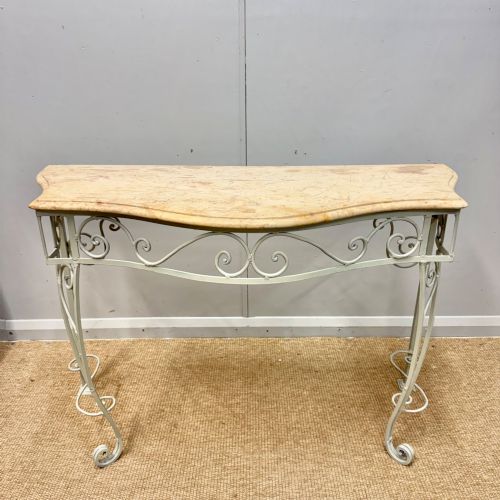
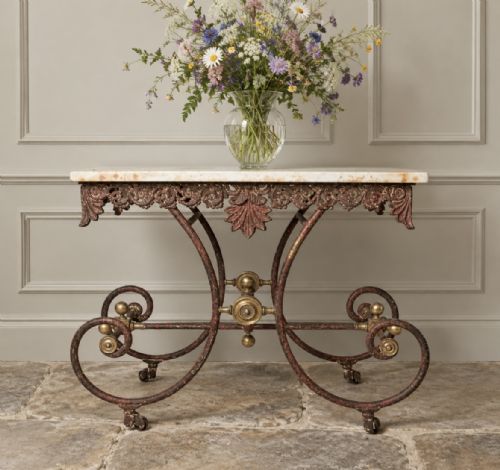


Antique Marble Work Table
An antique marble work table brings solid stone and sturdy metal or timber together to anchor a room with functional grace.
Antique Marble Work Table
An antique marble work table combines a heavy stone surface with a structural base designed for domestic labour or display. You encounter forms ranging from butchers and patisserie prep benches to console tables, side tables, and occasional tables.
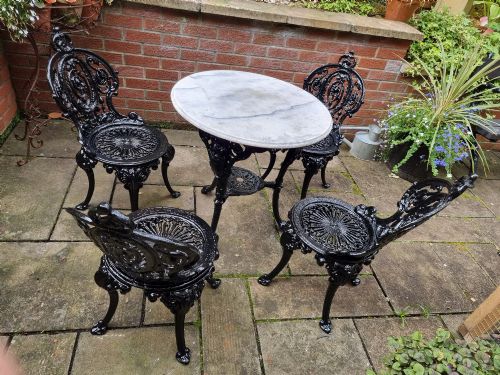
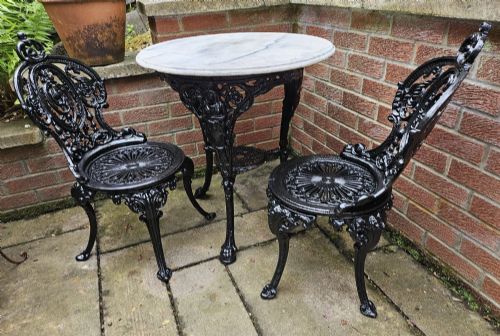
The material combinations span 19th Century and Edwardian periods, stretching through the 1920s and 1930s. French provincial, chateau, and Louis XVI revival styles dominate, alongside George IV rosewood pieces and heavy cast-iron garden sets.
Origins heavily lean towards French workshops, where marble tops met wrought iron, cast iron, ebonised wood, and figured rosewood. These pieces served practical functions in kitchens and shops before moving into modern reception rooms and halls.
Materials and construction
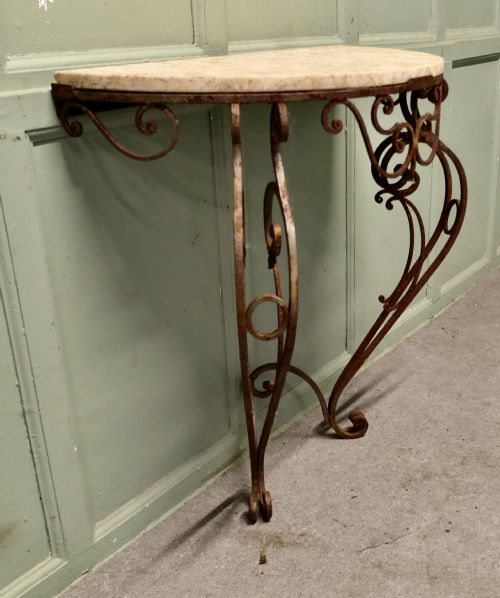
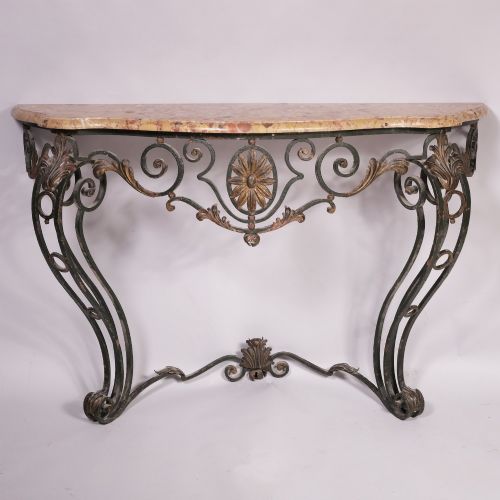
The primary construction relies on heavy stone slabs fitted to rigid metal or timber frameworks. Wrought iron and cast iron provide industrial strength for console and baker tables, while ebonised wood and figured rosewood serve refined occasional furniture.
Marble tops sit directly within frames or atop pedestals, often shaped with serpentine curves or kidney profiles. Metal components involve forged ironwork and cast structures, sometimes paired with brass or gold leaf details.
Antique Marble Work Table Retail Price Guide 2026
Typical asking prices for marble work table among the pieces listed under this phrase on Sellingantiques today, from the lower quarter to the upper quarter. They describe what is for sale here now, not the wider market.
Some French patisserie tables retain flour dust embedded in their iron pores from decades of pastry making.
Factors of quality
Quality rests upon the harmony between the stone slab and its supporting chassis. Thick, richly veined marble paired with finely forged wrought iron or cabinet-grade rosewood represents the upper tier of production.
The execution of the base structure dictates the piece's integrity. Hand-forged iron scrollwork and precise joinery in timber frames separate standard utility items from finer decorative examples.
The Antique Marble Work Table Glossary
- Console table
- A table designed to stand against a wall, frequently supported by wall brackets or console legs. They often feature marble tops for durability.
- Serpentine
- A curved line resembling a snake's movement, featuring a convex centre flanked by concave sides. This shaping appears frequently on higher-end marble tabletops.
- Wrought iron
- Iron that has been heated and shaped with tools by a blacksmith. This material forms the sturdy bases of many French bakers and console tables.
- Ebonised wood
- Timber treated to resemble ebony, usually through staining and polishing. It offers a dark, uniform surface seen on occasional tables.
- Kidney shaped
- A curved, asymmetrical tabletop resembling a kidney bean. This form appears on 19th Century occasional and console tables.
Antique Marble Work Table: Frequently Asked Questions
What rooms suit an antique marble work table?
These tables find natural homes in kitchens, hallways, and living spaces where a durable surface is advantageous. Their stone tops handle daily use while adding architectural weight to a room.
Console and side variants fit narrow circulation spaces, whereas coffee and occasional formats anchor seating areas.
How do I care for antique marble?
Marble is a porous stone susceptible to staining from acids and oils. Regular wiping with a damp cloth and mild soap preserves the surface.
Avoid abrasive cleaners and harsh chemicals that etch the polish. Using coasters and mats protects the historic top from accidental spills.
Are these tables heavy?
The incorporation of solid stone slabs and dense metal bases makes these pieces remarkably heavy. Moving them requires careful handling and usually two people to prevent structural strain.
This weight provides stability, ensuring the tables remain firmly planted without needing wall fixings.
How can I tell the period of a table?
Dating relies on examining the construction marks, metal forging techniques, and wood joinery. 19th Century examples often show hand-forging irregularities, while later 1920s and 1930s pieces display more standardised industrial fabrication.
Stylistic cues like Louis XVI revival motifs or George IV rosewood framing also point to specific eras.