
Antique Marble Urn Table
An antique marble urn table brings solid stone and dark wood together, offering a sturdy surface designed to display decorative vessels.
Antique Marble Urn Table
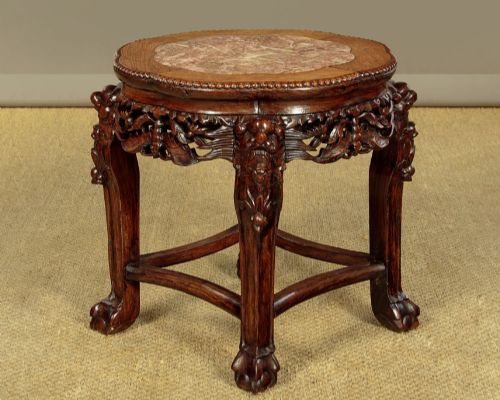
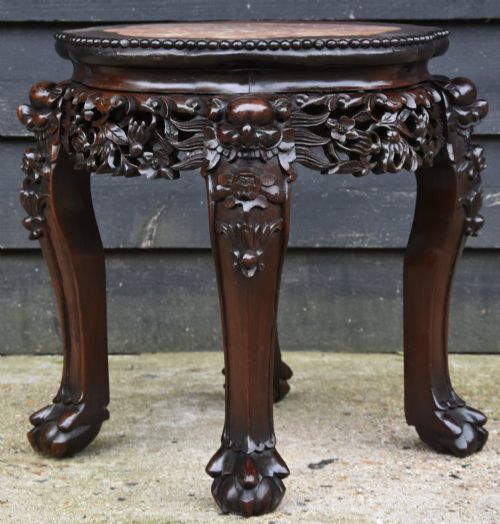
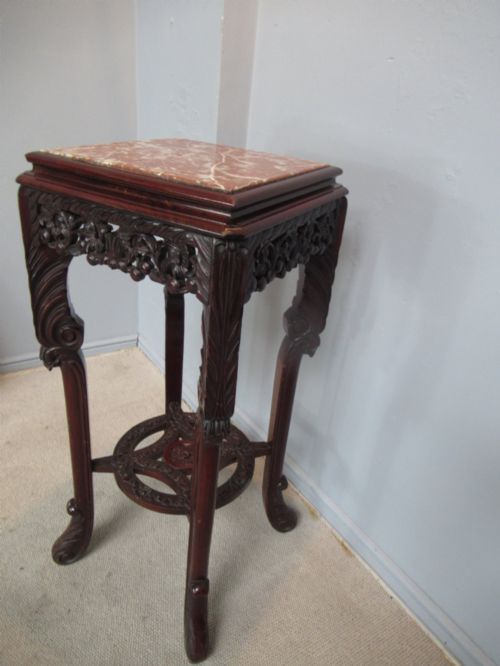
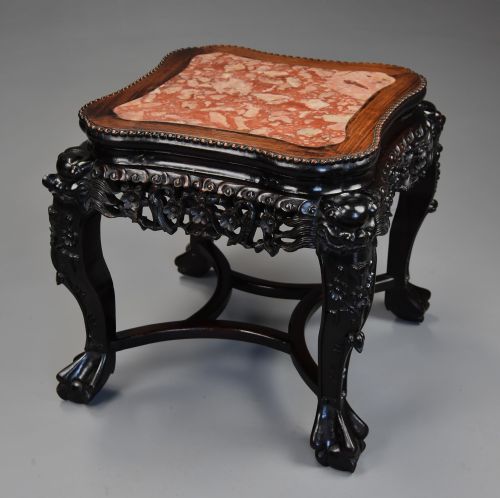
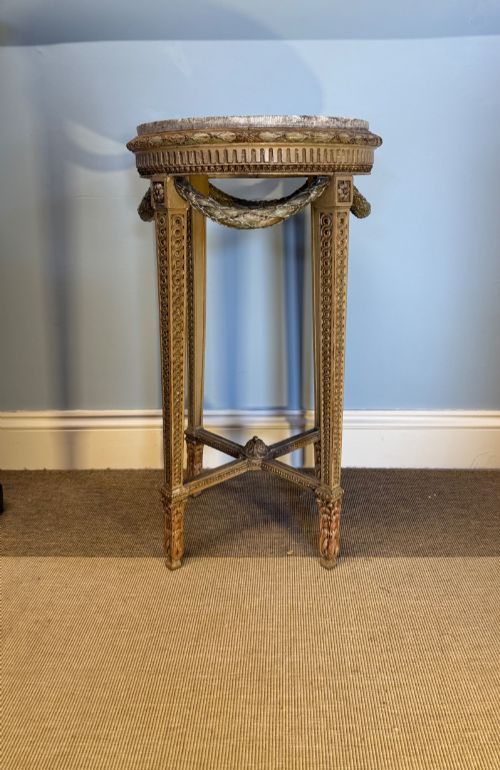
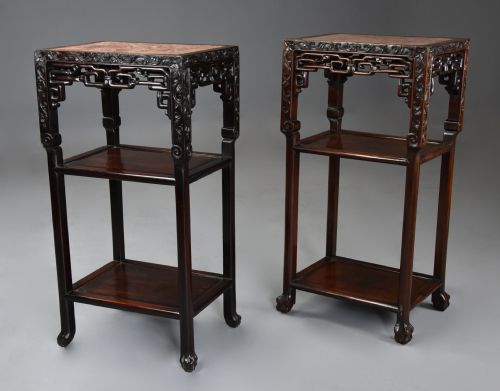
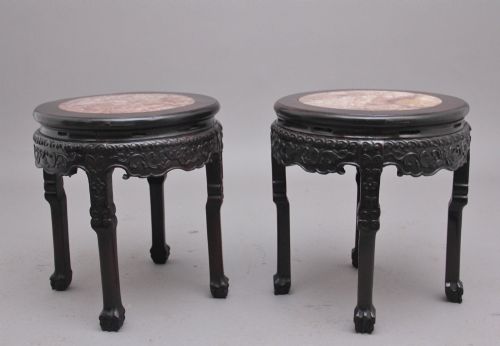
The search for an antique marble urn table leads directly to carved plant stands, low occasional tables, and pedestal supports designed with stone inset tops. These pieces originate primarily from nineteenth century Chinese workshops and French ateliers influenced by neoclassical design.
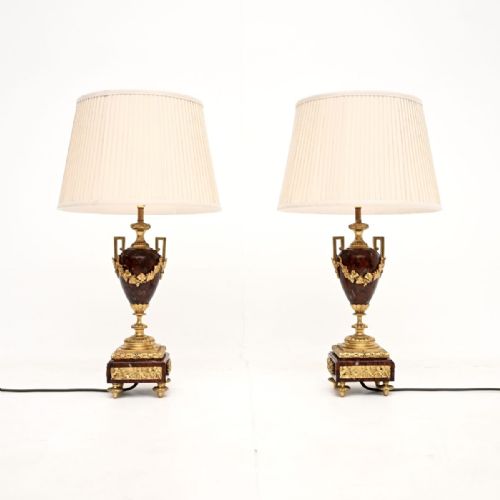
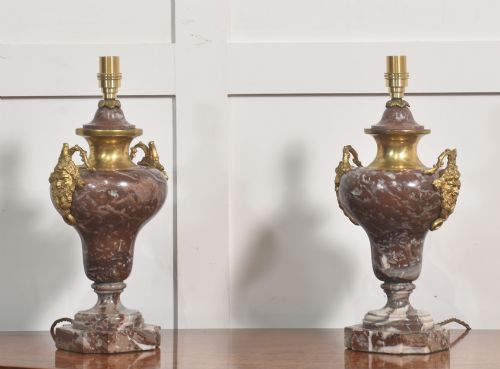
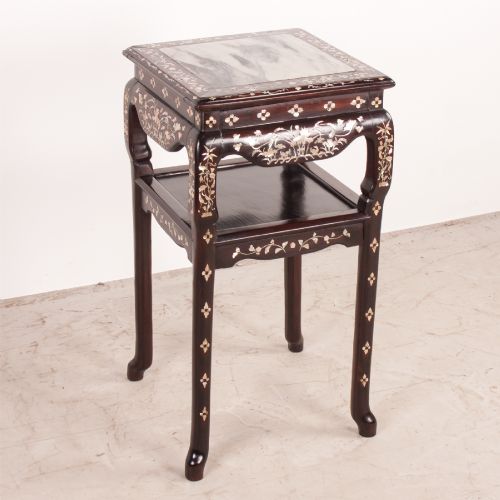
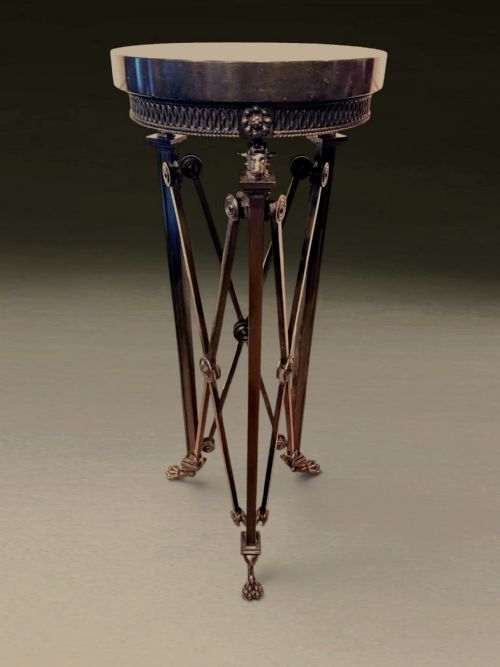
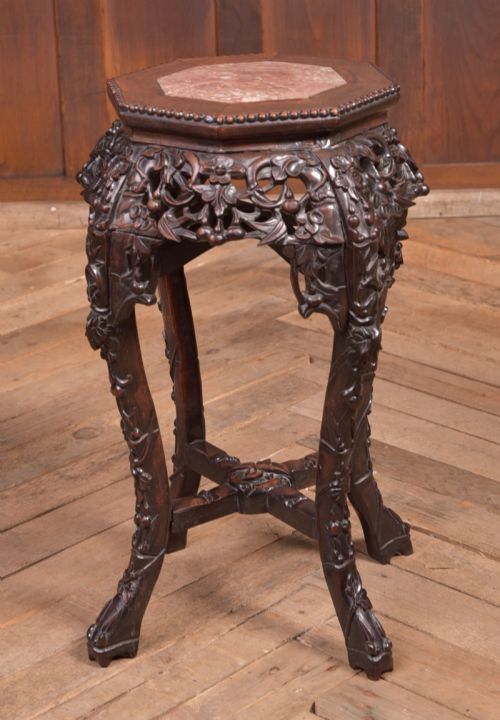
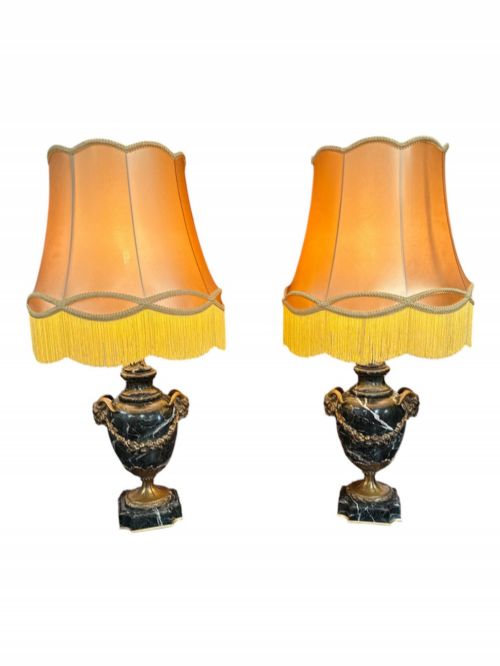
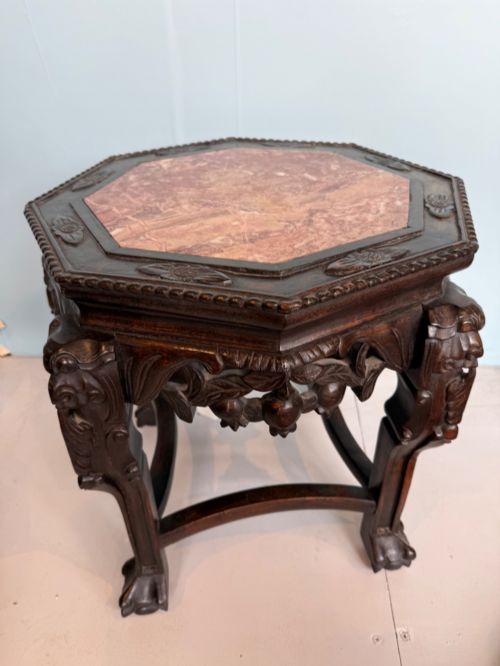
Chinese hardwood stands incorporate inset variegated rouge or white marble panels within shaped frames intended for heavy ceramic planters and vessels. French examples utilise similar stone slabs mounted with gilt bronze, ormolu, or brass within Louis XVI and Empire styles.
Buyers encounter both freestanding low tables and taller pedestals designed specifically to elevate heavy decorative items. The forms rely on heavy materials that provide stability for stone and metal urns.
How they were made
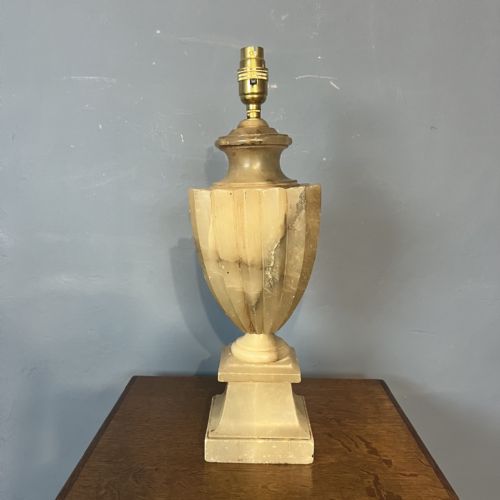
Construction combines dense hardwoods such as rosewood, padouk, and hongmu with quarried marble and alabaster. Joinery in Chinese pieces relies on traditional frame and panel techniques to support the heavy stone inserts without cracking.
European makers mounted white, rouge, and block marble into cast bronze, gilt brass, and ormolu mounts. Surface finishing involves hand polishing the stone tops to a smooth sheen alongside carved wood details or gilt metal chasing.
Alabaster and rouge marble appear frequently alongside rosewood, bronze, and brass across the recorded periods.
What varies in quality
Quality rests on the depth and precision of the wood carving or the crispness of the gilt bronze and ormolu mounts. Superior pieces show tightly fitted marble inserts that sit flush within the timber or metal frame.
The choice of dense, heavy timbers like padouk and rosewood against softer secondary woods dictates the longevity and structural integrity of the base. Finer examples display harmonious grain patterns and substantial metal castings that anchor the stone securely.
Louis Goret·Sacre
The Antique Marble Urn Table Glossary
- Cassolette
- A decorative vessel shaped like an urn, often adapted as a lamp or clock with a removable lid.
- Ormolu
- Gilded bronze mounts applied to furniture and lighting, popular in French neoclassical design.
- Jardiniere
- A decorative stand or container intended to hold plants or flowers indoors.
- Hongmu
- A dense Chinese hardwood used for fine furniture and carved stands.
- Garniture
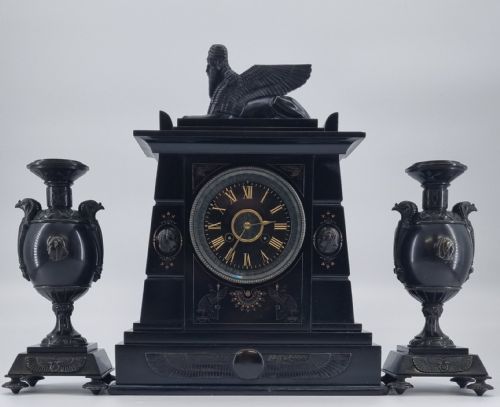
- A set of matching decorative objects, typically comprising a clock and flanking urns or candelabra.
Antique Marble Urn Table: Frequently Asked Questions
What were marble urn tables used for?
These pieces served as sturdy surfaces to display heavy decorative urns, jardiniere pots, and heavy lamps.
The stone top provided a cool, water-resistant surface that protected the underlying wood from damp plant pots and spilled water.
How do I clean a marble top?
Routine maintenance requires only a soft damp cloth followed by dry buffing to remove dust and fingerprints.
Harsh chemical cleaners and acidic substances should be avoided because they etch polished stone surfaces permanently.
Are these stands strong enough for heavy plants?
Solid hardwood and heavy stone construction make these pieces exceptionally stable and capable of supporting substantial weight.
Chinese pot stands and French pedestals were engineered specifically to bear the heavy load of large ceramic vessels.
How do I tell French and Chinese styles apart?
French examples typically display neoclassical gilt bronze mounts, ormolu, and rouge marble in Louis XVI styles.
Chinese versions utilise dense carved hardwoods like rosewood or padouk with inset variegated marble panels.