



Antique Maple Linen Press
An antique maple linen press offers serious storage and striking timber grain, bringing both utility and presence to a bedroom.
Antique Maple Linen Press
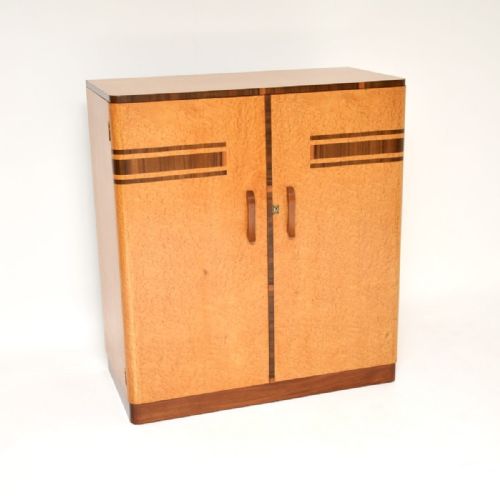
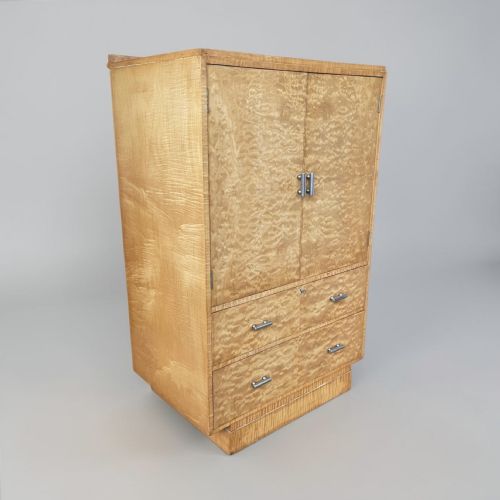
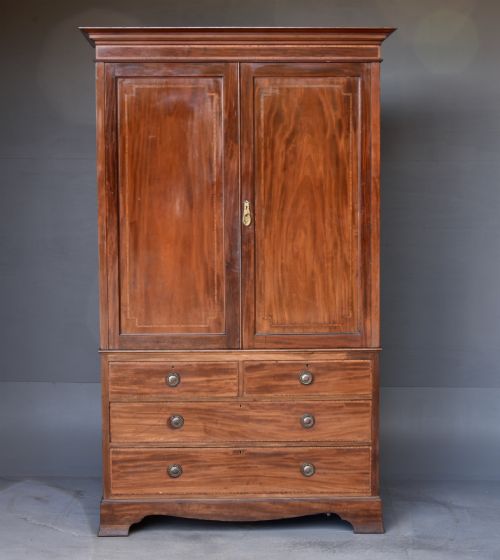
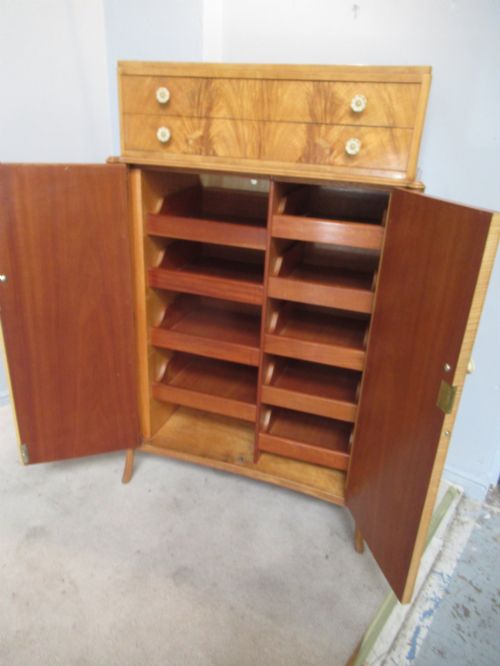
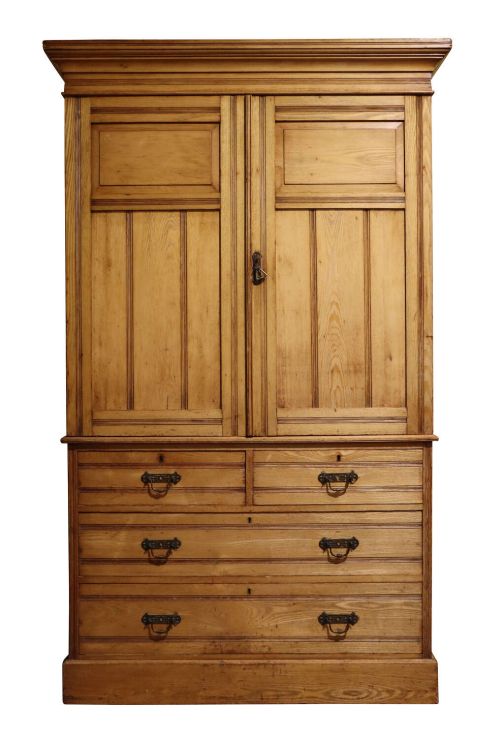
An antique maple linen press typically combines upper cupboard doors enclosing sliding trays with lower drawer storage, though forms frequently overlap with compactums and wardrobes. These pieces emerge across the nineteenth century and into the Edwardian and Art Deco periods, spanning varied aesthetics from Victorian utilitarianism to Swedish Empire Revival.
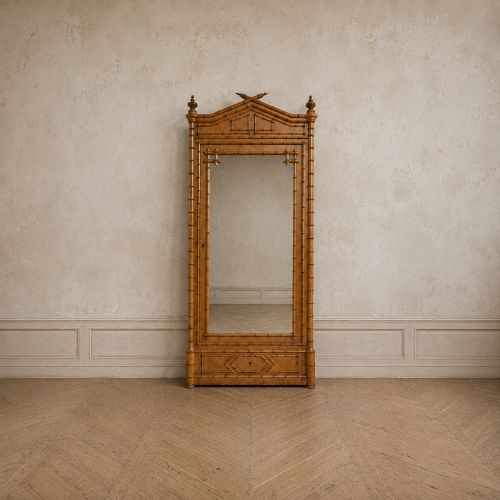
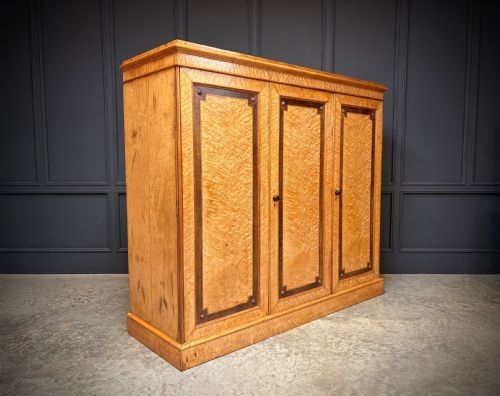
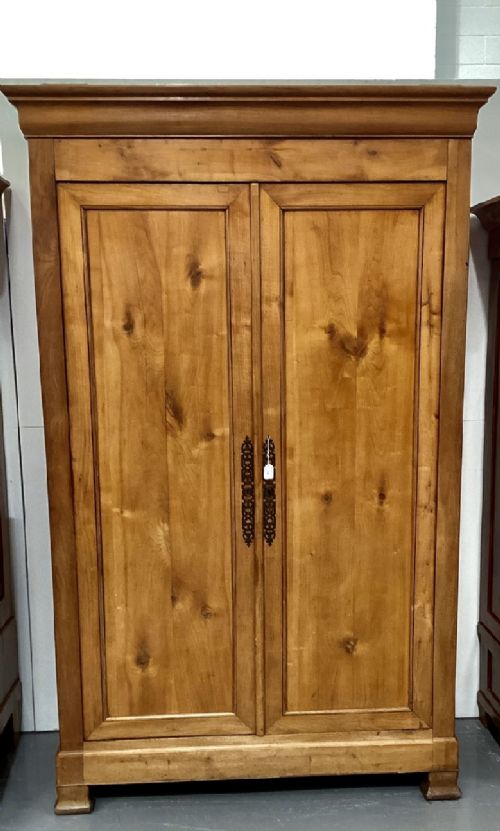
The maple utilised in these presses appears in plain, figured, and birds eye varieties, sometimes combined with mahogany, satinwood, or ash. Forms range from low Victorian compactum wardrobes to tallboy cabinets and large armoires, reflecting the changing domestic storage needs of their eras.
Materials and construction methods
Cabinetmakers constructed these presses using solid timbers alongside veneers, frequently employing birds eye maple veneer over a secondary wood core to create highly figured surfaces. Brass handles, key escutcheons, and occasional mirrored or lead light panels provide functional and decorative contrast to the pale timber.
Joinery techniques standard to quality cabinetmaking of the nineteenth and early twentieth centuries ensure structural stability across large forms like wardrobes and linen presses. Individual workshops applied polished finishes that emphasise the natural pattern and blonde tone of the maple grain.
Listings feature pieces spanning the nineteenth century through to 1930, utilising birds eye maple, mahogany, satinwood, and brass.
Assessing quality in construction and timber
Quality rests heavily on the selection and matching of the maple or birds eye maple veneer across the facade, where superior examples display symmetrical, unbroken grain patterns. The integration of secondary woods, the weight of the brass hardware, and the crispness of inlaid details further separate standard production from finer cabinetmaking.
Proportion and scale dictate the visual impact of these large storage pieces, with well-balanced cornices and flush-fitting doors marking superior craftsmanship. Pieces associated with named firms or specific revival styles often demonstrate more ambitious timber selection and refined decorative flourishes.
Maple & Co·Harry and Lou Epstein·J.Maple
The Antique Maple Linen Press Glossary
- Linen press
- A tall cabinet traditionally designed for storing folded linen in sliding internal trays above a chest of drawers. This form later evolved to accommodate general clothing storage.
- Compactum
- A fitted wardrobe combining multiple internal compartments, hanging space, and drawers within a single unified piece. These multi-purpose cabinets became popular during the Victorian and Edwardian eras.
- Birds eye maple
- A figure in maple wood resembling tiny swirling eyes caused by local distortions in the grain growth. Highly prized for decorative veneer work on fine furniture.
- Armoire
- A large upright cupboard with doors, used originally for storing arms and later for clothes. French and Swedish examples frequently showcase elaborate cornices and mirrored doors.
Antique Maple Linen Press: Frequently Asked Questions
How do I use a linen press today?
The internal sliding trays suit folded garments, knitwear, or bed linen perfectly, while deeper lower drawers manage bulkier items.
Many modern homes utilise these cabinets in bedrooms or hallways where built-in storage is absent.
What is birds eye maple?
Birds eye maple is a distinctive timber figure caused by growing conditions that create small, circular markings across the surface.
Cabinetmakers sliced this wood into veneers to cover large drawer fronts and cupboard doors for decorative impact.
How do I date an antique press?
Dating relies on combining stylistic clues from periods like the Victorian era, Edwardian period, or Art Deco with construction characteristics.
Hardware styles, timber choices, and internal fittings help narrow down the decade of manufacture.
Are these pieces difficult to move?
These large cabinets are heavy and often substantial in height, frequently requiring disassembly or specialist transport.
Many Victorian and Edwardian presses separate into upper and lower sections to ease transit through doorways.