

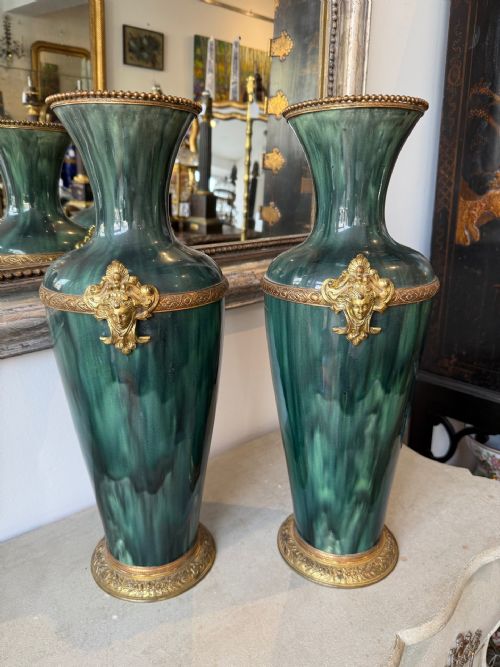


Antique Mantle Urns Pair
These antique mantle urns pair selections bring neoclassical grandeur to a room, offering symmetrical display pieces shaped by centuries of European and Asian ceramic and metal traditions.
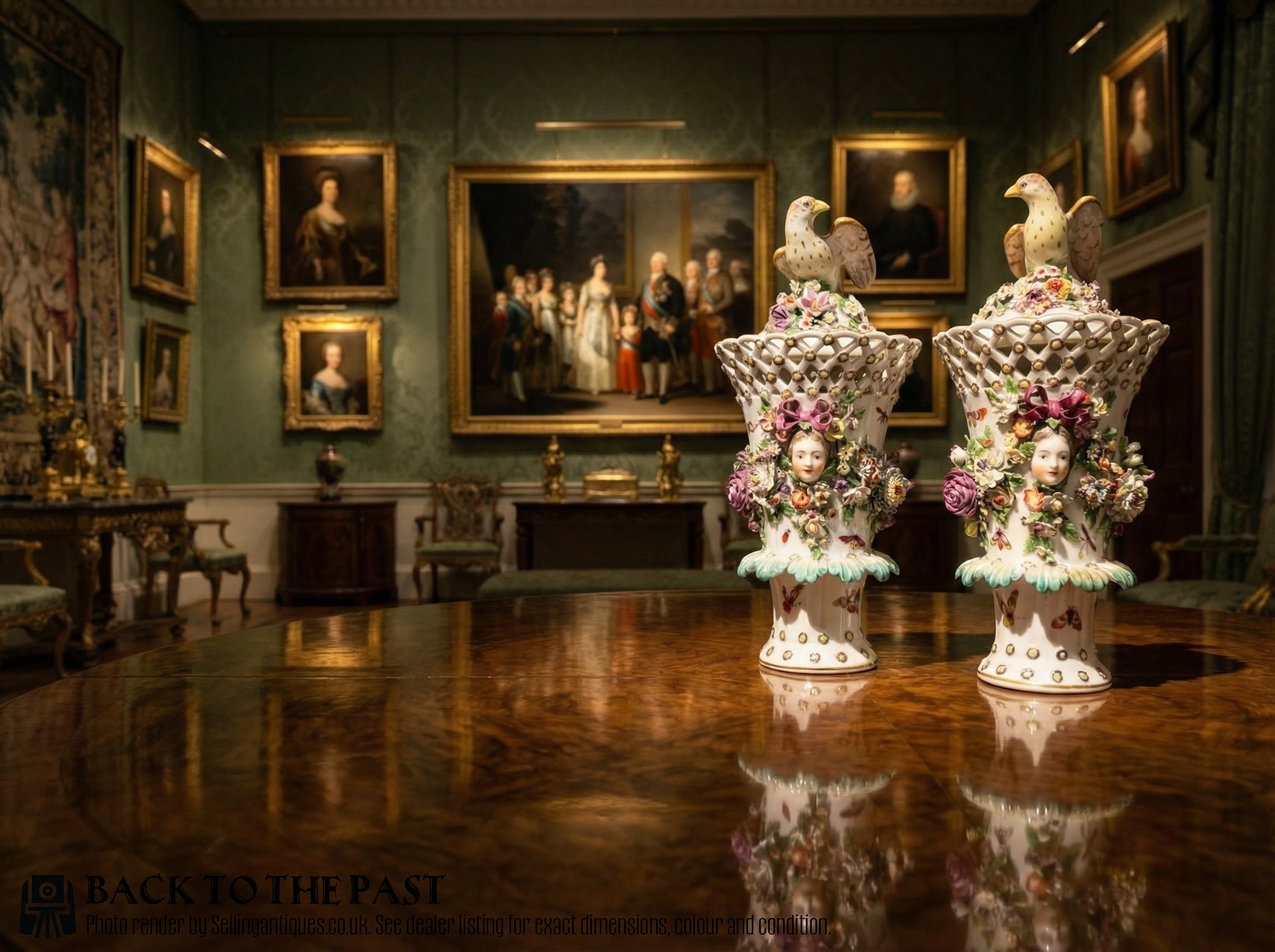
Antique Mantle Urns Pair
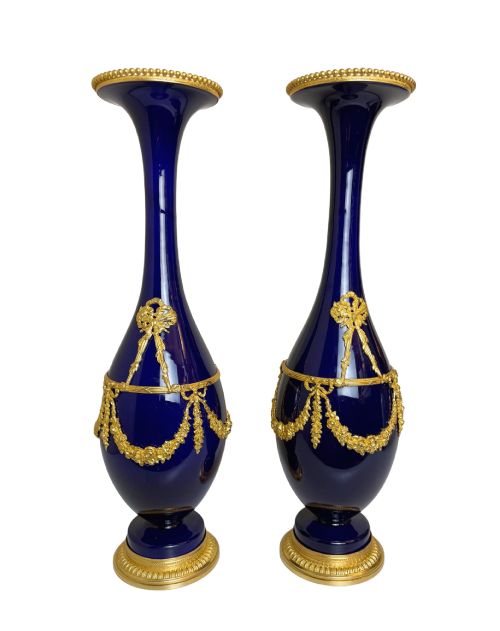
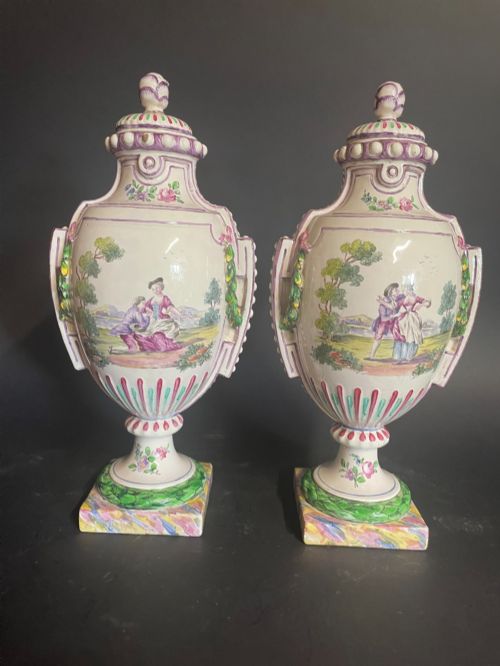
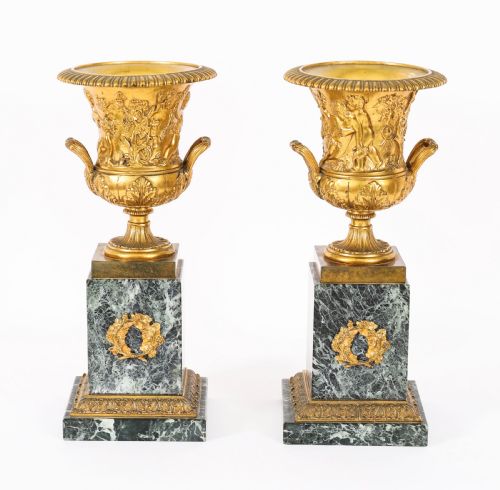
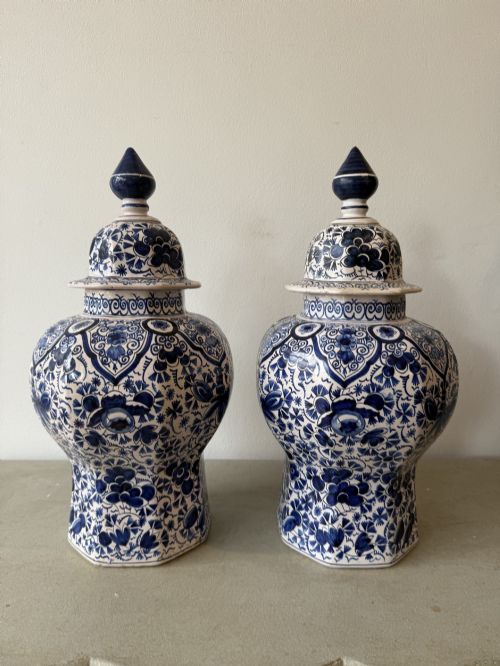
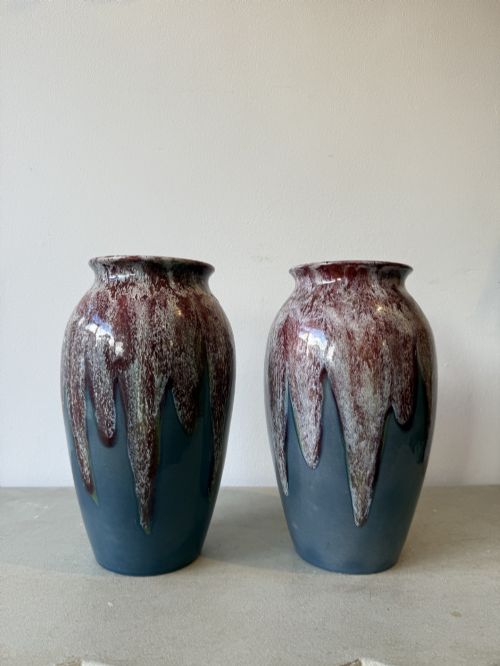
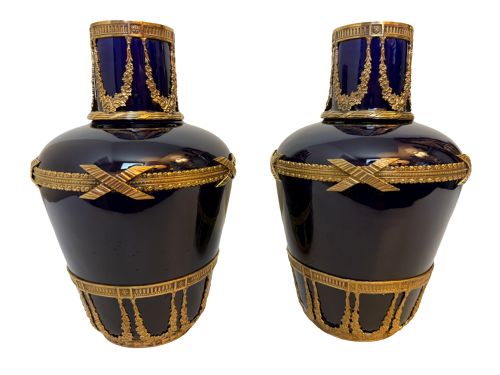
When you search for an antique mantle urns pair, you encounter decorative vessels, lidded urns, and campana-shaped vases designed primarily for symmetrical placement on mantelpieces or side tables. The selection ranges from nineteenth-century French porcelain and ormolu mounts to eighteenth-century Derby frill vases and earthenware.
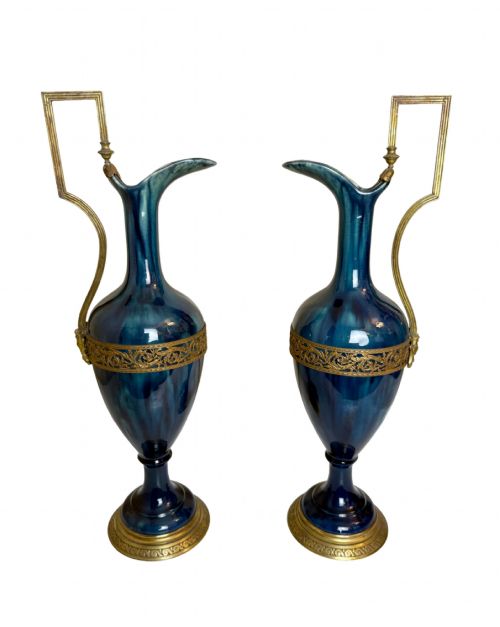
Most examples originate from the nineteenth century, including French Empire, Charles X, and Sevres style pieces alongside English factories like Royal Worcester and Doulton Lambeth. Forms vary from classical campana silhouettes to handled ewers and lidded jars.
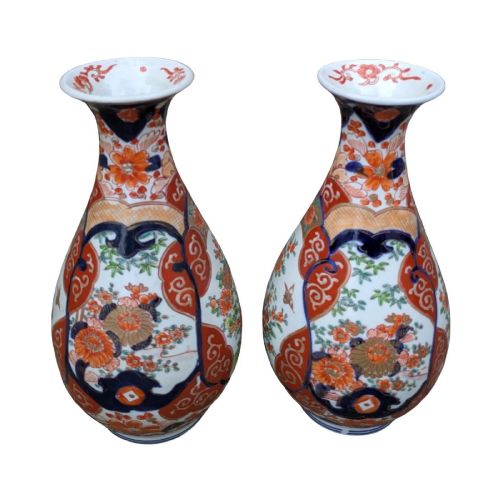
Asian export ceramics also appear within this category, notably Japanese Imari and Satsuma wares, reflecting the Victorian appetite for eclectic interior decoration. These pairings provide the balanced visual weight essential for traditional fireplace displays.
Materials and construction methods
Makers utilised high-fired porcelain, earthenware, and glass, frequently combining them with cast bronze, ormolu, and gilt metal mounts. Ceramic bodies were hand-thrown or slip-cast before receiving hand-painted decoration, enamel work, or monochrome glazes.
Metal components such as bases, handles, and rims were cast in bronze and subsequently gilded, chased, or silvered to frame the ceramic or glass bodies. Marble frequently serves as heavy structural bases for French neoclassical examples, providing stability and visual contrast.
The listings span the eighteenth, nineteenth, and early twentieth centuries, featuring porcelain, earthenware, glass, and gilt bronze.
Judging the quality of pairs
The refinement of the hand-painted decoration and the crispness of the bronze casting determine the standing of an antique pair. Superior pieces exhibit delicate brushwork, such as pate-sur-pate detailing or fine floral studies, executed by named artists or major manufactories.
Matching symmetry within the pair and the precision of the ormolu mounts indicate superior workshop standards. Integrated mounts that fit the ceramic body without excessive adhesive or gaps distinguish higher grade items from standard commercial output.
Jennens & Bettridge·Royal Worcester·Doulton Lambeth·Royal Crown Derby·Minton
The Antique Mantle Urns Pair Glossary
- Ormolu
- Gilt bronze mounts used extensively on nineteenth-century decorative arts. This technique involves applying a finely ground gold-mercury amalgam to bronze before heating.
- Campana
- An inverted bell-shaped vessel derived from classical antiquity. These forms feature flared rims and pedestal bases commonly found in neoclassical metal and ceramic urns.
- Pate-sur-pate
- A ceramic decoration method where successive layers of liquid white clay are built up on a coloured body. This creates a low relief cameo effect.
- Garniture
- A set of three or more matching decorative vases or urns designed for simultaneous display on a mantelpiece. These sets typically comprise a central urn flanked by matching vases or candlesticks.
- Delftware
- Tin-glazed earthenware originating from the Netherlands, traditionally finished in blue and white. The technique imitates imported Chinese porcelain.
Antique Mantle Urns Pair: Frequently Asked Questions
How were these urns displayed historically?
These vessels were placed symmetrically on mantelpieces, often flanked by matching candlesticks or forming part of a three-piece garniture set.
They served to draw the eye toward the fireplace centrepiece while reflecting the ambient light of nineteenth-century rooms.
Can I use these vases for fresh flowers?
Many antique porcelain and glass urns feature delicate painted surfaces or metal mounts that discourage regular exposure to water.
It is safer to display them dry or utilise plastic liners if holding botanical arrangements to protect the interior glaze and mounts.
How do I identify French Empire style?
French Empire pieces typically incorporate heavy gilt bronze mounts, classical architectural forms, and rich patination inspired by ancient Rome and Greece.
Marble bases and campana silhouettes frequently accompany these robust nineteenth-century designs.
What is the difference between porcelain and earthenware?
Porcelain is fired at extremely high temperatures, resulting in a dense, vitrified body that often appears translucent under strong light.
Earthenware is fired at lower temperatures, producing a porous, opaque material that requires a tin or lead glaze to hold liquids.