
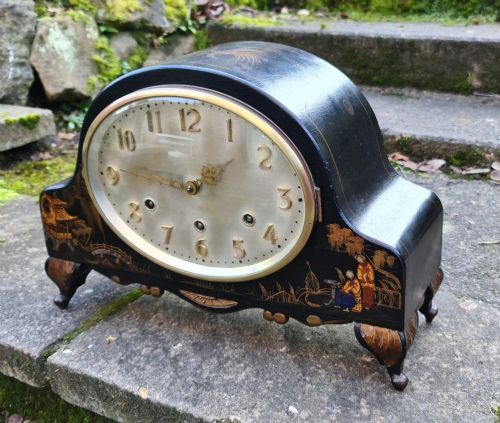
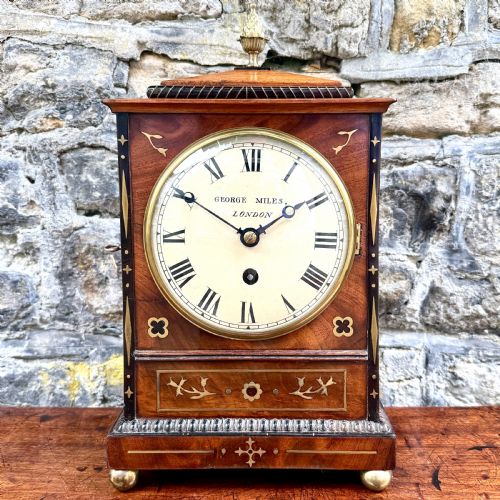
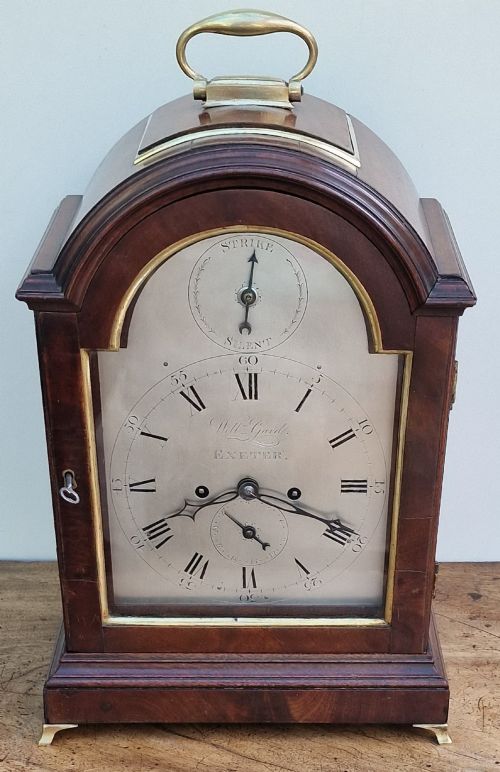
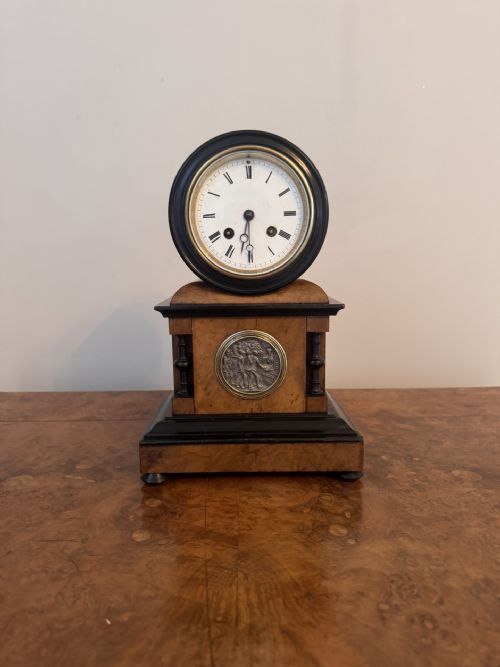
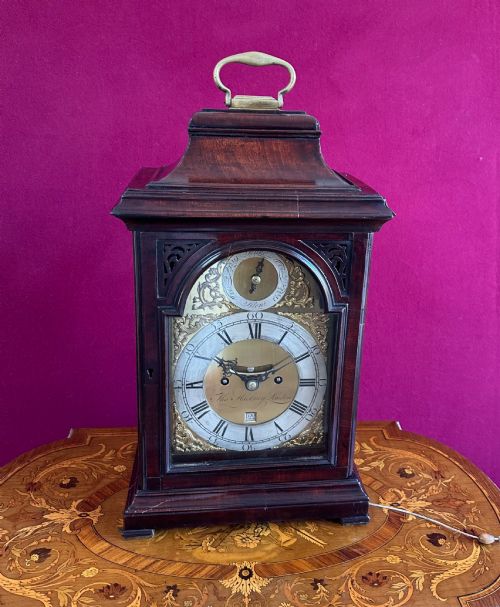

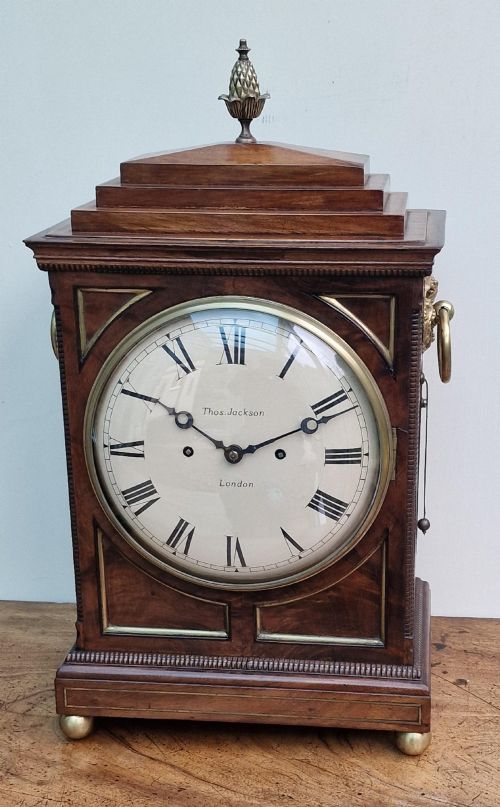
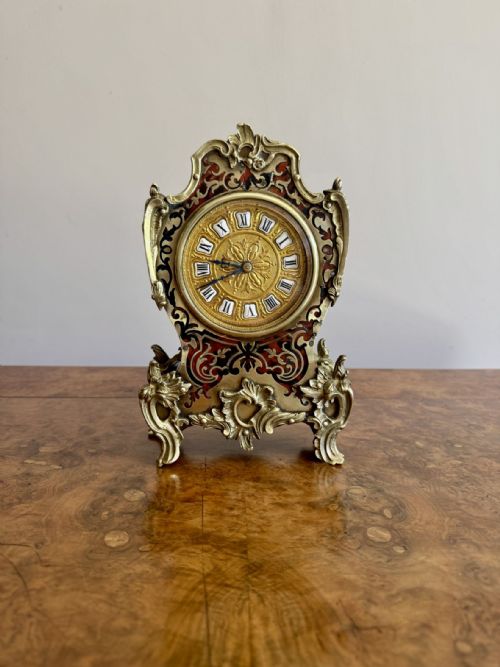

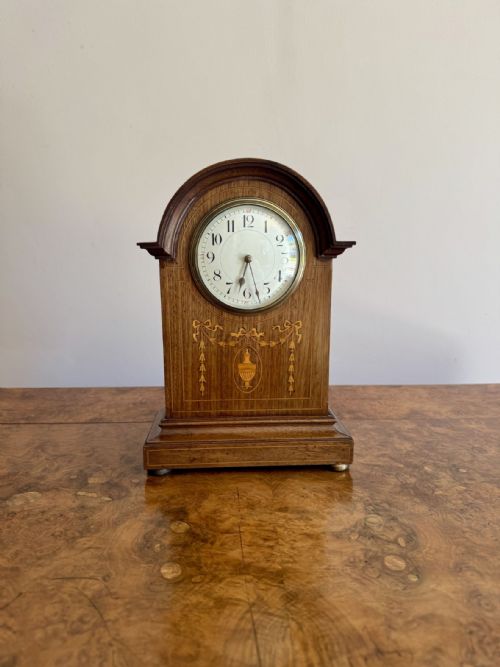


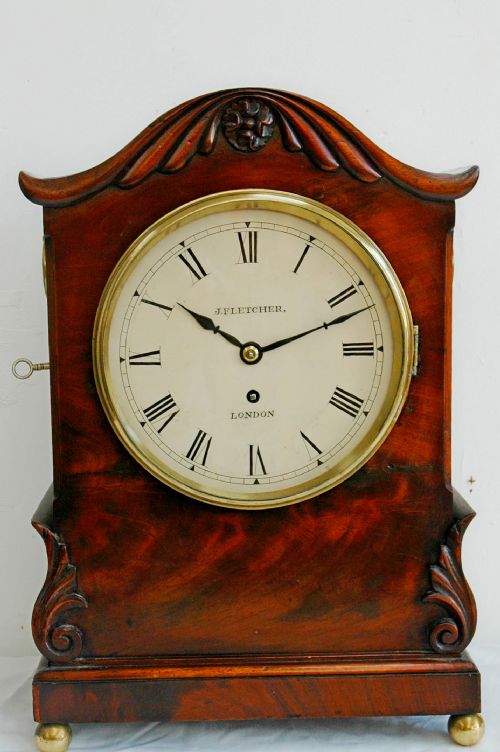

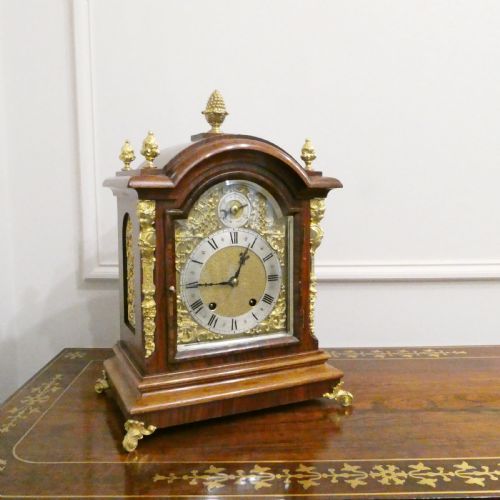

Antique Mantle Bracket Clock
An antique mantle bracket clock keeps time while anchoring a room with polished mahogany, brass, and centuries of cabinetmaking skill.
Antique Mantle Bracket Clock
When you search for an antique mantle bracket clock, you encounter timepieces designed for table surfaces, mantelpieces, and library shelves. The selection ranges from compact table clocks to large architectural pieces intended for prominent display in a room.
Mahogany forms the backbone of the selection, accompanied by rosewood, ebonised wood, and brass-mounted or ormolu French cases. You find Georgian, Regency, and Victorian iterations alongside Edwardian interpretations of earlier styles.
The objects combine domestic utility with decorative ambition, functioning as mechanical timekeepers and sculptural woodwork. Makers housed verge, fusee, and striking movements inside timber and metal housings that reflect their respective decades.
Materials and construction
Cabinetmakers constructed the wooden housings using solid timbers and veneers of mahogany and rosewood, often incorporating brass inlay, marquetry, or tortoiseshell effects. Brass and ormolu mounts provide structural accents and decorative borders around glass panels and dials.
Clockmakers fitted mechanical movements driven by springs and fusee or verge escapements, pairing them with enamelled dials and protective glass bezels. Iron, bronze, and gilt metals formed the chassis and decorative appurtenances of the French and English designs.
Several clocks carry German or French movements inside English mahogany boxes, proving that horologists swapped parts across borders centuries ago.
Qualities of distinction
The refinement of the wooden case separates standard production from superior work, seen in the crispness of brass inlay, marquetry, and moulded cornices. Cabinetmakers who selected figured mahogany and executed tight joints produced pieces that retain their structural integrity.
Movement sophistication dictates value, particularly when an eight-day fusee mechanism or quarter-strike system operates smoothly within the housing. Signed dials by known makers indicate higher workshop standards than unsigned, mass-produced alternatives.
William Gard·Barwise London·Thomas Jackson·George Orpwood·L Vick of Stroud·Webster Cornhill London·Thomas Moss·Schneckenburger·Mappin and Webb·Piggin Norwich·Thomas A Paris·Cording of London
The Antique Mantle Bracket Clock Glossary
- Fusee
- A conical pulley used in spring-driven clocks to maintain equal power as the mainspring unwinds. This mechanism ensures consistent timekeeping across the duration of the wind.
- Verge movement
- An early type of escapement that uses a crown wheel and a rod with pallets to regulate the motion of the clock. It produces a distinctive ticking rhythm.
- Ormolu
- Gilded bronze used for decorative mounts and feet on French cases. The technique involves applying a mercury and gold amalgam to bronze.
- Bracket clock
- A portable timekeeper originally designed to sit upon a matching wall bracket or a table. Over time, the name transferred to the clock style itself.
- Boulle
- A form of marquetry using tortoiseshell and brass inlaid in contrasting patterns. Named after the French furniture maker André-Charles Boulle.
Antique Mantle Bracket Clock: Frequently Asked Questions
Where did bracket clocks get their name?
These timepieces derived their name from the wooden wall brackets originally mounted beneath them to support their weight off the floor or table.
Over subsequent centuries, the term expanded to describe table clocks of this specific architectural box shape, regardless of whether a wall bracket accompanied the piece.
How do fusee movements work?
A fusee movement uses a conical pulley connected to the mainspring via a fine chain or cord. As the spring unwinds and loses tension, the chain moves to a wider part of the cone to maintain consistent torque.
This clever mechanical adjustment prevents the clock from running slower as the power winds down, delivering steady accuracy.
How do I wind an antique clock?
Winding requires a matching key inserted into the dial winding holes, turning gently clockwise until resistance indicates the mainspring is fully tensioned. Care must be taken not to overwind the mechanism.
Many fusee and spring-driven models require attention every eight days, while others demand daily or monthly maintenance depending on the movement train.
Can I place a clock on a working fireplace mantel?
Placing a timber or metal clock directly above an active fire exposes the case to excessive heat and soot. Fluctuating temperatures warp wood, dry out veneers, and damage delicate internal lubricants.
Collectors generally choose mantelpieces that remain unheated or position the piece on a sideboard, library table, or bracket away from direct thermal stress.
How do I tell a Georgian clock from a Victorian one?
Georgian examples emphasise architectural proportion, clean mahogany surfaces, and restrained brass mounts with verge or early fusee movements. Victorian pieces often introduce heavier ornamentation, marble inlays, or French ormolu styling.
Examining the internal movement construction and the timber grain helps distinguish the restraint of the eighteenth century from nineteenth-century revival aesthetics.