


Antique Mantelpiece Candleholder
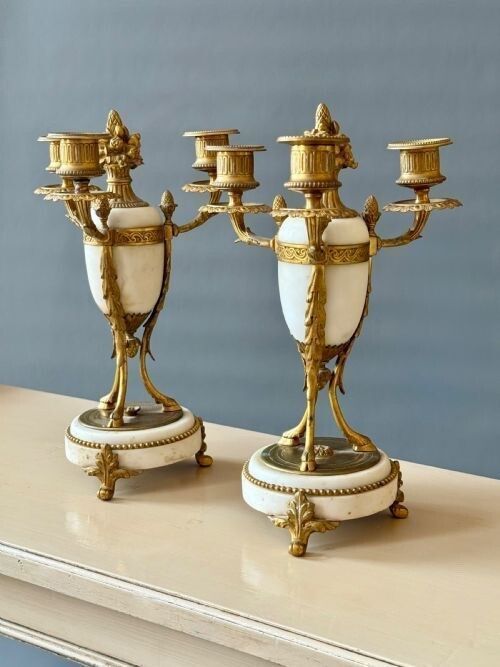
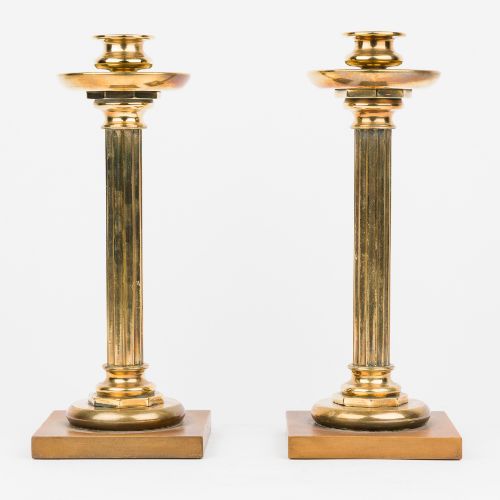
An antique mantelpiece candleholder brings height and metallic sheen to a hearth, most often found here as a matched pair in brass, ormolu or bronze.
Antique Mantelpiece Candleholder
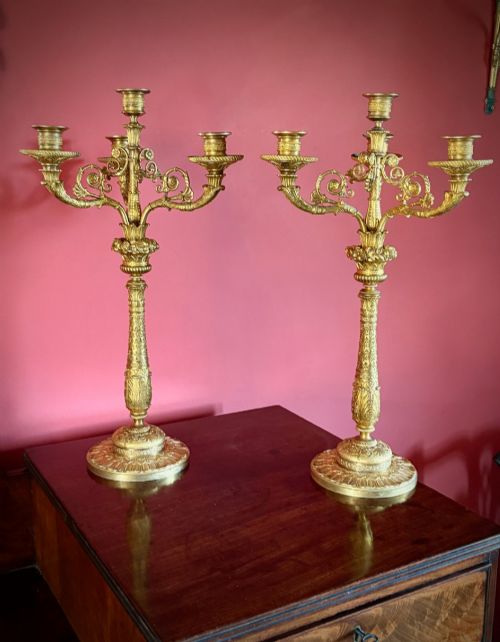
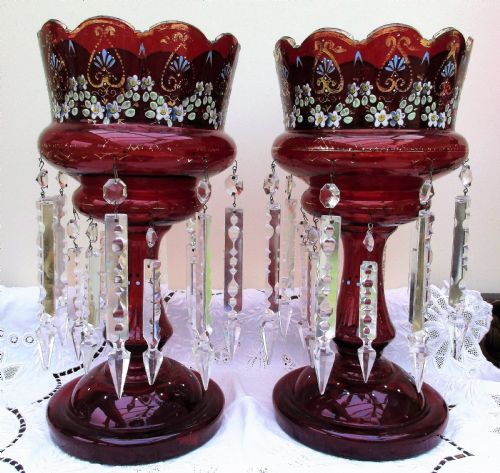
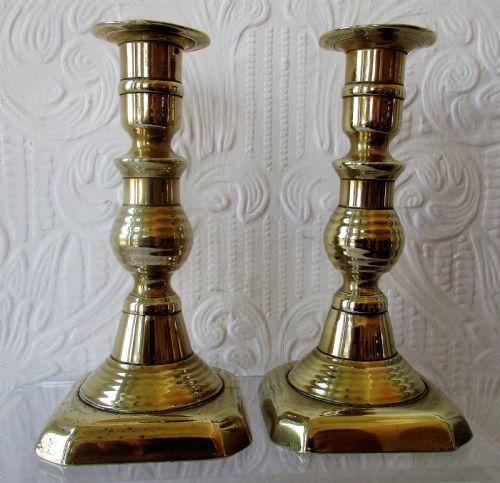
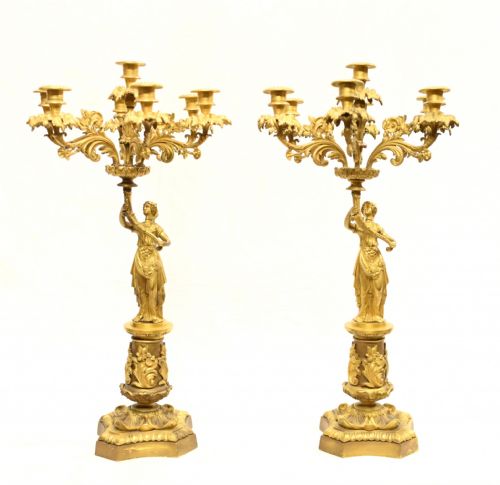
When you search for an antique mantelpiece candleholder, you encounter heavy metal and glass lighting fixtures designed to sit safely upon a fireplace shelf. The selections on this page span the Georgian, Regency and Victorian eras, incorporating styles from French Empire to Renaissance Revival. Candlesticks and multi-arm candelabra dominate the offerings, alongside hanging glass mantel lustres.
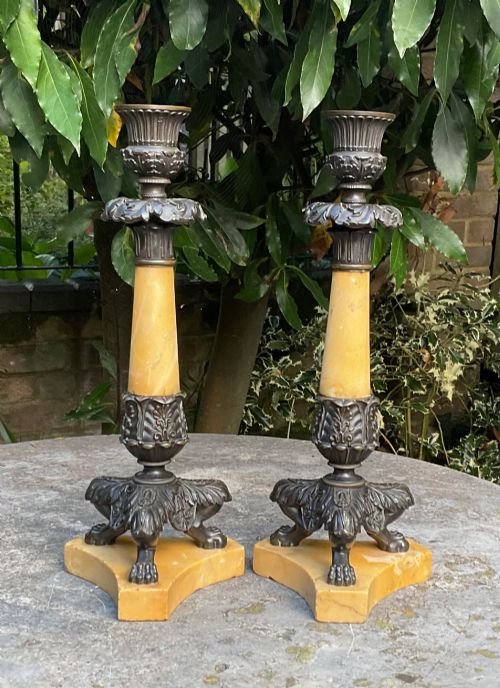
Pairs predominate among the listings, creating a balanced display for either end of a mantel shelf. Many examples combine cast metals with carved marble or coloured glass bodies, reflecting the decorative tastes of the nineteenth century. From simple brass column designs to elaborate figural ormolu pieces, these items served both a practical illumination purpose and a decorative function in period interiors.
Materials and Construction
Foundry work and metal casting define the construction of these pieces, utilising brass, bronze, spelter and ormolu. Artisans chased and gilt the bronze surfaces to create a bright metallic finish that caught the flickering light of candles. Heavy marble and porphyry bases provide stability, anchoring the tall stems and multiple branches securely.
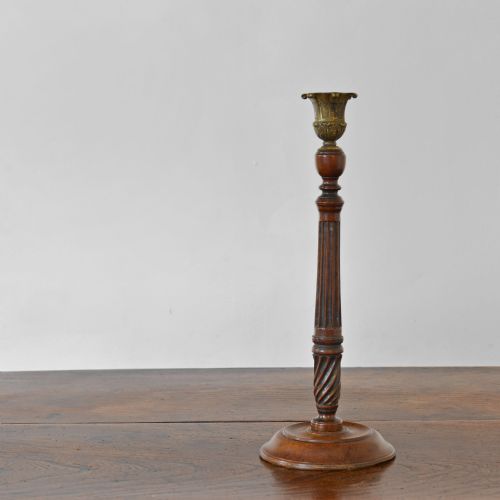
Glassmaking techniques are evident in the ruby and cranberry glass mantel lustres, which feature cut crystal pendants suspended from scalloped rims. Mahogany timber appears in simpler turned wooden candlesticks from earlier periods. Combinations of gold leaf, enamel and applied patination complete the surface treatments recorded in the inventory.
The listings feature nineteenth century brass, bronze and ormolu alongside ruby glass mantel lustres from English and French makers.
Distinctions in Quality
Superior quality shows in the crispness of the metal chasing and the depth of the gilding on bronze and ormolu surfaces. Finely cast figures and intricate foliate scrolls demonstrate the skill of the original metalworker, whereas lower tiers display softer details and simpler moulded forms. The weight of the metal and the precision of the joints between components also separate standard production from exceptional examples.
Material selection further divides the range, with genuine white marble and porphyry bases indicating higher production standards than cheaper substitutes. For glass components, the clarity of the crystal pendants and the depth of colour in ruby glass lustres mark out the better pieces. Complete sets of original hanging prisms intact on a mantel lustre represent a higher grade of preservation.
Claude Clodion
The Antique Mantelpiece Candleholder Glossary
- Ormolu
- A method of applying finely ground high-carat gold to a bronze object using a mercury amalgam. This technique produces a rich golden finish characteristic of French decorative metalwork.
- Mantle Lustre
- A decorative glass or porcelain vase fitted with a ring of cut crystal pendants. These fixtures refract candlelight through the hanging prisms.
- Spelter
- A zinc alloy used as a less expensive alternative to bronze for figural castings. It is often painted or bronzed to imitate heavier metals.
- Candelabra
- A branched lighting fixture designed to hold multiple candles simultaneously. They frequently incorporate a central light with two or more side arms.
- Porphyry
- An extremely hard igneous rock with large crystals, valued for its purple or red colour and used for decorative bases.
Antique Mantelpiece Candleholder: Frequently Asked Questions
How do I style mantel candleholders?
Place a matched pair at opposite ends of the mantelpiece to create visual symmetry around a central mirror or clock. Ensure the height of the pieces complements the depth of the shelf and the surrounding wall space.
Keep the immediate area clear of heavy drapery to maintain safety and allow the reflective brass or ormolu surfaces to catch natural light during the day.
Were these always used in pairs?
Many lighting fixtures from the Georgian and Victorian periods were manufactured as balanced pairs to adorn formal fireplaces and side tables. Symmetrical placement was a fundamental principle of interior arrangement during these eras.
Single examples do appear, often surviving from larger sets or designed originally for specific compact wall spaces.
How do I clean antique brass and ormolu?
Dust the metal surfaces gently with a soft, dry microfibre cloth to remove everyday particles. Avoid abrasive commercial metal polishes, which can strip away original fire gilding or historical patination.
Consult a professional restorer if the piece requires deeper cleaning or if the protective lacquer has degraded over time.