






Antique Mantel Lusters
These antique mantel lustres are brilliant ornamental centerpieces designed to catch the firelight, and you want a matched pair for your mantelpiece.
Antique Mantel Lusters
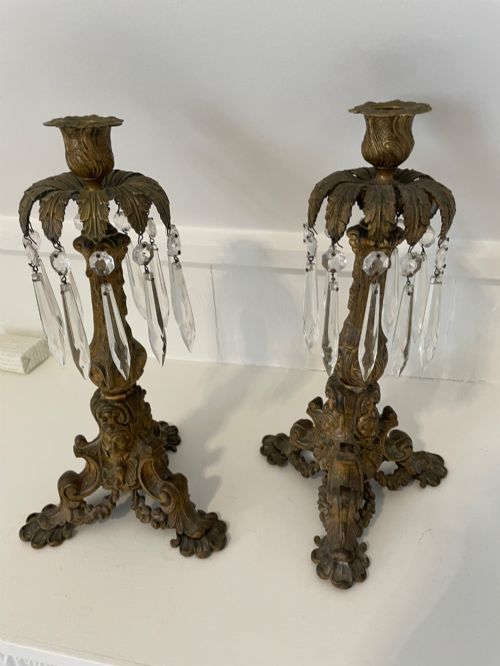
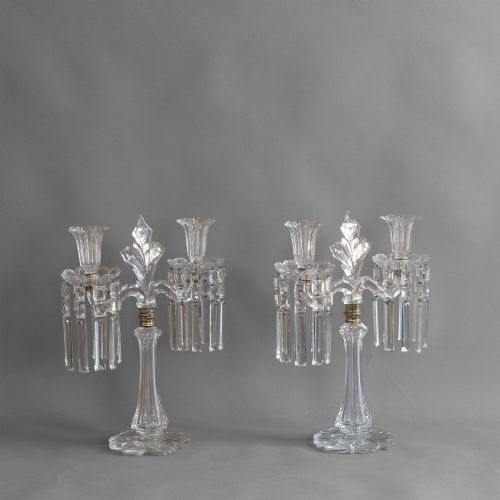
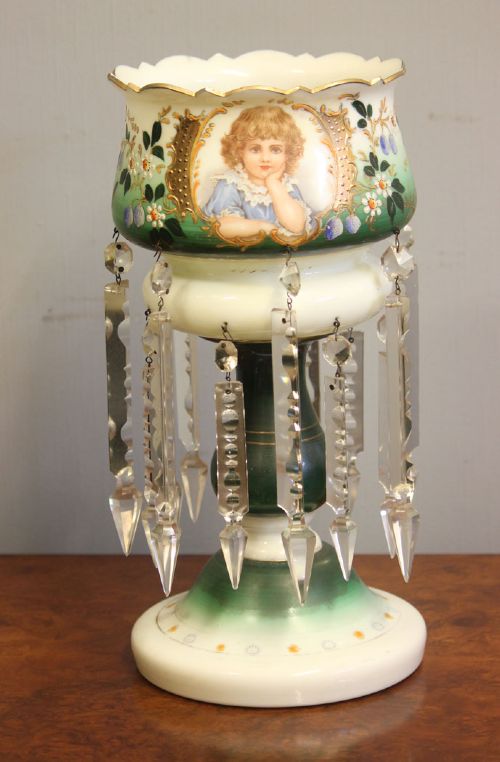
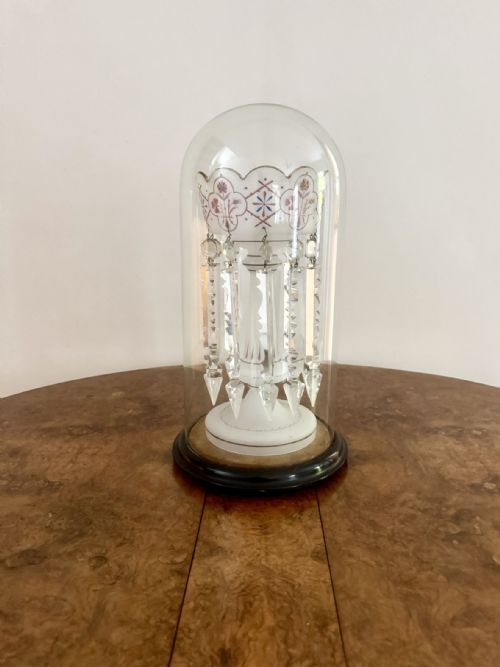
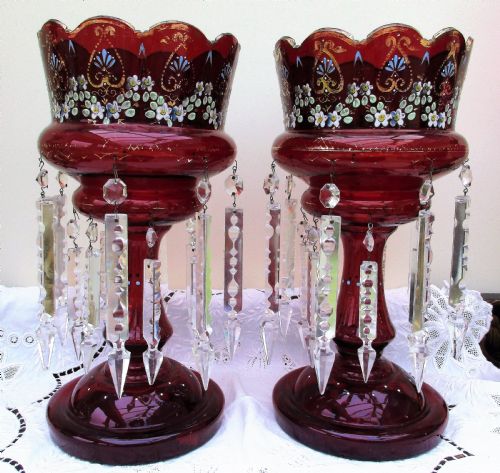
When you search for antique mantel lustres, you are looking at decorative candelabras and vase-like ornaments fitted with dangling crystal prisms. The examples you are most likely to meet on this page date from the nineteenth century, including Victorian and Regency periods, rendered in vibrant coloured glass.
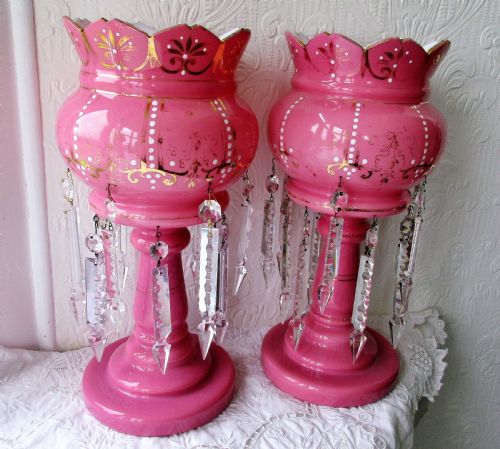
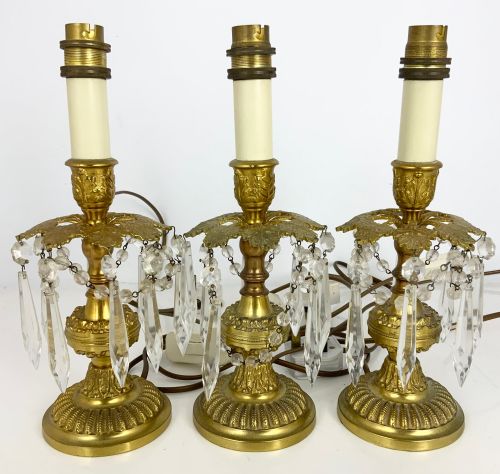
Most pieces appear in pairs designed to flank a clock or mirror on a drawing room fireplace. Forms range from simple glass candlesticks hung with drops to grand French gilt-brass candelabras and Staffordshire earthenware figures.
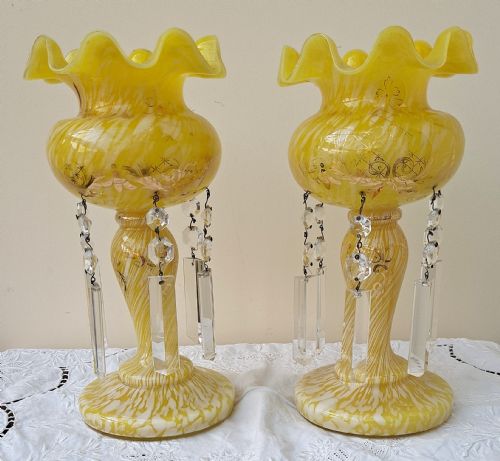
Makers produced these decorative objects in various hues such as ruby, green, pink, yellow, and cranberry glass. Alongside standard table lustres, the selections include overlaid glass and flash glass variations from Bohemian and English workshops.
How they were made
Glassmakers utilised techniques like cutting, overlaying, and flash staining to create coloured glass bodies. Artisans then applied gold leaf, enamel, and gilt highlights to the glass surfaces.
Prisms and drops of cut crystal or cut glass were suspended from the rims using metal wires. Bronze, ormolu, and gilt-brass mounts provided sturdy bases for the more architectural table lustres and candelabras.
Antique Mantel Lusters Retail Price Guide 2026
Typical asking prices for mantel lusters among the pieces listed under this phrase on Sellingantiques today, from the lower quarter to the upper quarter. They describe what is for sale here now, not the wider market.
The listings show nineteenth-century examples spanning Victorian, Regency, and William IV periods, alongside French gilt-brass and Staffordshire ceramic forms.
What varies in quality
The clarity and depth of the coloured glass separate standard examples from superior items. Rich ruby, cranberry, and layered Bohemian flash glass demand greater skill in the glasshouse than plain clear or light pastel alternatives.
The completeness and original match of the hanging glass drops dictate the overall standard of a pair. Lustres retaining their full complement of faceted crystal prisms with sharp edges command higher regard than those with mismatched or replacement drops.
Charlotte Rhead
The Antique Mantel Lusters Glossary
- Lustre
- A decorative glass or ceramic vase fitted with a ring of hanging crystal prisms. These pendants catch and reflect candle or daylight.
- Prism
- A cut glass or crystal drop suspended from the rim of a lustre. They refract light across the room.
- Flash glass
- A vessel formed by blowing a thin layer of coloured glass over a clear or contrasting body. Artisans then cut through the top layer to reveal the contrasting colour underneath.
- Ormolu
- Gilded bronze used for mounts and decorative fittings on nineteenth-century pieces. The technique provides a rich metallic finish.
- Opaline
- An opaque or translucent pale glass popular in nineteenth-century decorative objects. It often appears in soft pastel tones.
Antique Mantel Lusters: Frequently Asked Questions
What are antique mantel lusters?
These are ornamental glass or ceramic vessels adorned with hanging crystal pendants designed to reflect light from a mantelpiece.
They functioned primarily as decorative items rather than main lighting sources during the nineteenth century.
How do I style mantel lusters?
Place a matched pair symmetrically on either side of a central mirror, clock, or urn on your fireplace mantel.
Keep them away from high traffic areas where the hanging glass drops might get brushed and knocked loose.
Are mantel lustres always a pair?
Many survive as pairs because they were originally manufactured to flank central fireplace ornaments.
Some single pieces and sets of three do appear, reflecting different nineteenth-century display arrangements.
How do I date an antique lustre?
Examine the glass colour, cutting style, and the shape of the metal pins holding the crystal drops.
Victorian and Regency pieces display distinct hues like ruby red and cranberry alongside heavier bronze or gilt bases.