



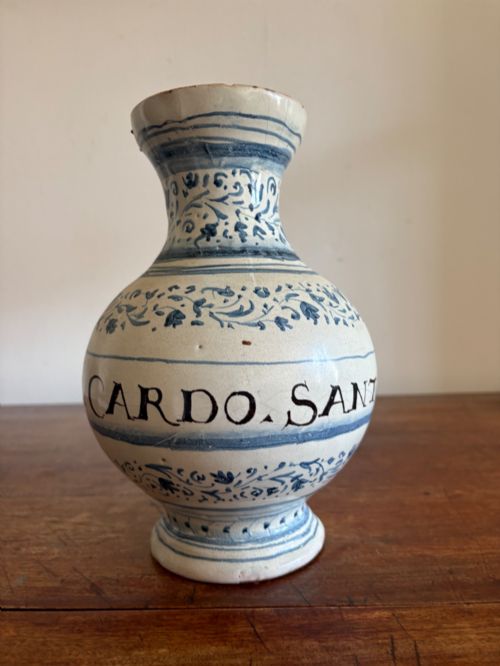


Antique Majolica Jars
These antique majolica jars bring rich colour and historic utility into a room, holding centuries of ceramic craft in their glazed surfaces.
Antique Majolica Jars
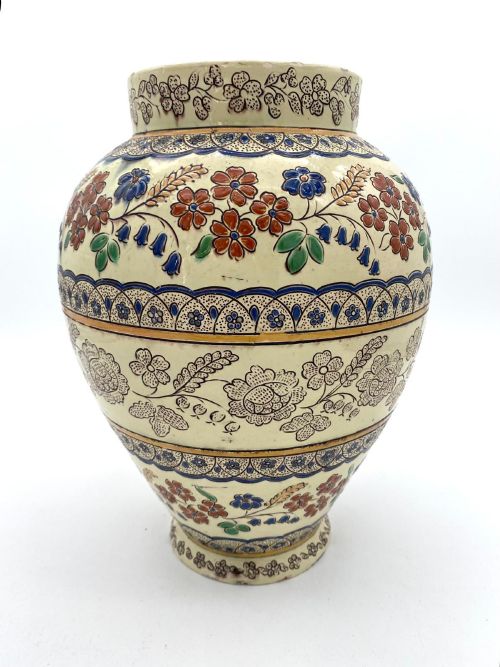
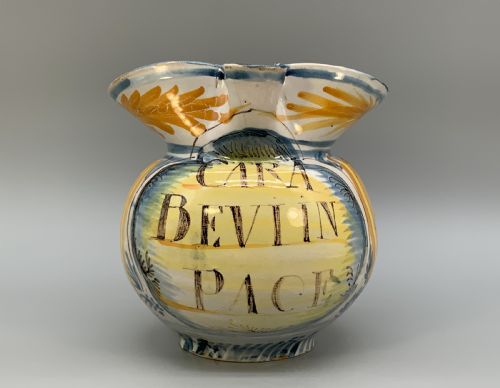
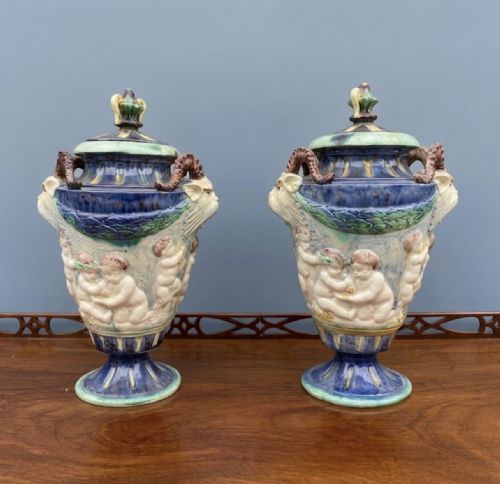
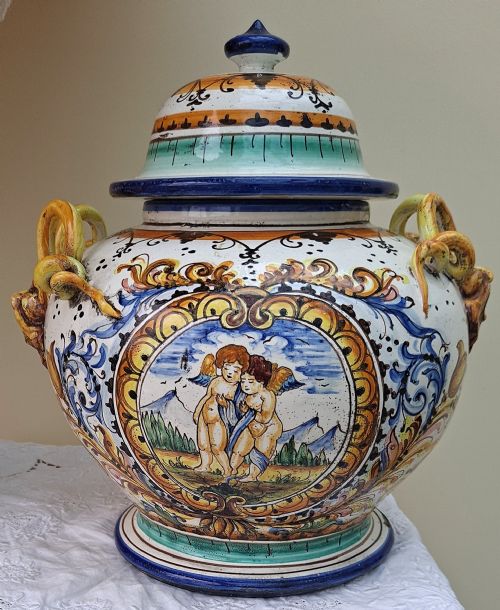
When you search for antique majolica jars, you encounter vessels rooted in utilitarian and decorative traditions spanning the seventeenth to the nineteenth centuries. These pieces encompass apothecary containers, pharmacy wet drug jugs, albarellos, and lidded vases originating from Italian, French, and Swiss workshops.
The most common examples on this page are nineteenth-century iterations alongside eighteenth-century Italian apothecary jars and albarellos. Makers shaped these earthenware bodies to hold medicines, dry goods, or liquids, employing forms that transitioned from practical storage to ornamental display.
The lineage reaches back through Italian Renaissance and Baroque styles, touching Victorian revivals and folk art interpretations. Buyers select them for their historic presence and the painted narratives wrapping their ceramic contours.
How they were made
Potters shaped earthenware and terracotta bodies on the wheel or in moulds before applying a tin glaze or lead glaze. This opaque white or tinted surface provided a smooth ground for subsequent painting.
Artisans applied pigments in polychrome, manganese, yellow, and blue directly onto the unfired or fired glaze. Firing fused the mineral oxides into the tin glaze, locking in the dense colours and distinctive surface sheen.
Antique Majolica Jars Retail Price Guide 2026
Typical asking prices for majolica jars among the pieces listed under this phrase on Sellingantiques today, from the lower quarter to the upper quarter. They describe what is for sale here now, not the wider market.
Listings feature earthenware and terracotta bodies finished with tin glazes and lead glazes across seventeenth, eighteenth, and nineteenth-century periods.
What varies in quality
The distinction between ordinary and exceptional pieces lies in the control and expressiveness of the brushwork across the tin glaze. Fine examples display confident, detailed pigment application in cobalt blue, manganese, and polychrome, whereas lesser pieces show hurried or muddy execution.
Proportion and the preservation of original lids also define the better items in this range. Surviving covers that match the exact glaze and period of the base elevate a jar's integrity significantly.
Minton·Albert Carrier
The Antique Majolica Jars Glossary
- Albarello
- A cylindrical pharmacy jar designed with a waisted body for a secure grip during apothecary use. This shape originated in the Middle East and became a staple of Italian workshops.
- Tin Glaze
- An opaque white ceramic coating containing tin oxide that accepts painted pigments directly. It defines the smooth surface characteristic of majolica and faience.
- Polychrome
- A multi-coloured palette utilised by painters to render figures, foliage, and heraldic motifs. It distinguishes these pieces from strict blue and white wares.
- Wet Drug Jug
- An apothecary vessel featuring a spout and handle for pouring liquid medicines and syrups. They often bear painted pharmaceutical labels identifying their original contents.
- Maiolica
- The Italian term for tin-glazed earthenware decorated with metallic oxide pigments. The designation encompasses both utilitarian apothecary vessels and ornamental vases.
Antique Majolica Jars: Frequently Asked Questions
What were antique majolica jars used for?
These vessels originally served as functional storage containers in apothecaries, pharmacies, and domestic dispensaries. They held dry drugs, ointments, and liquid medicines necessary for daily medical practice.
Over time, many transitioned from utility to display as collectors recognised the artistry of their painted surfaces and sculptural forms.
How do I tell an eighteenth-century jar apart from a nineteenth-century one?
Eighteenth-century examples often display softer tin glazes with hand-mixed pigments characteristic of traditional Italian potteries like Savona or Naples. The brushwork tends to follow looser, painterly traditions.
Nineteenth-century revival pieces, including Victorian and Alhambra-style works, frequently exhibit brighter polychrome palettes and crisper glaze formulations that reflect industrial improvements in ceramic production.
How should I display an antique jar at home?
Place them on sturdy shelves, cabinets, or sideboards where their painted surfaces and varied silhouettes can be appreciated in natural light. Their robust earthenware bodies require stable flat surfaces away from high-traffic edges.
Pairing lidded urns with open albarellos creates visual rhythm by contrasting vertical heights and differing handle configurations.
Did all pharmacy jars come with covers?
Many apothecary jars and albarellos were originally made with matching lids to protect their contents from moisture and dust. However, lids were easily misplaced or broken during centuries of handling.
Finding a jar with its original matching cover is uncommon, which influences how collectors evaluate a complete piece.