






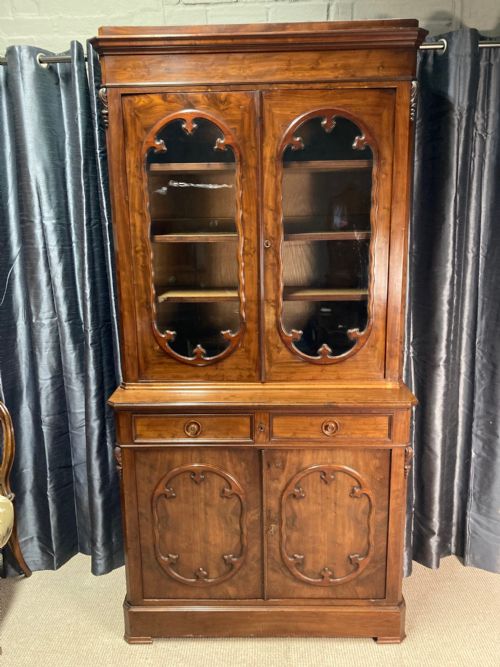

Antique Mahogany Library Case
An antique mahogany library case holds books safely behind glazed doors while grounding a study in rich timber tones.
Antique Mahogany Library Case
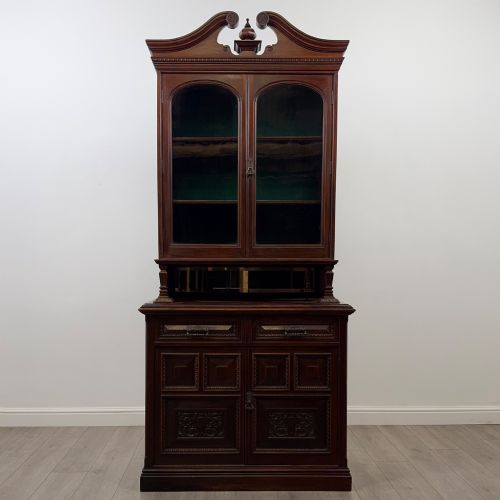
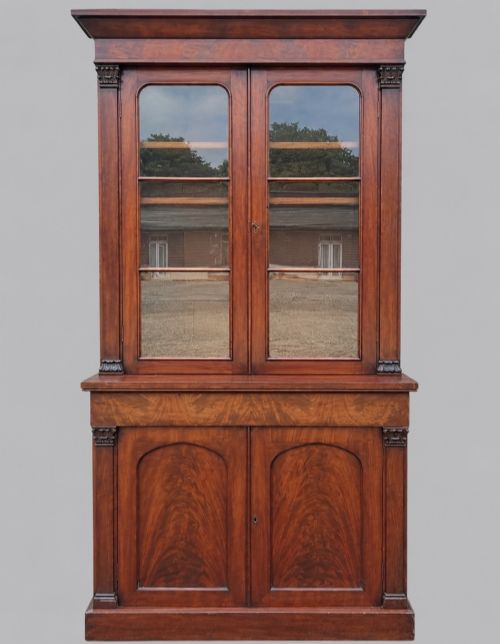
An antique mahogany library case serves as a grand storage piece for books and papers, combining upper display cabinets with lower enclosed cupboards. The versions you meet on this page span the Georgian, Regency, William IV, Victorian, and Edwardian eras, each bringing distinct architectural proportions to the room.
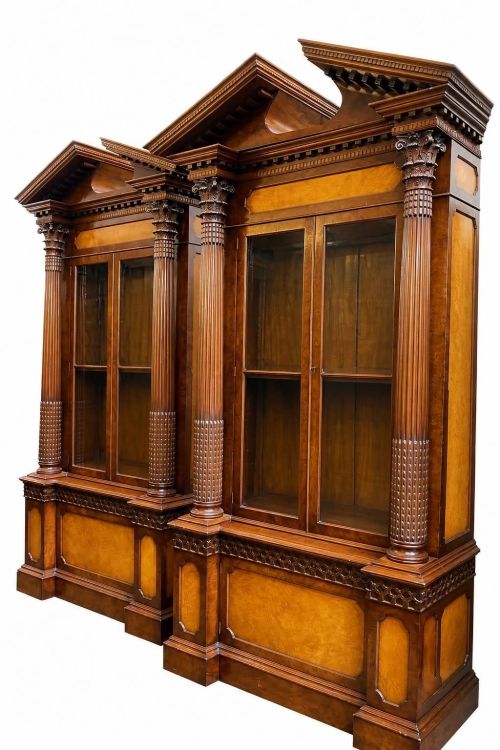
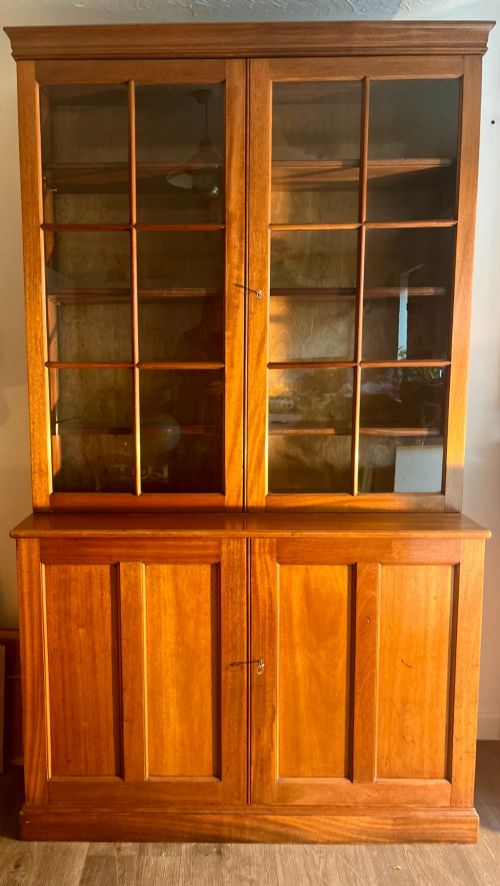
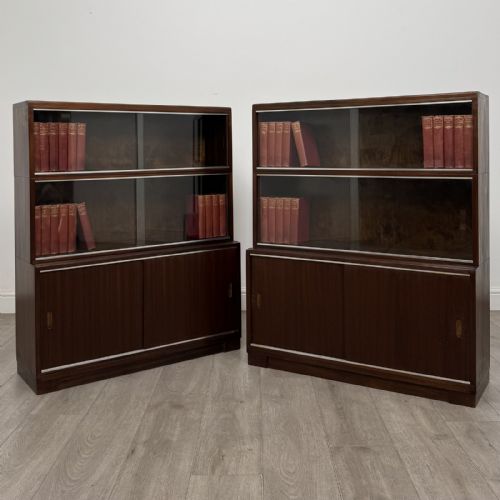
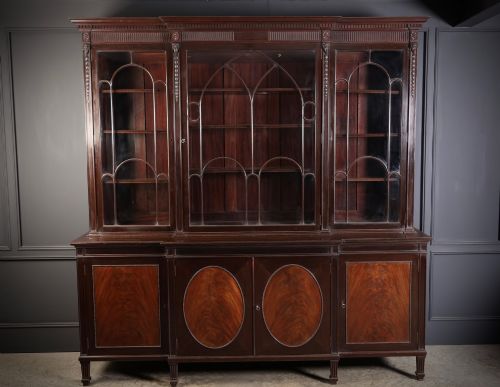
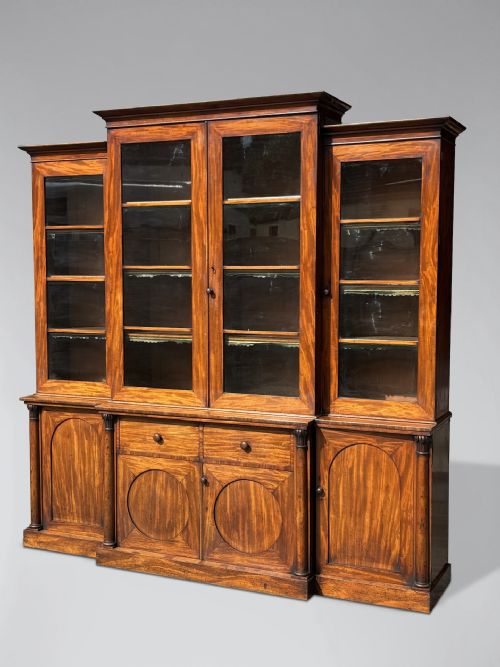
The form ranges from tall breakfront cabinets with swan neck pediments to narrow two-door cupboards and modular stacking units. Many examples incorporate adjustable shelves behind glazed or astral-glazed doors, while related library furnishings include fusee clocks, drum tables, and cased telescopes.
Makers such as Maple & Co. represent the refined cabinet-making traditions found within these listings. Buyers seek these pieces to bring traditional workspace organisation and deep reddish-brown timber character into a modern interior.
How they were made
Cabinet-makers built these library cases primarily using solid mahogany and mahogany veneers, often accented with satinwood inlay or supported by oak carcass framing. Glazing bars formed geometric panes of glass, while brass hardware, metal fittings, and silvered metal details completed the mechanical elements of desks and clocks.
Structural methods involved precision joinery, sturdy bracket or plinth bases, and architectural cornices such as swan neck pediments. The timber received hand-applied polish that enhanced the natural grain patterns developed over the nineteenth and early twentieth centuries.
Antique Mahogany Library Case Retail Price Guide 2026
Typical asking prices for mahogany library case among the pieces listed under this phrase on Sellingantiques today, from the lower quarter to the upper quarter. They describe what is for sale here now, not the wider market.
Listings span the Georgian, Regency, William IV, Victorian, and Edwardian periods, utilising mahogany, glass, brass, oak, and satinwood.
What varies in quality
The distinction between standard cabinet-making and superior work lies in the selection of figured mahogany veneers and the crispness of inlaid satinwood details. Finer cases display balanced proportions across breakfront layouts and meticulous joinery in the assembly of astragal glazing bars.
Hardware execution and secondary timbers like oak also signal grade, where original brass fittings and robust internal shelving systems elevate the piece. The integrity of the glass panels and the precision of the cornice carving further separate utilitarian storage from master-built library furniture.
Maple & Co.·Walker·Dent·McCabe·Matthew Berge
The Antique Mahogany Library Case Glossary
- Breakfront
- A large cabinet design where the central section projects forward from the flanking outer sections. This architectural arrangement creates depth and visual interest in formal rooms.
- Astral glazing
- A framework of slender wooden bars dividing a glass door into smaller panes. This technique lightens the visual weight of large bookcase doors.
- Swan neck pediment
- A decorative broken pediment featuring two curved scrolling ends shaped like the neck of a swan. It often crowns the top of formal Georgian and Victorian bookcases.
- Fusee clock
- A clock movement driven by a spring and a conical pulley that equalises the power as the spring unwinds. These mechanisms ensured precise timekeeping in nineteenth-century libraries.
- Satinwood
- A lustrous yellow-gold timber used sparingly for contrasting stringing and decorative inlay. It provides a bright visual accent against dark mahogany.
Antique Mahogany Library Case: Frequently Asked Questions
How do I date an antique library case?
Dating relies on architectural styles, construction methods, and timber characteristics. Georgian pieces typically show restrained classical lines, whereas Victorian examples introduce heavier pediments and robust proportions.
Secondary woods and glass types also offer clues. Hand-blown glass panels and oak drawer linings point firmly to earlier nineteenth-century production.
Are the shelves adjustable?
Many Victorian and Edwardian library cases feature adjustable shelving systems supported by wooden ratchets or metal pins. This allowed owners to alter shelf heights for varying book sizes.
Fixed shelves remain more common in earlier Georgian and provincial iterations. Checking the interior uprights reveals whether the shelving layout can be modified.
How should I care for mahogany timber?
Mahogany thrives in stable room environments away from direct sunlight and sudden radiator heat. Consistent humidity prevents the solid timber and veneers from drying or splitting.
Occasional dusting with a soft, dry cloth maintains the polished surface. Heavy wax polishes are rarely needed if the historic finish remains intact.