
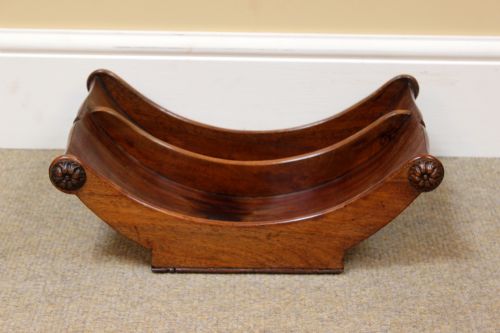

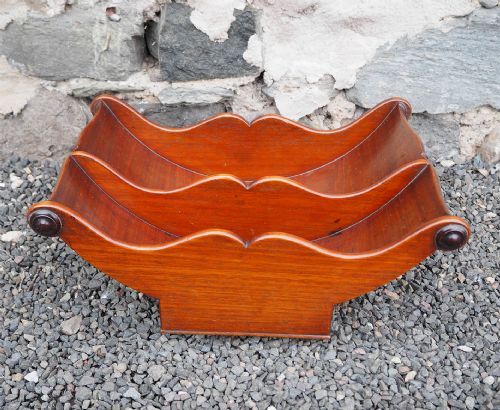


Antique Mahogany Dining Coaster
An antique mahogany dining coaster protects the table while carrying cheese or wine bottles around the room with ease.
Antique Mahogany Dining Coaster
An antique mahogany dining coaster is a low-profile serving accessory designed to glide across the polished timber of a dining table during or after a meal. Most examples on this page date from the Georgian, Regency, and nineteenth-century periods, taking the form of bottle stands or crescent-shaped cheese truckles. These pieces serve to move wine bottles and Stilton stands smoothly between guests without scratching the surface of the dining table.
The primary variations include circular single-bottle stands and elongated cheese coasters, sometimes referred to as fruit bowls or truckles. Many incorporate subtle rolling mechanisms such as brass castors or rotating lazy-susan bases to aid movement. Their forms reflect formal dining rituals of the eighteenth and nineteenth centuries, when heavy decanters and large cheeses required dedicated portable carriers.
Materials and construction
Cabinet makers selected dense, figured mahogany for its rich grain and durability, frequently pairing the timber with turned fruitwood or carved details. Brass fittings, including castors and delicate gallery rails, appear regularly to facilitate movement and secure the bottles or cheese in place.
Construction techniques rely on traditional joinery, turning on a lathe, and precise carving executed by hand. Surfaces often display a deep patina developed through centuries of polishing with traditional wax.
Listings span the eighteenth and nineteenth centuries, featuring Georgian, Regency, and Victorian periods alongside materials such as mahogany, brass, fruitwood, and bone.
Distinctions in quality
Quality rests on the crispness of the hand-carving, the weight and choice of the mahogany timber, and the originality of the brass hardware. Superior examples display balanced proportions, finely turned spindles, and fluid movement on their original castors.
Simpler workshop pieces show less intricate detailing and heavier framing, whereas attribution to known makers or particularly unusual rotating configurations elevate the standing of a piece within the category.
James Mein of Kelso
The Antique Mahogany Dining Coaster Glossary
- Cheese truckle
- A crescent-shaped or boat-shaped dish designed specifically to hold large cheeses like Stilton on the dining table. They frequently feature small wheels underneath to allow easy passing from guest to guest.
- Bottle stand
- A small circular tray or coaster used to hold a wine bottle or decanter and protect the table finish. These often incorporate a turned wooden base and a raised rim.
- Castor
- A small wheel attached to the underside of furniture or serving pieces to permit rolling. In dining coasters, these are typically made of brass.
- Lazy-susan
- A revolving tray placed on a table to assist in moving food or serving items around. The nineteenth-century examples utilise a central pivot mechanism for smooth rotation.
Antique Mahogany Dining Coaster: Frequently Asked Questions
What is a cheese coaster?
A cheese coaster is a curved serving tray designed to hold a wedge of cheese, such as Stilton, at the table. They allow the cheese to be passed easily along the length of the table.
Most historic examples take a crescent form and sit upon small wheels or castors.
How were bottle stands used?
Bottle stands held wine bottles and decanters securely during dining. They prevented condensation and wine rings from damaging polished wooden table surfaces.
Guests would slide or roll the stand across the table to share wine without lifting heavy decanters.
How do I date a Georgian coaster?
Dating relies on timber selection, turning styles, and hardware details such as brass castors. Georgian pieces often feature rich, dense mahogany and restrained hand-carved decoration.
Comparing the construction methods to documented pieces from the eighteenth century helps confirm the period.
Can I use these for modern dining?
These pieces function well for serving wine bottles or cheese boards during contemporary meals. Their original purpose translates directly to modern hosting.
Care should be taken to protect the historic wood from moisture and heavy impacts during daily use.