
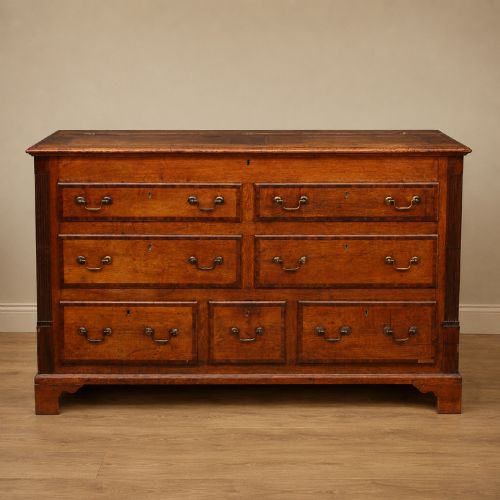

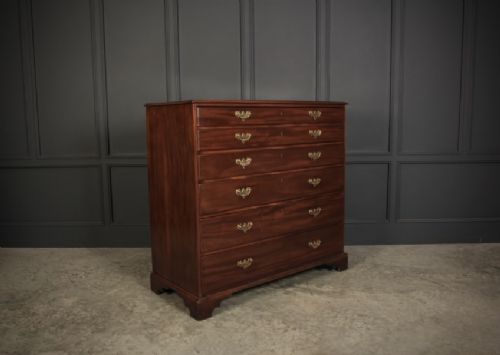


Antique Mahogany Coffer Drawers
Antique mahogany coffer drawers bring solid timber storage and deep historical utility into a room.
Antique Mahogany Coffer Drawers
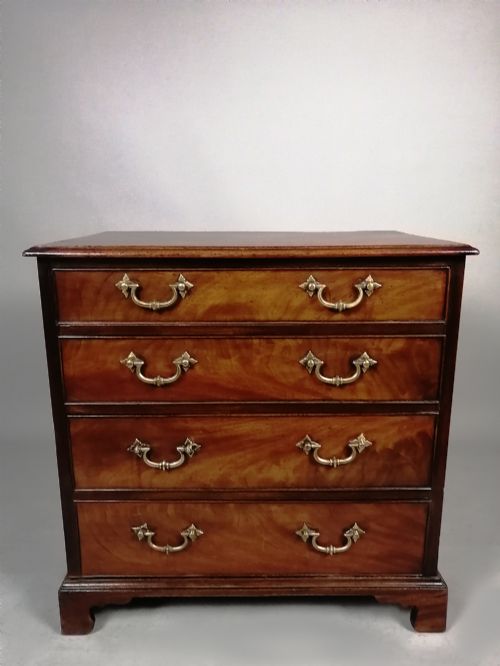
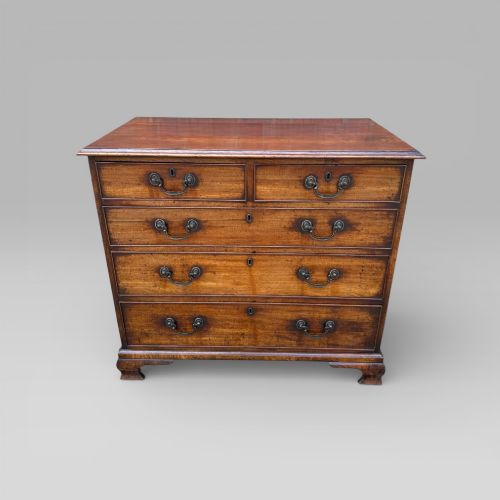
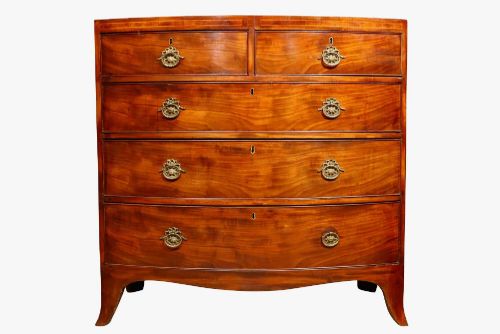
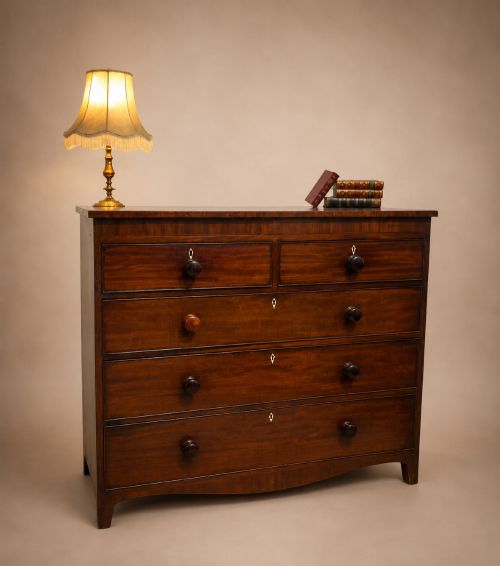
When searching for antique mahogany coffer drawers, you will encounter substantial storage furniture designed to hold garments, linens, and household goods. The selection spans standard chests of drawers, mule chests, blanket boxes, and trunks with integrated drawers from the eighteenth and nineteenth centuries.
Georgian and Regency examples dominate the offerings, built from dense tropical hardwoods like Cuban mahogany alongside flame mahogany veneers. You will also find variations incorporating secondary timbers such as oak and pine within their internal carcases.
Materials and construction methods
Cabinet makers utilised solid mahogany and figured veneers applied over robust framing timbers like oak and pine. Brass fittings such as drop handles, escutcheons, and carrying brackets provide both structural reinforcement and decorative contrast against the dark wood grain.
Drawer construction typically relies on hand-cut dovetails and panel backs, reflecting the joinery standards of the Georgian and Victorian periods. Crossbanding, stringing, and mother of pearl inlay appear on select pieces to frame the drawer fronts and top surfaces.
Listings span the 18th Century, Georgian, Regency, and Edwardian periods, utilising mahogany, oak, pine, and brass.
Assessing quality in mahogany chests and coffers
Quality rests in the selection of the timber, particularly the choice of figured flame mahogany veneer or dense Cuban mahogany for primary surfaces. The crispness of the dovetail joints and the integrity of the secondary woods inside the drawers reveal the standard of workshop execution.
Proportion and the retention of original brass hardware elevate certain examples above standard utility pieces. Retaining original feet, backboards, and working locks distinguishes superior survivals from those altered or rebuilt during later restorations.
J Moorcroft
The Antique Mahogany Coffer Drawers Glossary
- Mule chest
- A storage chest fitted with one or more working drawers across the base. This form bridges the traditional blanket box and the standard chest of drawers.
- Flame mahogany veneer
- A thinly sliced wood layer cut from timber fork joints to create a fiery, patterned grain effect. Makers applied this decorative surface over stable secondary woods.
- Crossbanding
- A narrow strip of veneer laid perpendicularly to the surrounding grain pattern to frame a drawer front or tabletop. It adds a neat border of contrasting wood tone.
- Brushing slide
- A pull-out shelf integrated above the top drawers of a chest, used historically for folding clothes or grooming. It slides flush into the carcase when not in use.
- Serpentine chest
- A case piece featuring a gently undulating front profile with a convex centre flanked by concave curves. This curved shape requires advanced cabinet making skill.
Antique Mahogany Coffer Drawers: Frequently Asked Questions
What is a mule chest?
A mule chest combines a top-opening storage compartment with one or more lower drawers for smaller items.
This hybrid form evolved during the Georgian period to offer more organised storage without requiring a full wardrobe.
How do I date a mahogany chest?
Dating relies on observing construction methods, timber choices, and hardware styles across the piece. Earlier eighteenth-century pieces often feature solid Cuban mahogany and hand-cut dovetails, while nineteenth-century versions introduce veneers and factory-produced elements.
Examining secondary woods like oak or pine inside the carcase also helps confirm the period of manufacture.
Where were these pieces used?
These pieces served primarily in bedrooms, dressing rooms, and grand hallways of Georgian and Victorian homes.
Housekeepers and families used them to store textiles, linens, blankets, and personal garments securely.
Are brass handles original?
Original brasses show appropriate wear, correct casting techniques, and fit the existing mounting marks on the drawer wood.
Replacements often leave extra plugged holes behind the backplates or feature modern alloy compositions.