

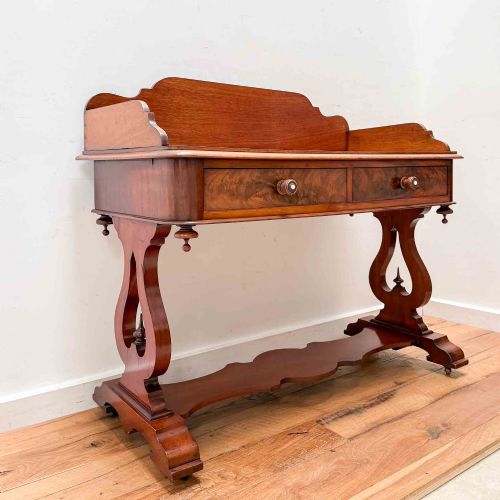


Antique Lyre Table
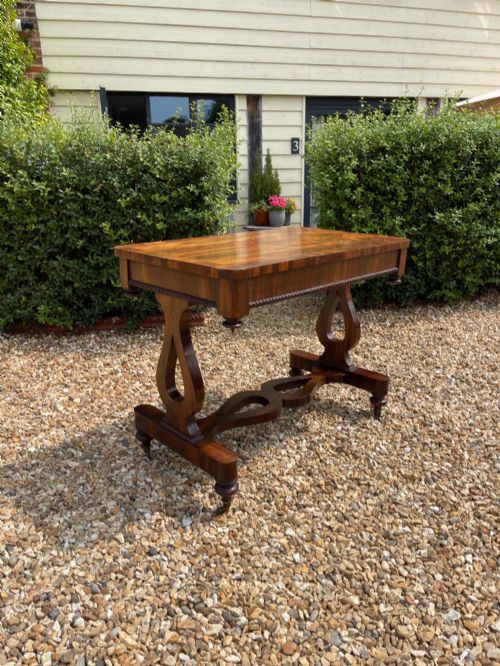
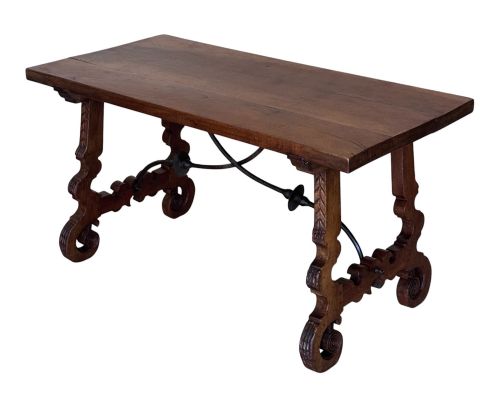
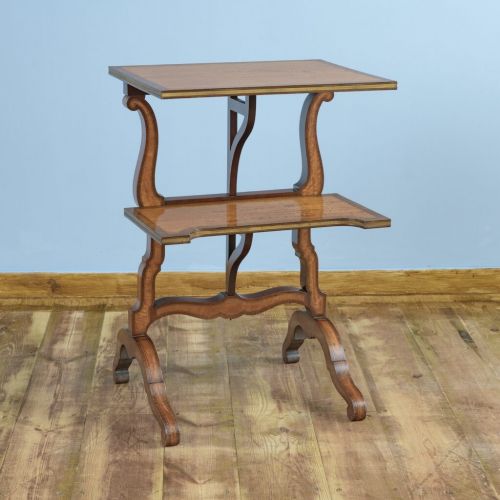
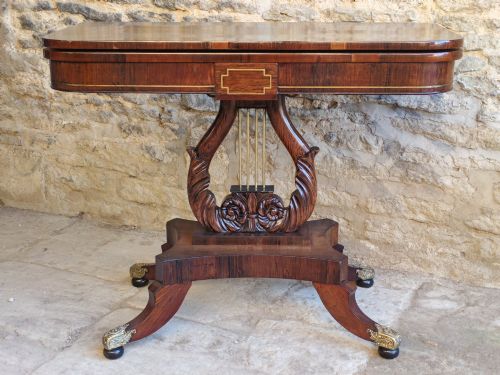
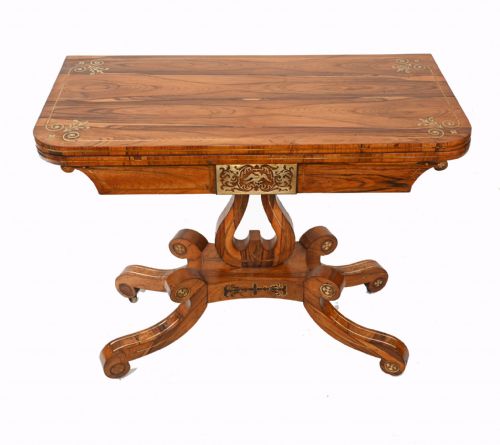
An antique lyre table brings classical proportion into a room, utilising musical instrument motifs in the pedestals to support polished wooden surfaces.
Antique Lyre Table
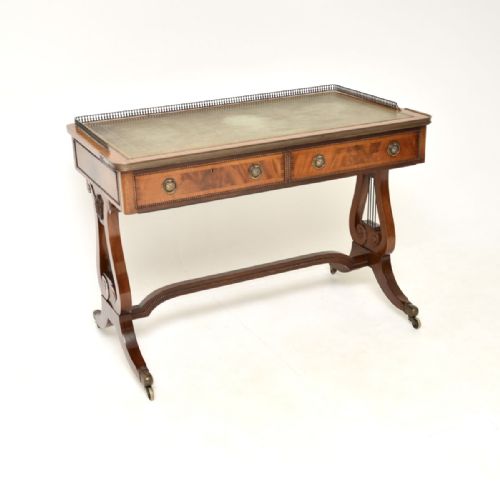
When buyers search for an antique lyre table, they seek pieces defined by lyre-shaped trestle supports or pedestals, typically taking the form of sofa tables, card tables, and tea tables. These designs emerge most frequently from the Regency, Georgian, and William IV periods, constructed during the nineteenth century when classical antiquity inspired furniture makers.
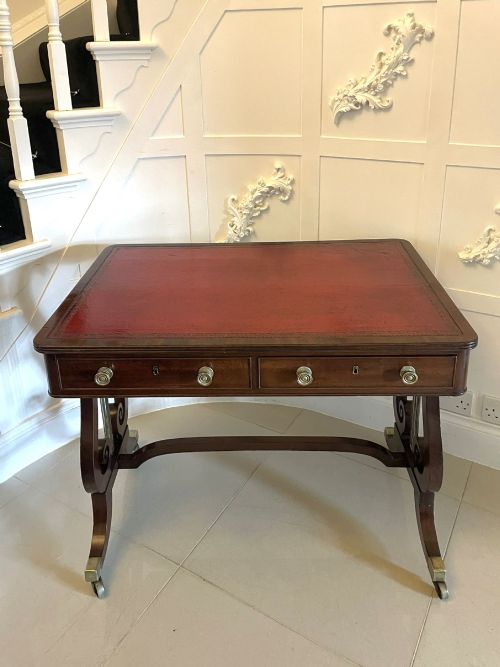
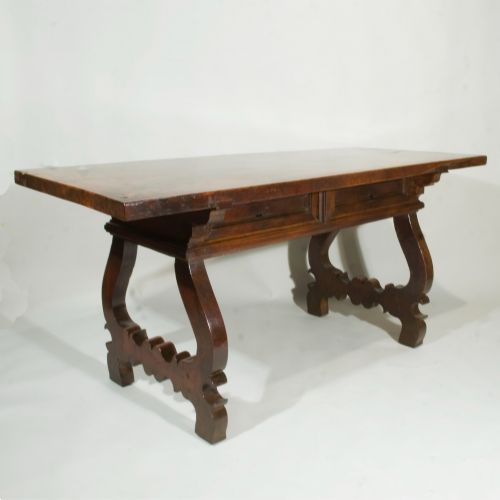
The version most commonly met on this page is the mahogany sofa table or tea table from the early nineteenth century, often featuring drop leaves and brass or wood stretchers between twin lyre ends. Later revivals into the Edwardian era also appear, alongside occasional variants utilising rosewood or walnut.
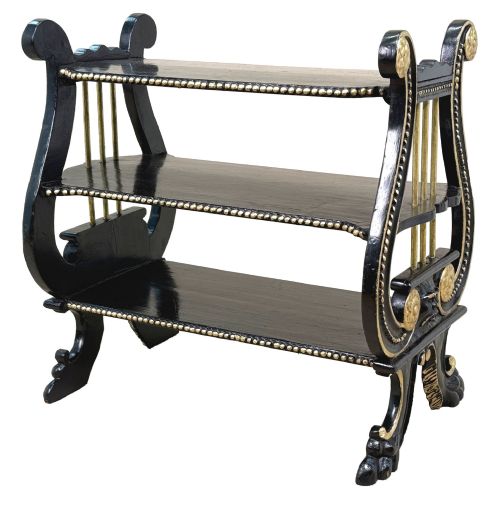
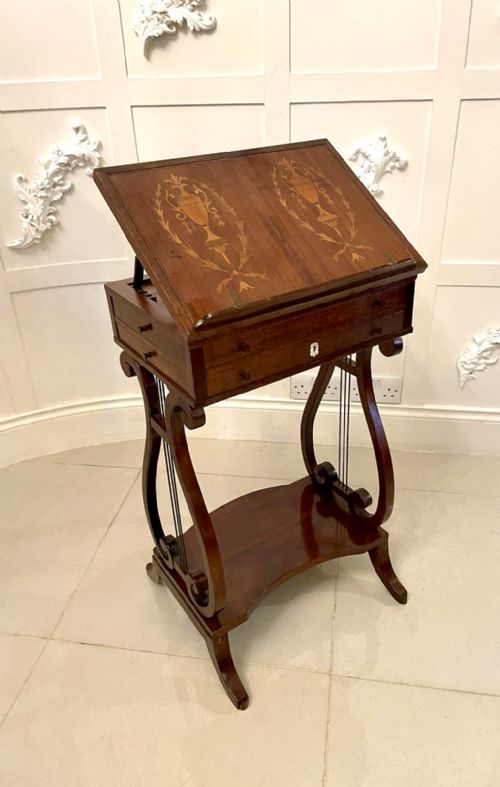
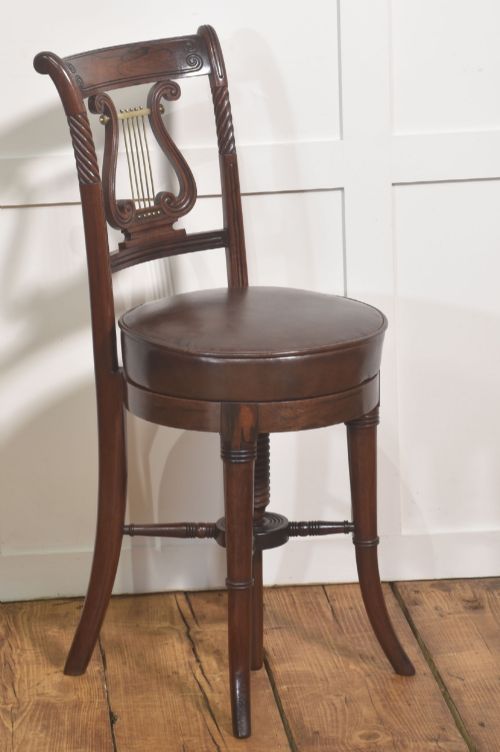
Beyond standard tables, the lyre motif extends to related objects in the evidence, such as writing desks, music stands, and mantel clocks. Each variation employs the characteristic scroll and string shape of the ancient Greek instrument to anchor the design.
Materials and Construction
Makers relied heavily on dense tropical hardwoods like mahogany and rosewood for their rich grain and structural stability, frequently employing walnut and satinwood for contrasting veneers. These timbers were shaped into sweeping curves for the lyre ends, sometimes complemented by brass inlay or ormolu mounts.
Construction techniques combined solid framing for weight-bearing pedestals with finely figuredveneers applied to table tops and drop leaves. Brass elements, including stringing and paw feet, were embedded into the wood or used to articulate the central lyre supports.
One sewing table even arrives complete with its nineteenth-century contents intact inside.
Distinguishing Quality Across the Range
Quality rests in the precision of the timber selection and the carving of the lyre motif, where crisp, deep relief work distinguishes finer examples from simpler production. The choice of figured mahogany or well-matched rosewood veneer elevates a piece significantly.
Integration of secondary materials also marks the division, such as finely chased brass inlay, robust mechanical joints for drop leaves and folding tops, and well-balanced stretcher placement between the dual supports.
Maison Giroux·Andrew Thomson And Sons·Lenzkirch
The Antique Lyre Table Glossary
- Lyre Table
- A table supported by one or two pedestals carved in the shape of a musical lyre. These forms gained immense popularity during the Regency and William IV periods.
- Sofa Table
- A rectangular table designed to sit in front of a sofa, typically featuring drop leaves on either side and dual pedestals. They often incorporate drawers and cross-banded veneers.
- Tea Table
- A small folding table manufactured to hold tea service equipment during the eighteenth and nineteenth centuries. Many examples utilise swivel tops or single central lyre supports.
- Brass Inlay
- The technique of embedding thin strips or patterns of brass into the wooden surface of furniture. It is frequently seen on Regency rosewood and mahogany pieces.
- Drop Leaf
- A hinged flap on the side of a table that can be raised to extend the surface area. It rests on swing brackets or pivoting wooden arms.
Antique Lyre Table: Frequently Asked Questions
What periods do antique lyre tables come from?
The pieces originate primarily from the nineteenth century, encompassing Regency, George IV, and William IV eras. Later Edwardian revivals also appear.
Craftsmen during these periods drew heavily on classical Greek and Roman motifs, adapting the lyre shape into functional domestic furniture.
How were lyre tables used originally?
They served multiple functions in the principal rooms of a home, functioning as sofa tables, card games tables, or tea tables.
Their mobility allowed them to be moved easily near seating areas or against walls when not in use.
How do I care for a mahogany lyre table?
Maintain the wood by keeping it away from direct heat sources and strong sunlight, which can dry out and fade the timber. Use a soft cloth for dusting.
Apply a traditional beeswax polish sparingly to preserve the natural lustre of the mahogany or rosewood surfaces.
What is the difference between a sofa table and a tea table?
Sofa tables are traditionally longer and narrower, designed to stand directly behind or beside a sofa, often featuring two small drawers. Tea tables feature folding or swivelling tops designed for serving tea.
Both forms frequently share the characteristic lyre pedestal support base seen across this category.