



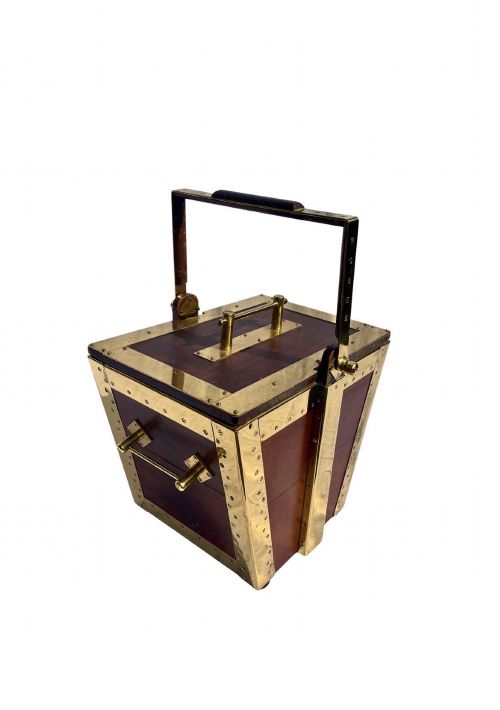

Antique Log Box
An antique log box keeps hearth fuel close to hand while bringing period timber and metal to the fireside.
Antique Log Box
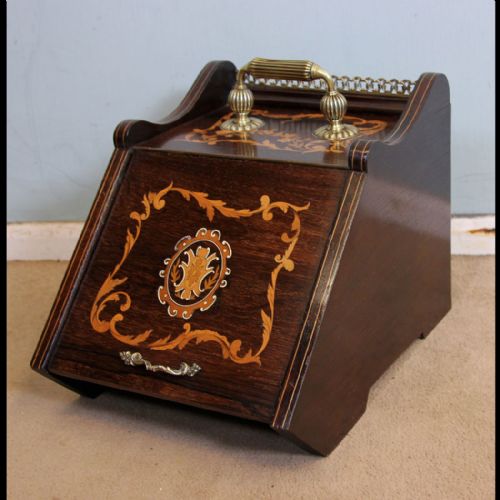
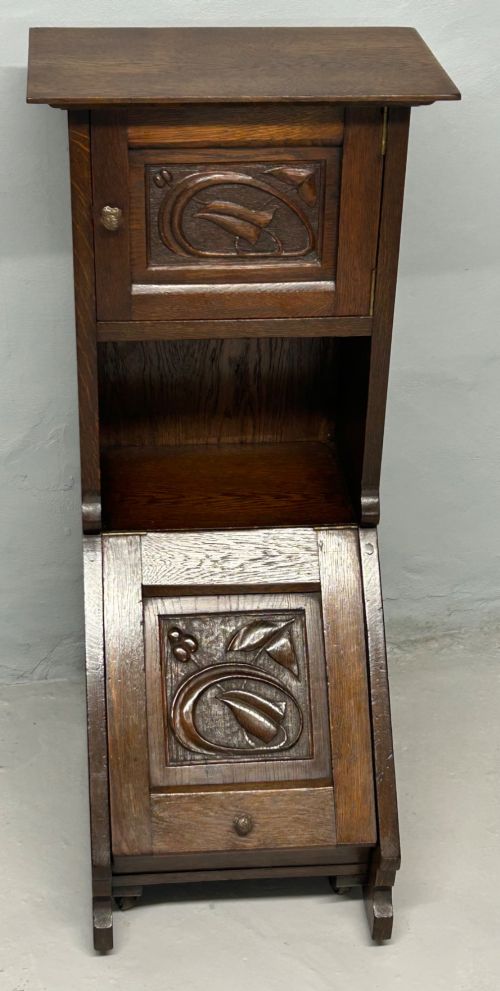
An antique log box serves as heavy-duty fireside storage for wood, coal, and peat, appearing primarily in Victorian, Edwardian, and nineteenth-century forms. The selection includes dedicated log bins, coal scuttles, purdoniums, and industrial bins adapted for domestic fuel storage.
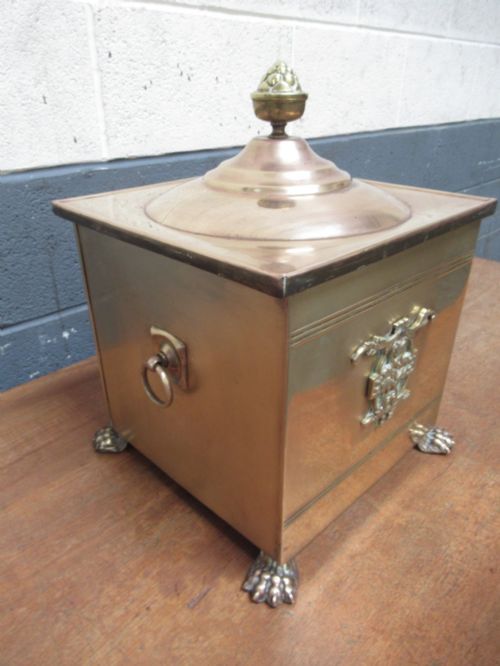
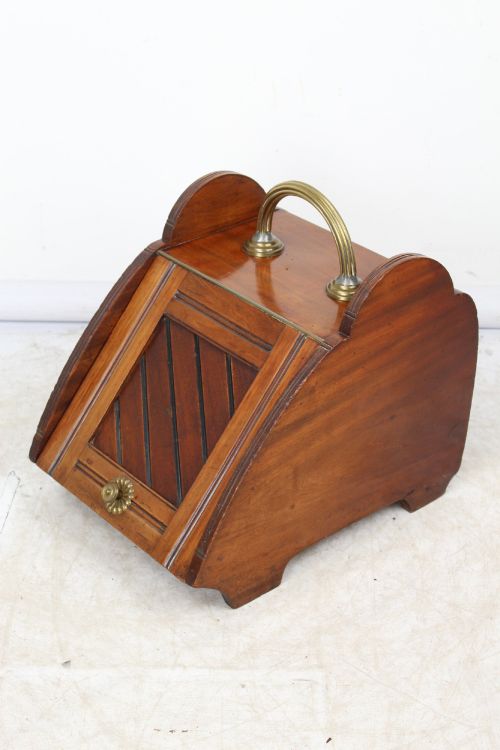
Buyers encounter sturdy oak, walnut, and mahogany boxes alongside utilitarian pine chests and woven Scandinavian baskets. Metal versions utilise brass, copper, and iron, often combining wooden bodies with metal linings and matching scoops.
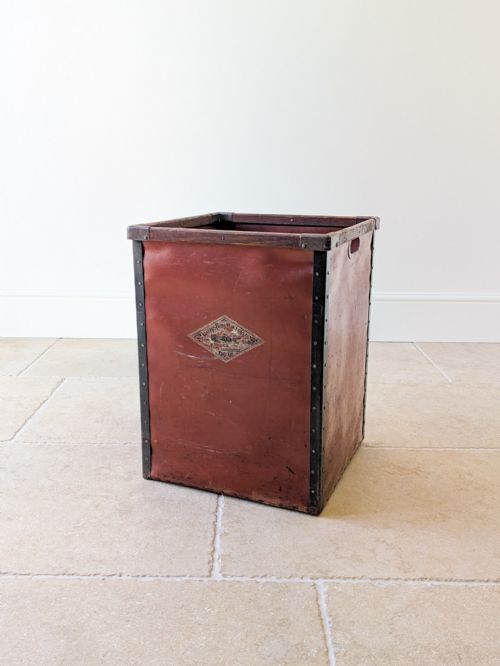
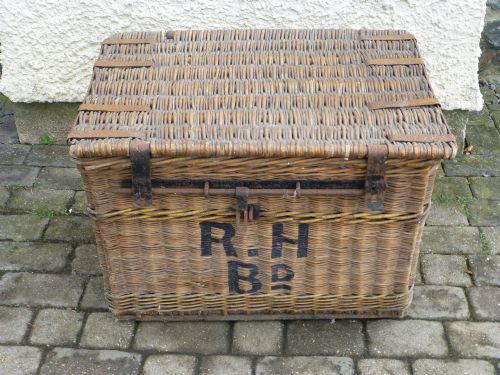
Regional and stylistic variations span English country pieces, Scottish bunkers, French fireside boxes, and Arts and Crafts designs. Industrial examples such as mill bins and cane travelling trunks also feature as alternative fuel storage.
Construction and materials
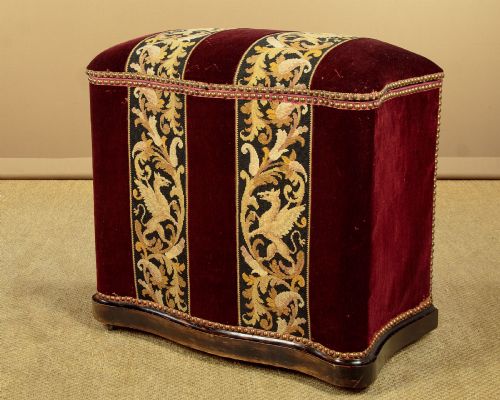
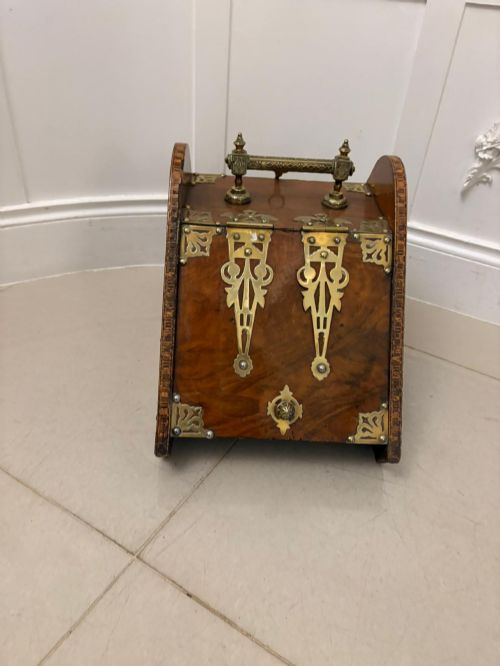
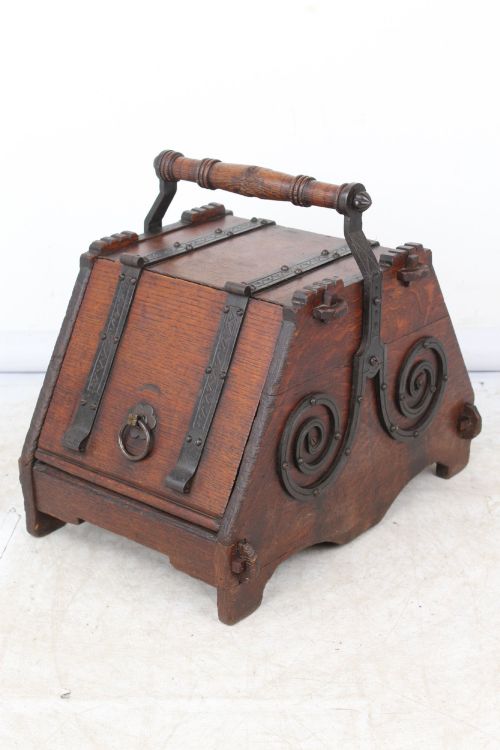
Cabinet makers constructed wooden boxes from solid oak, walnut, and mahogany, employing dovetail joints, carved panels, and upholstered lids for durability. Iron banding and brass mountings reinforced the heavy timber frames against constant use.
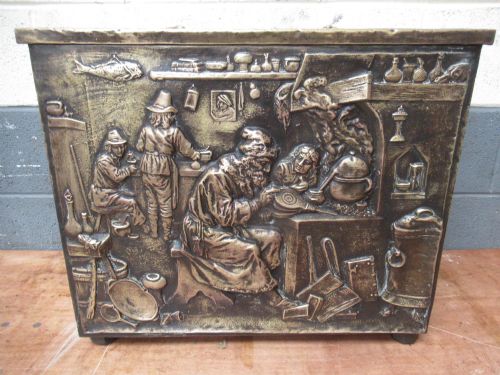
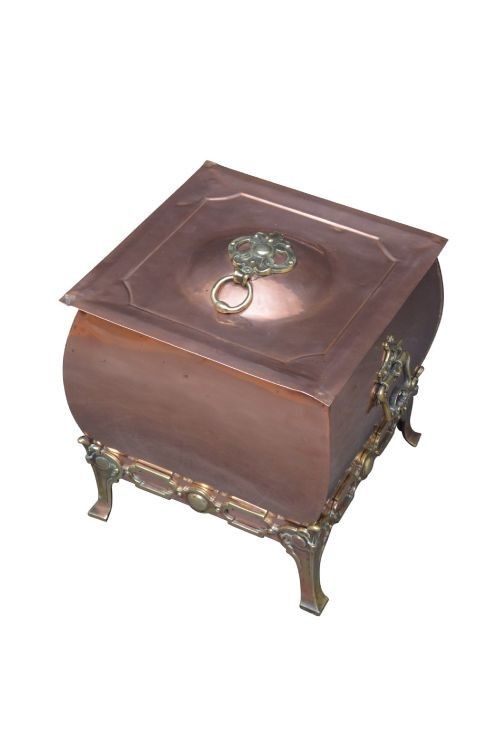
Metal vessels relied on sheet brass and copper, shaped through embossing, riveting, and hammering to create decorative helmets, bins, and slipper boxes. Many designs incorporated interior metal liners to contain ash and moisture from the fuel.
Antique Log Box Retail Price Guide 2026
Typical asking prices for log box among the pieces listed under this phrase on Sellingantiques today, from the lower quarter to the upper quarter. They describe what is for sale here now, not the wider market.
Several pieces double as makeshift coffee tables once the firewood runs out.
Assessing quality in hearth storage
Quality rests in the weight of the timber and the gauge of the brass or copper used in the construction. Heavier metal mountings, hand-beaten detailing, and substantial iron bands distinguish better pieces from lighter utilitarian items.
The integrity of the interior lining and the survival of original components such as shovels and scoops elevate a piece. Superior examples combine robust structural joinery with considered decorative elements like crisp carving or repoussé work.
Christopher Dresser·Henry Loveridge
The Antique Log Box Glossary
- Purdonium
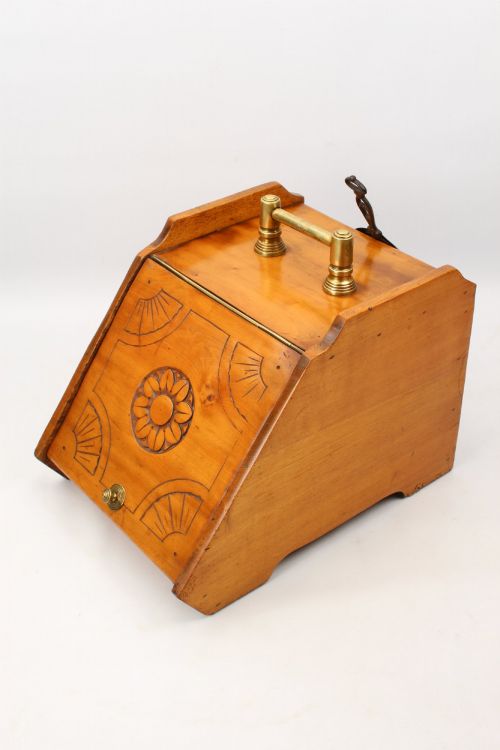
- A specialised cabinet or box designed to hold coal, typically featuring a sloping front door and a metal interior liner. It often includes space for a small coal shovel.
- Coal Scuttle
- A metal or wooden bucket used for carrying and storing solid fuel by the hearth. Common forms include helmet-shaped buckets and lidded bins.
- Arts and Crafts
- A design movement emphasising handcraftsmanship and simple forms. Pieces from this style often feature exposed joinery, hammered brass, and unpretentious materials.
- Gothic Revival
- An architectural and decorative style drawing on medieval motifs. Objects in this vein display pointed arches, heavy strapwork, and ecclesiastical detailing.
- Aesthetic Period
- A late nineteenth-century movement prioritizing visual beauty over narrative content. Items from this time display refined ornamentation and eclectic influences.
Antique Log Box: Frequently Asked Questions
What is the difference between a log box and a coal scuttle?
A log box is typically a chest or bin intended for larger pieces of firewood, constructed mainly from wood or woven materials.
A coal scuttle is a smaller bucket or purdonium designed for carrying and storing loose coal, usually equipped with a metal liner and scoop.
Can I use an antique log box for modern firesides?
These pieces were built to withstand heavy daily use and function effectively beside contemporary stoves and open hearths.
Using a metal-lined box or inserting a protective tray safeguards original timber interiors from moisture and bark debris.
How do I date an antique log box?
Dating relies on identifying stylistic markers such as Victorian Gothic Revival details, Arts and Crafts hand-beating, or Edwardian industrial construction.
Materials and joinery methods, such as hand-cut dovetails or machine-sawn boards, also point toward specific decades in the nineteenth and early twentieth centuries.
Were these boxes only made in Britain?
While many pieces originate from English and Scottish workshops, the selections also include continental examples from France and Belgium.
Scandinavian hand-woven pine baskets and industrial mill bins further expand the geographic origins beyond British domestic workshops.