




Antique Livestock Picture
An antique livestock picture brings the quiet rhythm of rural life directly into a room through oil and watercolour.
Antique Livestock Picture
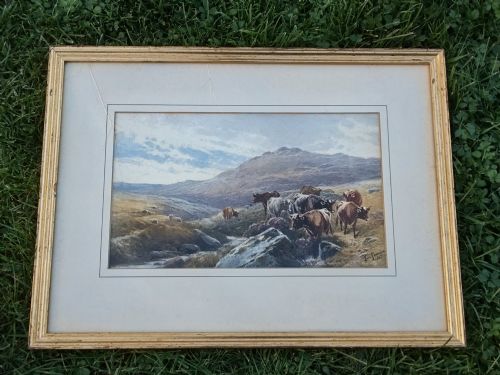
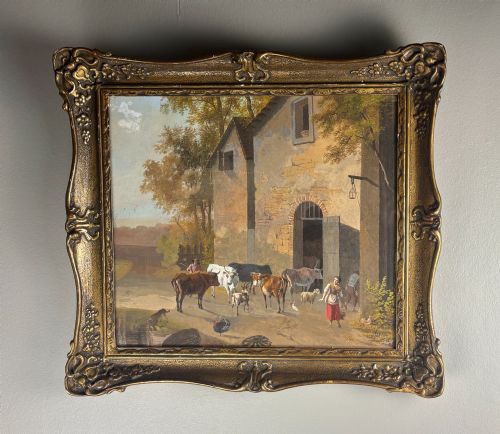
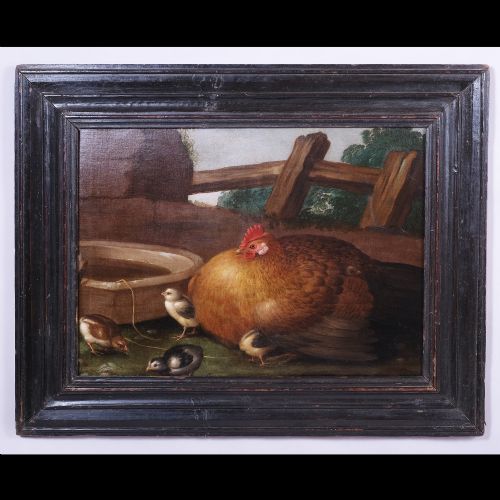
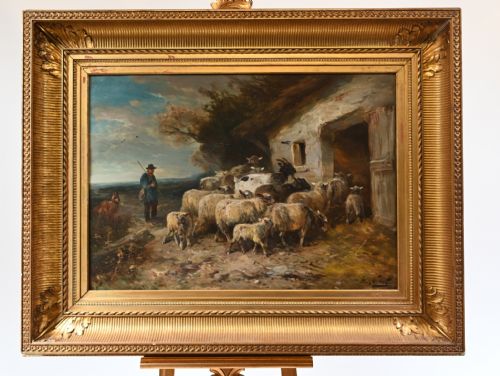
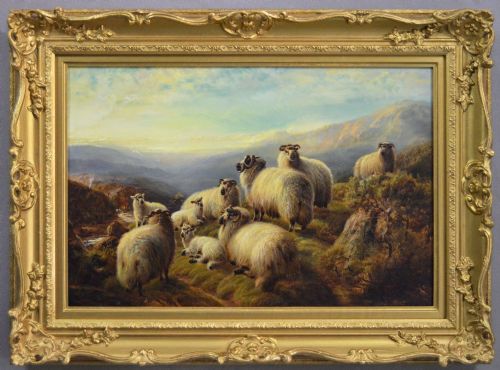
An antique livestock picture captures farmyard scenes, cattle, sheep and horses painted across the eighteenth, nineteenth and early twentieth centuries. These works range from detailed oil on canvas portrayals of prize animals to softer pastoral watercolours.
Buyers meet Victorian realists and pastoralists most frequently on this page, often showing sheep resting in highland landscapes or cattle grazing by rivers. The common thread is a focused attention on farm animals and rural settings.
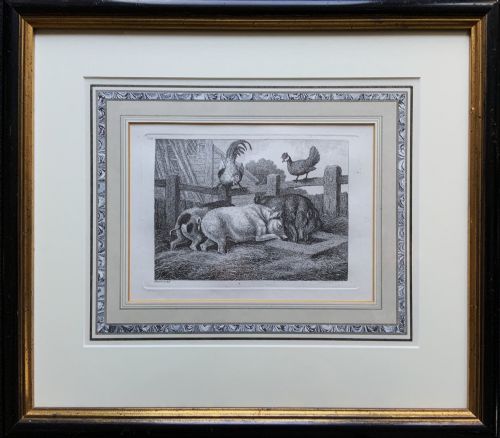
The format spans framed oil paintings, watercolours under glass, and occasional framed prints or sand pictures. Each piece records a traditional agricultural world through the specific lens of its period.
How they were made
Artists painted primarily in oil on canvas or applied watercolour to paper, setting the works within wooden frames that often feature gesso and gold leaf. The physical construction relies on stretched canvas over wooden frames or heavy paper protected behind glass.
Frames frequently utilise moulded gesso and giltwood to complement the pastoral subjects within. These original surrounds play an essential role in housing and preserving the paintings.
Techniques range from smooth nineteenth-century realism to textured brushwork, capturing the tactile quality of wool, hide and feathers.
Antique Livestock Picture Retail Price Guide 2026
Typical asking prices for livestock picture among the pieces listed under this phrase on Sellingantiques today, from the lower quarter to the upper quarter. They describe what is for sale here now, not the wider market.
Listings feature works spanning the eighteenth century through to the Edwardian period, executed in oil on canvas and watercolour.
What varies in quality
Quality rests upon the artist's ability to render the anatomy, weight and character of the animals with convincing realism. Weaker works stiffen the figures and flatten the landscape, while superior examples capture light on fleece and muscle with distinct authority.
The handling of the surrounding pastoral landscape contributes heavily to the overall merit of the artwork. Depth, atmosphere and harmonious colour elevate a composition beyond a simple record of farm animals.
Originality of the frame and the preservation of the canvas or paper surface distinguish finer survivals from heavily restored or later-assembled pieces.
Robert Watson·Henry Schouten·Thomas Sidney Cooper·Frederick Septimus Lewis·Eugene Verboeckhoven·Andre de Moller·Basil Bradley·Arthur Charles Dodd·Claude Cardon·Edgar Hunt·Henry Cheadle·Aster Richard Chilton Corbould·William Sidney Cooper·Louis Marie Dominique Robbe·Thomas E Francis
The Antique Livestock Picture Glossary
- Pastoral
- Relating to the countryside and farm life. These scenes focus on peaceful rural settings with livestock.
- Gesso
- A plaster-like mixture applied to wooden frames before gilding. It provides a smooth base for intricate decorative mouldings.
- Realism
- An artistic movement aiming to represent subject matter truthfully without artificiality. In these works, it shows animals and farmyards as they actually appeared.
- Giltwood
- Wood carved and covered with a thin layer of gold leaf. It creates the traditional metallic shine seen on period frames.
- Watercolour
- Pigments suspended in a water-based solution applied to paper. It yields translucent washes of colour distinct from oil paint.
Antique Livestock Picture: Frequently Asked Questions
How do I date an antique livestock painting?
Dating relies on stylistic clues, canvas preparation, and the construction methods of the accompanying wooden frame. Costume details and the specific rendering of the landscape also point towards periods like the Victorian era or the nineteenth century.
Signatures and inscriptions on the reverse often provide direct connections to recorded artists active during specific decades. Comparing the handling of paint to known dated works helps narrow the timeframe further.
Where should I hang a livestock picture?
These works suit traditional reception rooms, studies, or dining spaces where their pastoral themes complement classic interiors. Keep them away from direct sunlight and damp walls to protect the canvas and watercolour pigments.
Ensure the hanging height allows comfortable viewing of the fine brushwork and animal details. Adequate wall space lets the original giltwood or wooden frame finish properly.
What is the difference between oil and watercolour livestock pictures?
Oil paintings use pigments bound in oil on canvas, offering rich textures and deep colour layering. Watercolours use water-soluble paint on paper under glass, presenting a lighter and more luminous finish.
Oils generally tolerate environmental changes better than watercolours, which require careful framing behind glass to prevent moisture damage. Both mediums capture different facets of nineteenth-century pastoral art.
How do I identify a Victorian pastoral painting?
Victorian pastoral works typically feature idealised yet realistic depictions of farm animals, sheepfolds, and riverbanks painted with careful attention to natural light. The palette often relies on earthy greens, browns, and soft evening skies.
Subject matter focuses heavily on domestic agriculture, reflecting the period's romantic attachment to rural life. Signature styles from this era prioritize narrative clarity and anatomical accuracy in cattle and sheep.