




Farmyard Scene Artwork
Farmyard scene artwork captures 18th-century to 1930s rural life through oil and watercolour, offering buyers traditional pastoral charm.
Farmyard Scene Artwork
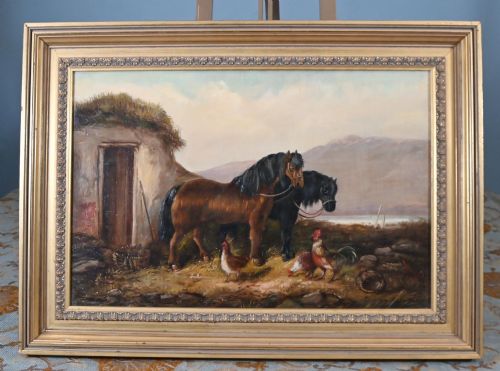
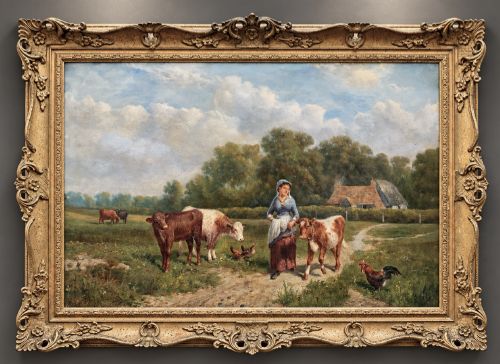
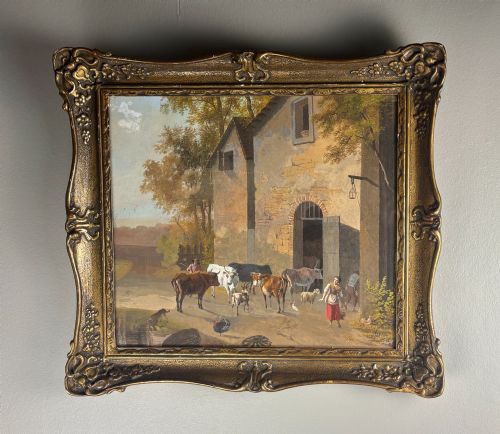
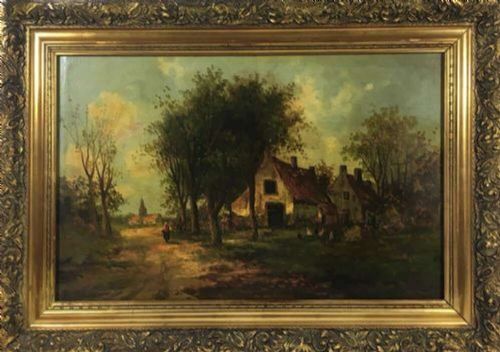
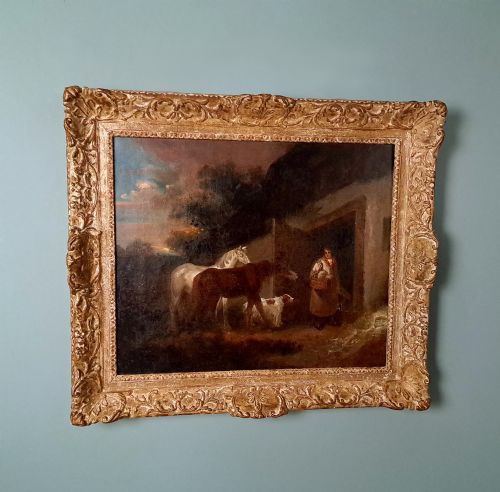
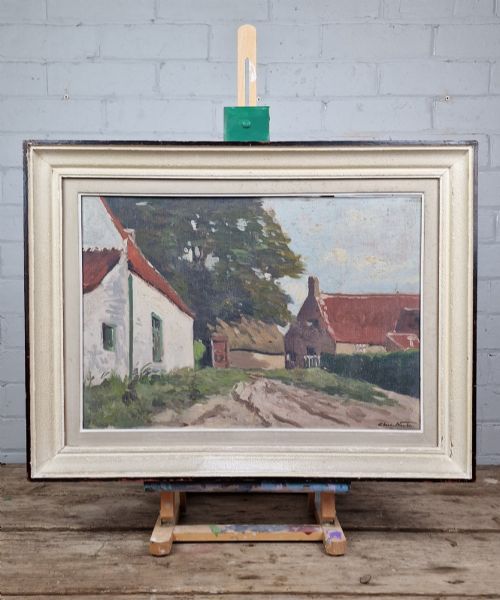
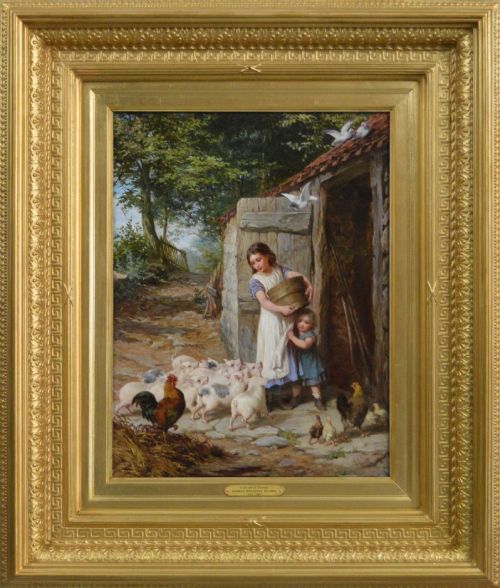
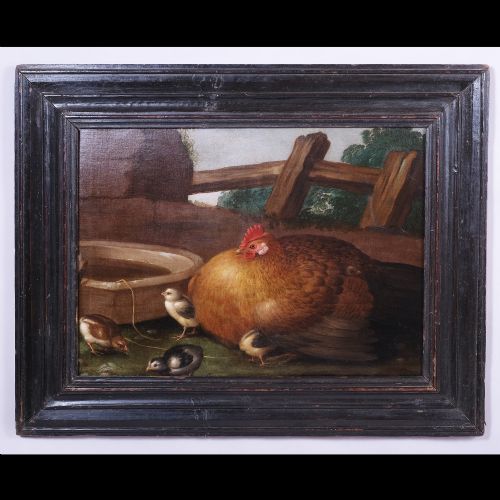
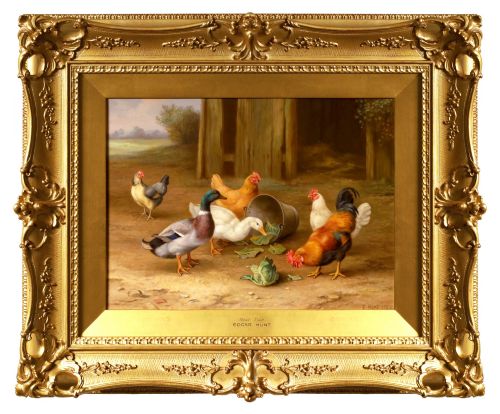
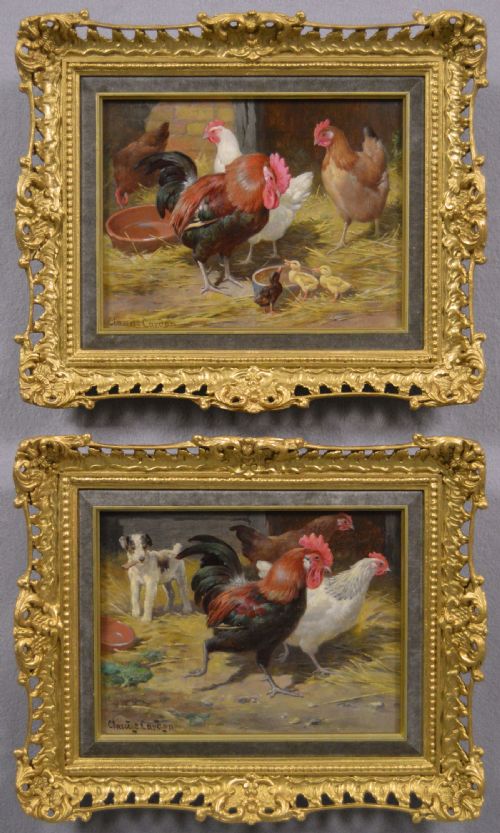
A farmyard scene artwork depicts rural agricultural life, typically focusing on horses, cattle, pigs, and poultry situated near barns, stables, and farmhouses. The pieces span from the 18th century through the Victorian period and into the early decades of the 20th century.
Most examples found here are oil paintings on canvas or board, accompanied by select watercolours and framed prints. Subjects range from quiet pastoral landscapes to genre scenes featuring farm workers and feeding animals.
How They Were Made
Artists painted primarily with oil paint on stretched canvas or wooden panels, applying pigment to build depth in textures like animal coats, straw, and weathered timber. Watercolours on paper appear in period works, utilising transparent washes to capture light.
Framing often involves period giltwood or wood mouldings that complement the palette of the canvas. Pigments were applied with varied brushwork, from the tight detail of animal portraiture to the looser touches of British Impressionism.
Farmyard Scene Artwork Retail Price Guide 2026
Typical asking prices for farmyard scene artwork among the pieces listed under this phrase on Sellingantiques today, from the lower quarter to the upper quarter. They describe what is for sale here now, not the wider market.
Several canvases record persistent poultry underfoot, proving that farmyard ducks and chickens supervised agricultural labour long before modern cameras arrived.
What Varies in Quality
Quality rests upon the artist's anatomical precision in rendering horses, livestock, and poultry, alongside the handling of natural light across the yard. Superior works balance the central animal subjects with convincing architectural perspective in the surrounding barns and outbuildings.
The sophistication of the palette and the preservation of the original paint surface differentiate standard decorative pieces from significant works by recognised Victorian and 19th-century painters.
William Joseph Shayer Senior·Charles Houben·George Augustus Holmes·Edgar Hunt·Claude Cardon·Herbert Royle·John Frederick Herring Jnr·Percival Glenfern·John Linnell·Helena Maguire·Pierre Emmanuel Dielmans·Ralph Dorrance·Julius Caesar Ibbetson·Arthur Charles Dodd·Robert Russell MacNee·Owen Bowen·B. Kaufmann·Joseph Kirkpatrick·John R. K. Duff·Edward Killingworth Johnson·John Percy Cooke·Arthur Walker Redgate·Ernest Higgins Rigg·Georgina Lara·George Morland
The Farmyard Scene Artwork Glossary
- Oil on Canvas
- Pigment mixed with drying oil applied to a woven fabric support. This combination allowed artists to blend tones smoothly and build thick impasto for textures.
- Barbizon School
- A French movement focused on naturalistic landscape painting. Artists worked outdoors to capture real rural conditions and atmospheric lighting.
- Genre Painting
- Depictions of everyday subjects and ordinary people engaged in common activities. In this context, it describes farm workers and domestic animals within rural settings.
- Watercolour
- Paint consisting of colour suspended in a water-soluble vehicle. Applied to paper, it creates translucent layers of tone and light.
Farmyard Scene Artwork: Frequently Asked Questions
What periods do these paintings come from?
The collection spans from the 18th century through the Victorian era up to the 1930s. Works include Georgian rural scenes, Victorian pastoral compositions, and early 20th-century watercolours.
Each piece reflects the prevailing artistic style of its decade, shifting from formal 18th-century landscapes to more direct observation in later British Impressionist and Post-Impressionist works.
How should I hang and light them?
Oil paintings on canvas and panel suit traditional wall spaces away from direct sunlight and excessive heat sources. Frame types range from simple wood mouldings to ornate giltwood.
Use picture lights designed for art to illuminate the canvas evenly without generating damaging heat close to the pigment surface.
What animals appear most often?
Horses, particularly shires and cart horses, dominate the larger farmyard compositions alongside working dogs and cattle. Chickens, cockerels, ducks, and pigs frequently populate the foregrounds of genre scenes.
Artists often grouped these animals around barns, feeding troughs, and cornfields to create balanced compositions of rural activity.
How do I tell oils from watercolours?
Oil paintings feature textured paint surfaces on canvas or wooden boards, sometimes showing visible brushstrokes and a heavier varnish layer. Watercolours sit on paper beneath glass, displaying smooth translucent washes.
Watercolours require conservation framing with acid-free mounts to protect the paper from humidity and fading over time.