






Antique Livestock Landscape
An antique livestock landscape captures the pastoral economy of the nineteenth century through oil paintings and watercolours of cattle and sheep.
Antique Livestock Landscape
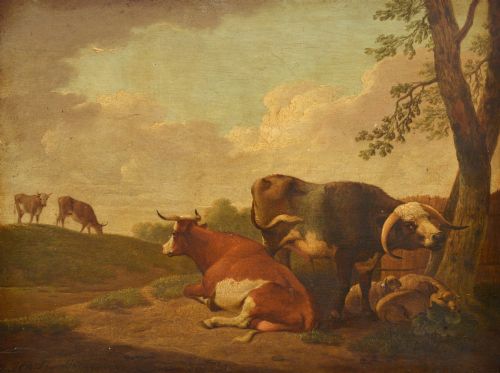
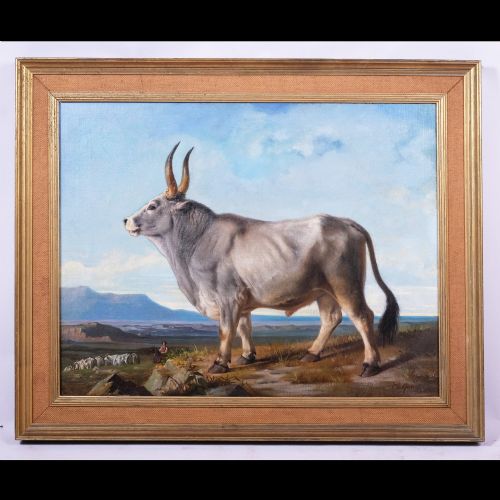
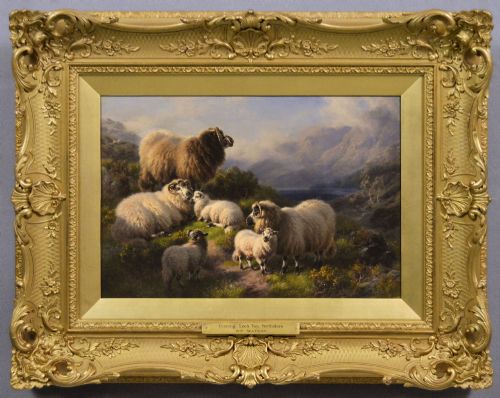
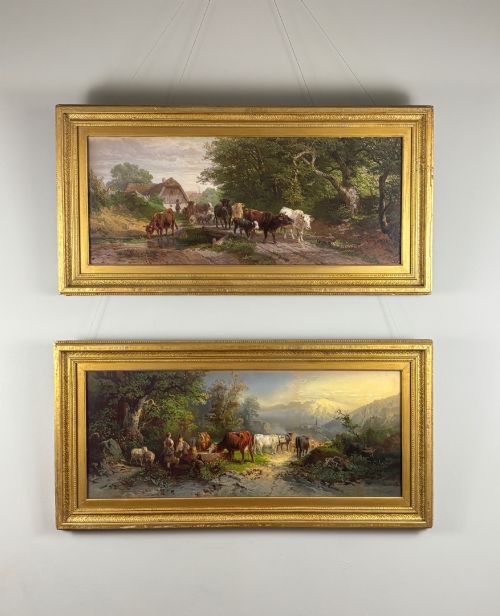
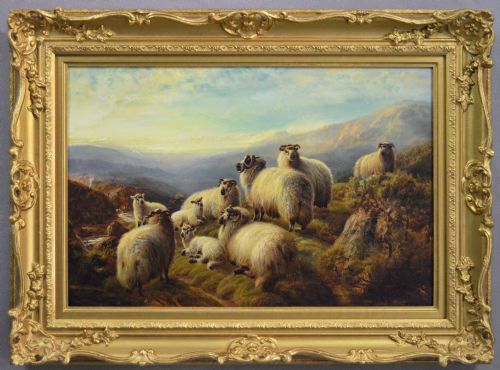
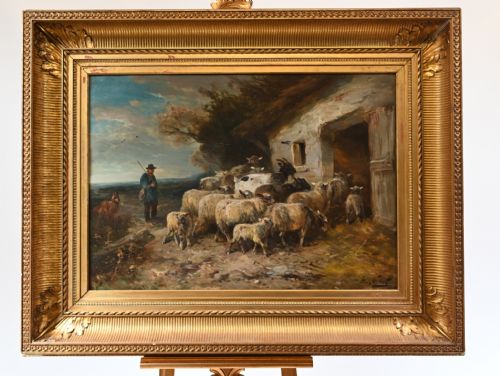
An antique livestock landscape depicts cattle, sheep, and horses situated within rural and Highland settings, painted primarily in oil on canvas or watercolour on paper. These works document the agricultural focus of the nineteenth and early twentieth centuries through detailed animal portraits and broader pastoral vistas.
The version most commonly encountered on this page is the nineteenth-century oil painting, frequently framed in giltwood and gesso, depicting shorthorn bulls, Highland sheep, or grazing herds by regional British and continental European artists.
Materials and construction
These works utilise oil paint applied to stretched canvas or wooden oak panels, capturing the texture of animal coats and the light of rural landscapes through layered brushwork. Watercolour paintings on paper also appear, preserving lighter washes for evening skies and coastal pastoral scenes.
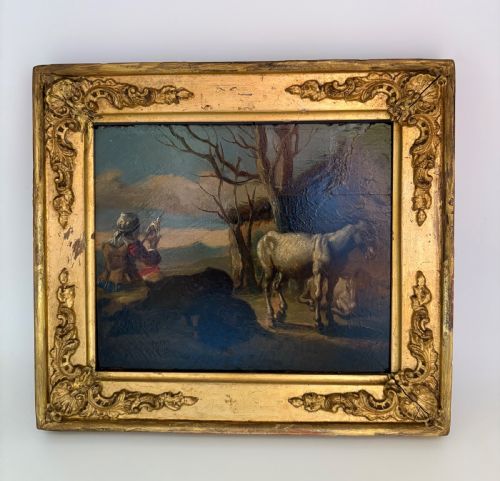
Frames are constructed from wood ornamented with moulded gesso and finished with gilt leaf, providing the traditional Victorian mounting for these pastoral subjects.
Listings feature works executed in oil on canvas, oak panel, and watercolour on paper, framed in period giltwood and gesso.
Factors of quality
Quality rests upon the anatomical precision of the animals and the handling of the surrounding landscape, distinguishing works by established painters from generic studio output. Artists who recorded musculature, bone structure, and wool with specific botanical and zoological accuracy achieve greater visual depth than lesser hands.
The integrity of the original giltwood and gesso frame contributes significantly to the piece, as period frames matching the date of the canvas preserve the presentation intended by the nineteenth-century maker.
Eugène Verboeckhoven·Thomas Sidney Cooper·Heinrich Harder·Franz van Severdonck·William Henry Mander
The Antique Livestock Landscape Glossary
- Giltwood
- Wood carved and coated with gold leaf or gold paint. This finish forms the traditional reflective border seen on nineteenth-century picture frames.
- Gesso
- A plaster mixture applied to wood frames before gilding. It provides a smooth base for intricate moulded ornamentation.
- Pastoral
- A genre of art concerning rural life and domestic animals. These scenes idealise agricultural landscapes and livestock.
- Oak Panel
- A rigid wooden support used for early paintings. Panels predate the common use of stretched canvas.
- Watercolour
- Pigment suspended in a water-based solution applied to paper. This medium creates translucent washes distinct from opaque oil paint.
Antique Livestock Landscape: Frequently Asked Questions
What periods do these paintings date from?
The works span from the eighteenth century through the Victorian era up to the early twentieth century. Most examples originate in the nineteenth century.
Paintings from this time reflect shifting attitudes towards agriculture, landscape observation, and animal portraiture across Britain and continental Europe.
How were these artworks framed originally?
Makers housed these oils and watercolours in wooden frames embellished with gesso and finished in gilt. These surrounds often date to the same period as the canvas.
Matching frames complete the presentation of nineteenth-century pastoral art and protect the edges of the stretched fabric.
Where were livestock landscapes displayed?
Victorian and Edwardian households hung these rural scenes in domestic reception rooms and dining spaces. Landowners and farmers commissioned portraits of prized livestock to record agricultural achievements.
Today, these works suit traditional interiors, study walls, and spaces dedicated to historic British fine art.
How do you distinguish animal breeds in the paintings?
Artists often documented specific agricultural livestock such as shorthorn bulls and Highland sheep with distinct physical traits. Painters like Thomas Sidney Cooper specialised in accurate anatomical portrayals.
Examining horn shapes, wool texture, and body proportions reveals the specific farming standards of the nineteenth century.