


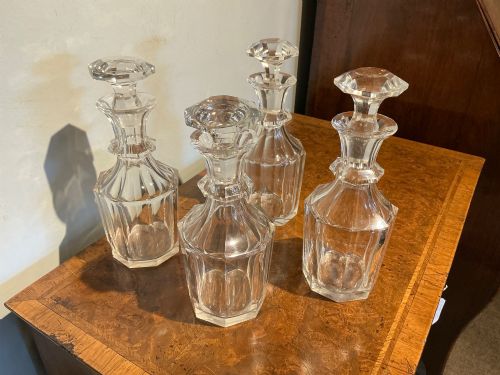



Antique Liqueur Glasses
These antique liqueur glasses bring small-scale glassware and fitted portable services from past centuries straight to the modern table.
Antique Liqueur Glasses
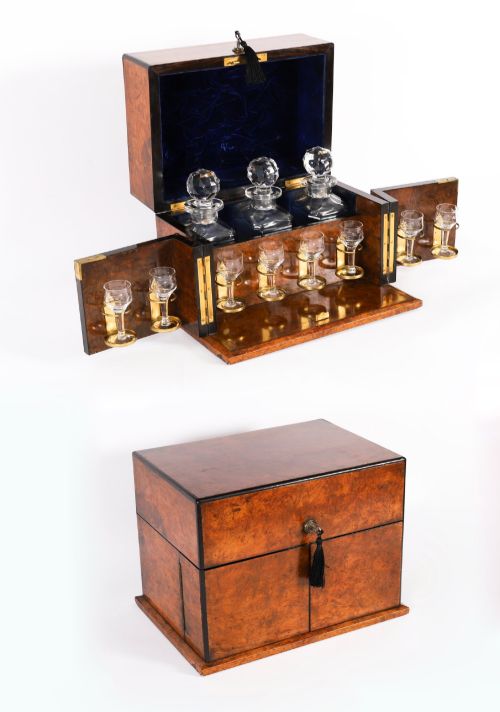
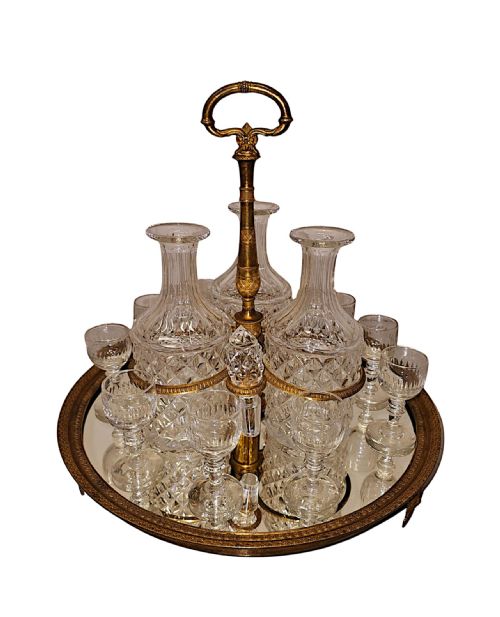
When you search for antique liqueur glasses, you encounter small drinking vessels designed for cordials, spirits, and shots, often found alongside matching decanters and fitted tantalus boxes. The selection spans straightforward Victorian coloured pieces, delicate Edwardian cordial sets, and robust Art Deco services.
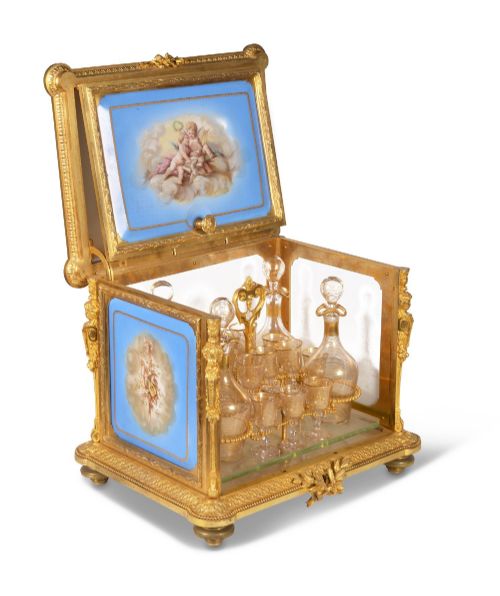
Many examples arrive complete within wooden cases or mounted in silver-plated stands, including French cave a liqueur boxes lined for travel. Forms range from simple shot glasses and facet-stemmed cordial glasses to elaborate ewers and Russian silver vodka cups.
Materials and construction
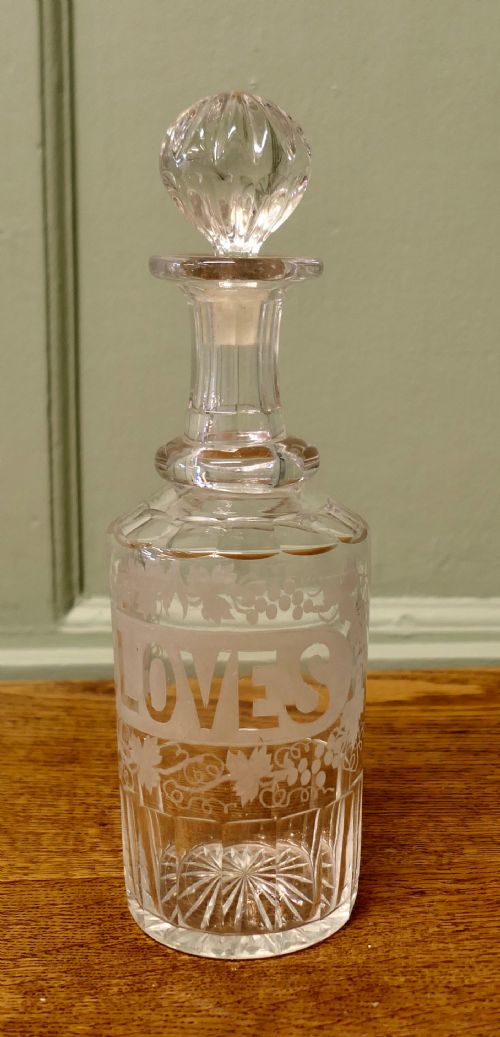
Makers utilised lead crystal, standard glass, and coloured glass, often applying hand-enamelling, etching, or cutting techniques to decorate the surface. Workshops combined these glass bodies with brass, ormolu, silver, silver plate, and satin wood inlays for the trays, stands, and locking tantalus frames.
Production methods involved mouth-blowing glass into moulds or onto pontils, followed by hand-finishing, wheel-cutting, and sometimes the application of metallic mounts by silversmiths and cabinetmakers.
Antique Liqueur Glasses Retail Price Guide 2026
Typical asking prices for liqueur glasses among the pieces listed under this phrase on Sellingantiques today, from the lower quarter to the upper quarter. They describe what is for sale here now, not the wider market.
Listings span from the 18th century through the Victorian era and into 1930s Art Deco.
Distinctions in quality
Quality separates ordinary glassware from superior pieces through the crispness of the wheel-cut facets, the depth and precision of enamel work, and the weight of the crystal. Matching sets that retain every original glass within an intact box or silver-plated stand command greater attention than partial or mismatched groupings.
The sophistication of the housing - such as an inlaid satin wood box or a heavy ormolu-mounted frame - demonstrates the standard of the manufacture and the original cost of the service.
Baccarat·Rene Lalique·Val Saint Lambert·Theresienthal·Moser·Salviati·Karl Palda·Elkington·Aleksandr Timofeyevich Shevyakov
The Antique Liqueur Glasses Glossary
- Cave a liqueur
- A fitted box or cabinet containing a set of decanters and matching glasses, often designed for travel or formal entertaining on a French Napoleon III or Victorian sideboard.
- Tantalus
- A locking wooden stand that holds decanters securely in place with a metal bar, preventing access to the contents without a key.
- Ewer
- A large jug with a wide spout and handle, used historically for serving liquids or as part of a decorative barware set.
- Balustroid
- A glass stem shape resembling an architectural baluster, typical of 18th-century drinking vessels.
- Enamel
- Opaque glass paste applied to the surface of glassware and fired to create colourful decorative patterns.
Antique Liqueur Glasses: Frequently Asked Questions
What is a tantalus?
A tantalus is a locking wooden frame that holds decanters upright, securing the stoppers so the liquor cannot be poured without a key.
Victorian households utilised these to deter servants from sampling fine spirits while keeping the bottles displayed on a sideboard.
How do I use them today?
These small glasses suit after-dinner cordials, small pours of spirits, or espresso service.
Hand washing protects the delicate antique crystal, enamel work, and silver mounts from the harsh heat of modern dishwashers.
What is a cave a liqueur?
A cave a liqueur is a portable wooden box or caddy fitted with a velvet or silk interior designed to hold a set of matching liqueur decanters and glasses.
Popular during the 19th century, these locking caddies protected fragile glassware during travel and kept the barware organised in a parlour.
How do I date a set?
Dating relies on stylistic clues, such as geometric Art Deco forms from the 1930s, ornate Victorian cranberry glass, or heavy 18th-century balustroid stems.
Maker marks, signatures on the glass, and the manufacturing style of accompanying silver mounts or fitted wooden boxes also narrow the period.