


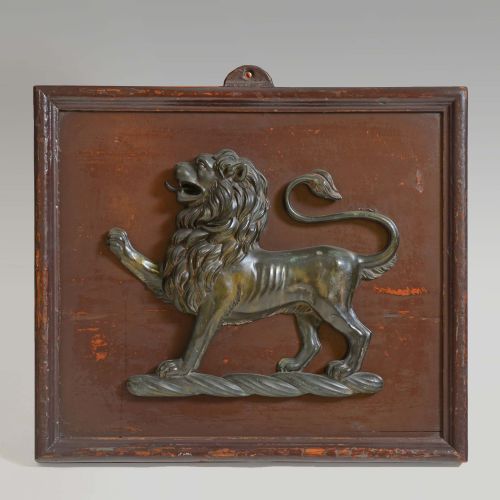


Antique Lion Plaque
An antique lion plaque brings centuries of heraldic power and sculptural weight to a wall, offering a striking focal point for a serious room.
Antique Lion Plaque
An antique lion plaque encompasses wall carvings, cast metal coats of arms, and sculptural door hardware dating from the eighteenth century through to the Edwardian period. These pieces frequently depict heraldic crests, royal insignia, and fierce feline visages rooted in Victorian, Black Forest, and Traditional Chinese traditions.
The most common examples on this page are substantial Victorian cast iron royal coats of arms and nineteenth-century carved wood wall masks. Buyers also encounter bronze crests and marble panels, reflecting a diverse range of domestic and architectural settings.
How they were made
Metal plaques utilise heavy foundry casting in iron or bronze, often finished with polychrome paint, enamel, or gold leaf to highlight heraldic details. Iron pieces provide immense structural presence, whereas bronze allows for finer chased linework in Foo dogs and crests.
Wooden plaques rely on deep hand carving in timber, oak, or walnut, utilising chisel work to create realistic fur and muscular tension in Black Forest tiger heads and wall masks. Marble panels employ incised relief carving on stone surfaces to render classical figures like the Lion of St Mark.
Antique Lion Plaque Retail Price Guide 2026
Typical asking prices for lion plaque among the pieces listed under this phrase on Sellingantiques today, from the lower quarter to the upper quarter. They describe what is for sale here now, not the wider market.
Listings span cast iron, bronze, carved wood, oak, walnut, and Sienna marble across the Victorian, Edwardian, and eighteenth-century periods.
What varies in quality
The integrity of original surface finishes, such as aged polychrome paint, untouched patination on bronze, and genuine gold leaf, dictates the historical value of the piece. Later overpainting or crude repairs obscure the original hand of the maker and diminish visual depth.
The Antique Lion Plaque Glossary
- Coat of arms
- A distinct heraldic design displayed on a shield or plaque to identify a family, institution, or royal house. These symbols often incorporate lions rampant or passant.
- Black Forest carving
- A style of ornate woodwork originating from Switzerland and Germany, renowned for lifelike animal sculptures and deep relief panels. Walnut and lime timber are standard mediums for this craft.
- Polychrome
- Painted in several colours, frequently applied over gesso or direct wood to simulate natural markings and heraldic tinctures. This finish preserves early decorative schemes.
- Heraldic crest
- The upper component of a complete coat of arms, traditionally mounted on a helmet or depicted independently on a plaque. Lions are a dominant motif in British heraldry.
- Foo dog
- A traditional Chinese guardian lion symbolising protection, rendered here in cast bronze door plates and plaques. These figures combine stylised manes with muscular authority.
Antique Lion Plaque: Frequently Asked Questions
Where should I hang an antique lion plaque?
These plaques suit prominent locations such as above a fireplace mantel, in a hallway, or centred on a dark wood panelled wall. Their weight and visual gravity require secure fixing to solid masonry or properly anchored studs.
Because many examples feature heraldic themes or fierce expressions, they balance well against traditional interior schemes and substantial antique furniture.
How do I clean cast iron and bronze plaques?
Dust metal plaques regularly with a soft, dry brush to prevent particulate build-up in recessed carved details. Avoid chemical polishes or abrasive cloths that strip away historical patination and original painted surfaces.
For stubborn grime, a light application of microcrystalline wax protects bronze and iron from moisture while preserving the authentic aged skin.
What is the difference between a wall mask and a coat of arms?
A wall mask focuses purely on the sculptural head of an animal, such as a Black Forest tiger or lion, emphasising naturalistic anatomy and deep woodcarving. A coat of arms incorporates institutional shields, crowns, and banners alongside the lion motif.
Coat of arms plaques carry political or familial symbolism, whereas wall masks serve a purely decorative and rustic function.
How do I date a cast iron lion plaque?
Dating relies on casting technique, weight, surface texture, and stylistic cues from Victorian or Edwardian design registers. Nineteenth-century ironwork often shows hand-finished dressing behind the plate and distinct foundry markings.
Comparing the crown styles, lettering fonts, and heraldic composition against documented period examples helps narrow down the decade of manufacture.