
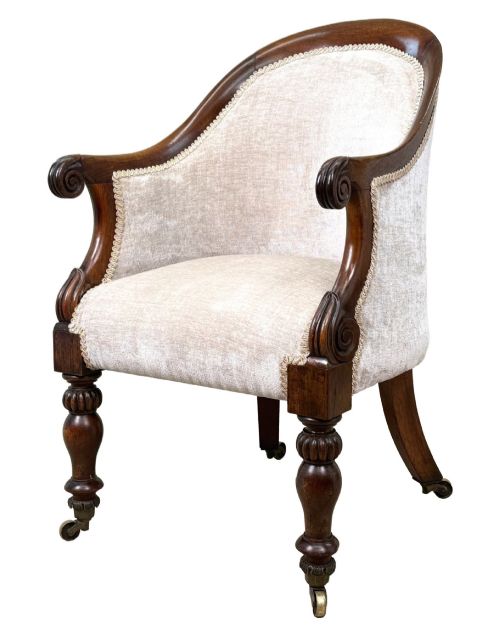
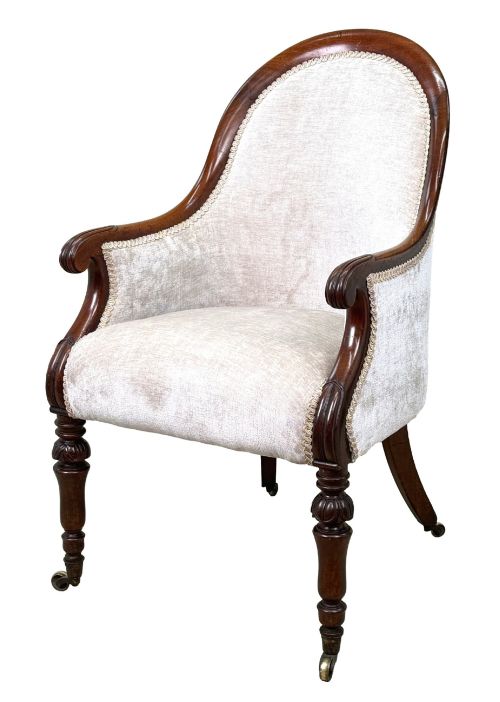
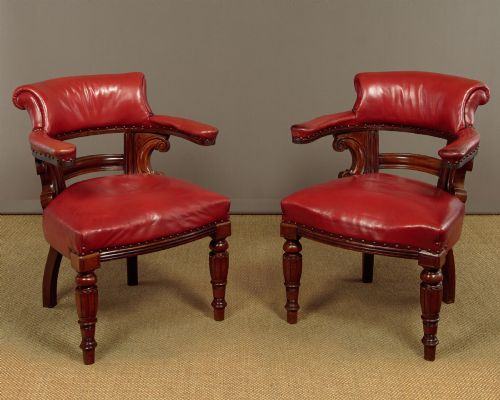
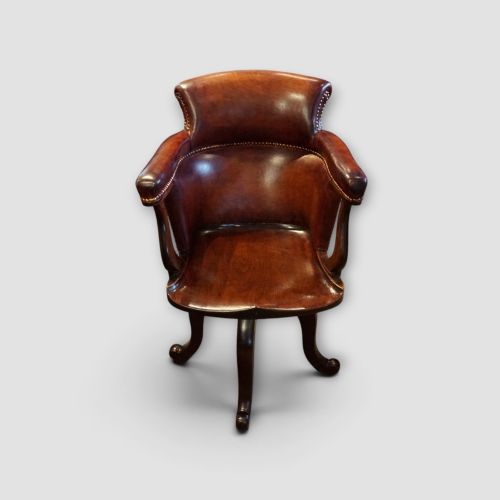


Antique Library Tub Chair
An antique library tub chair brings solid wood frames and deep upholstery together for long hours at a desk or reading table.
Antique Library Tub Chair
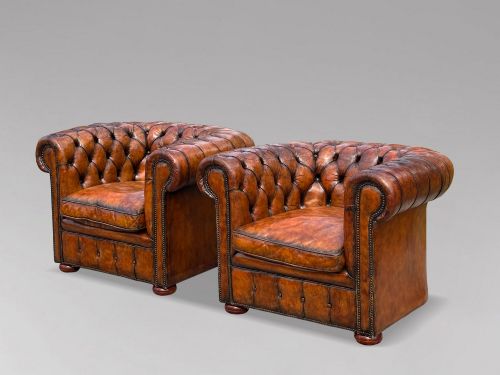
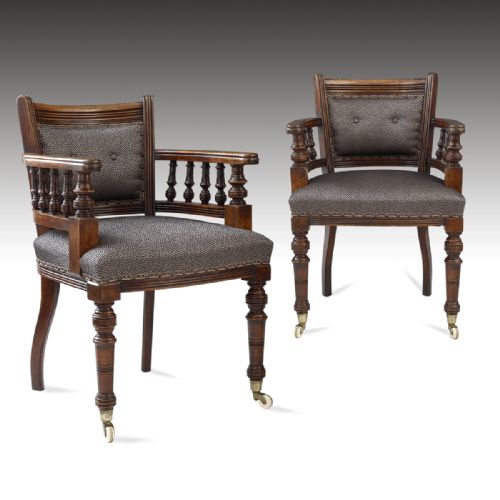
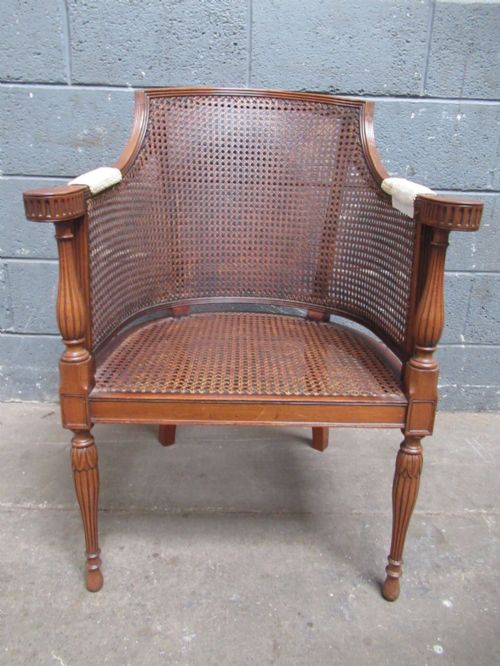
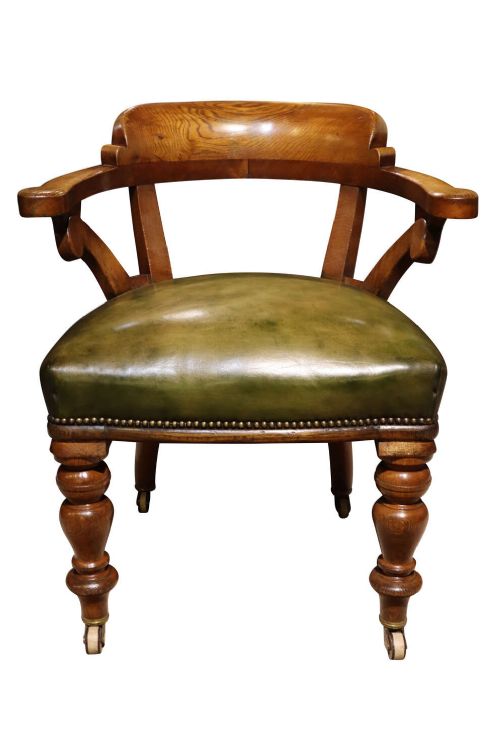
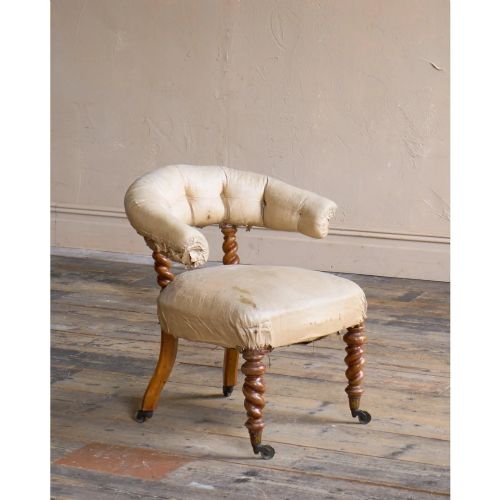
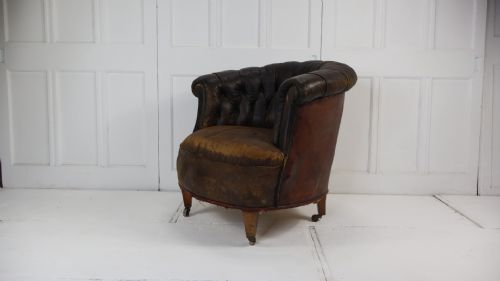
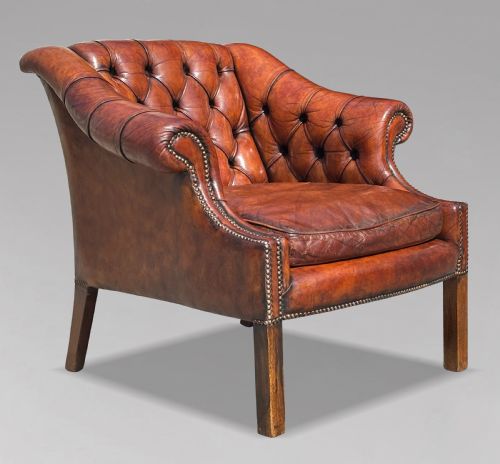
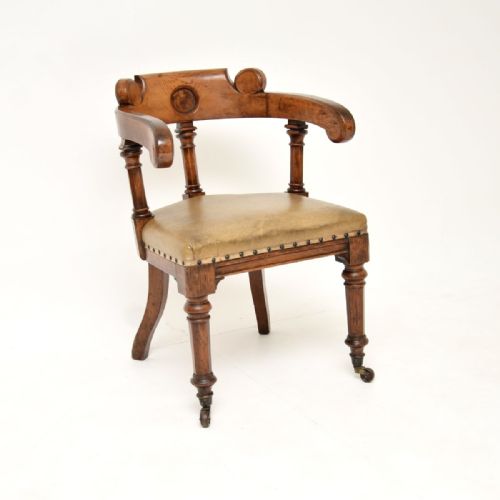
An antique library tub chair combines a rounded, enclosing backrest with a low-slung seat designed for comfort and extended reading sessions. These seating pieces appear frequently from nineteenth-century periods through the Edwardian era, taking forms such as desk armchairs, captain's chairs, and bergères. Mahogany and oak dominate the timber frames, often paired with supple leather or woven cane seats.
The Regency and Victorian periods supply many of the formal library examples seen here, whilst Edwardian variations tend toward lighter oak and beech construction. Certain models incorporate revolving mechanisms or brass inlay, shifting their function toward practical office use. Buyers encounter both single armchairs and matched pairs intended for partner desks or firesides.
Materials and construction methods
Cabinetmakers built these frames using dense hardwoods like mahogany, walnut, and oak, often steam-bending timber to achieve the characteristic curved tub profile. Joinery relied on traditional mortise and tenon joints to withstand the rotational stress placed upon desk and swivel chairs. Solid brass casters, brass inlay, and turned wooden legs frequently finish the lower framework.
Upholstered versions utilise stitched leather, velvet, or fabric stretched over coiled metal springs and horsehair stuffing, whilst caned variants employ split cane woven tightly through a frame channel. Ebonising, polishing with shellac, and wax finishes protect the timber surfaces while highlighting the grain of rosewood, burr elm, and mahogany.
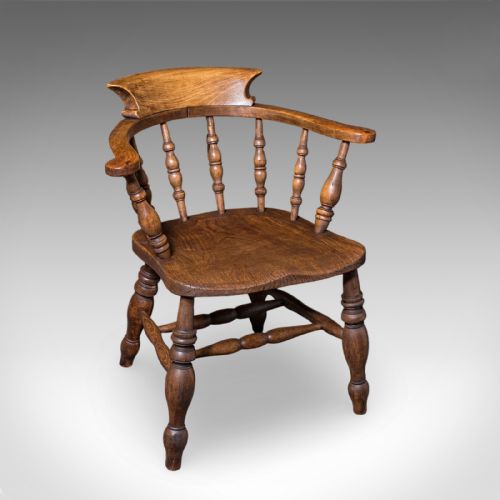
Smoker's bow chairs earned their name because the curved top rail provided comfortable arm support for gentlemen enjoying a pipe.
Judging quality and craftsmanship
The distinction between standard utility seating and exceptional library chairs rests upon the crispness of hand-carved details, the selection of figured timber veneers, and the integrity of the underlying frame joinery. Superior examples display tightly fitted joints that remain rigid over decades of use, alongside carefully matched wood grain on curved back rails.
Leather upholstery quality depends on the weight and tanning of the hide, where hand-tooled gilt borders and traditional deep buttoning reflect higher workshop standards. Cane work likewise varies from simple machine-pressed panels to intricate hand-woven split cane that maintains uniform tension across complex curves.
C. Hindley & Sons·Gillows
The Antique Library Tub Chair Glossary
- Tub chair
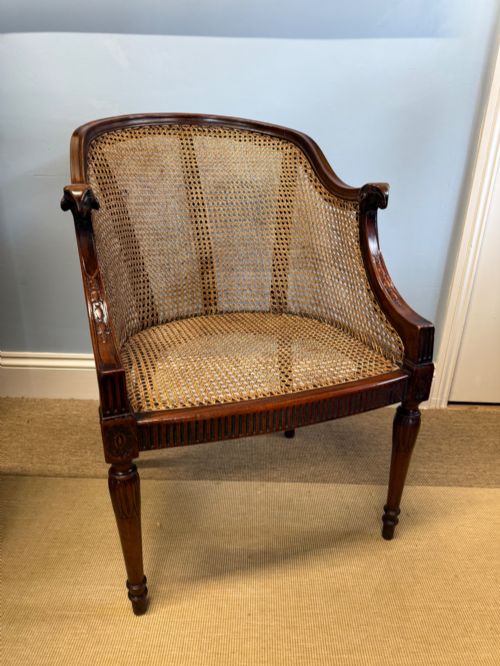
- An armchair featuring a continuous curved back and armrest rail that encloses the sitter. This rounded profile provides lower back support during long periods of reading.
- Bergère
- An upholstered French-style armchair with enclosed cane or wooden sides. The back and seat typically incorporate woven cane panels or loose cushions.
- Captain's chair
- A sturdy wooden armchair with a rounded spindle back resting on a low post framework. These chairs frequently serve at office desks and reading tables.
- Smoker's bow
- A low-backed Windsor armchair featuring a bentwood crest rail and turned spindles. It shares a similar lineage with the traditional captain's chair.
- Ebonisation
- A chemical or finishing process that darkens light timber to imitate expensive ebony. Victorian cabinetmakers utilised this technique on fruitwood and mahogany frames.
Antique Library Tub Chair: Frequently Asked Questions
What is an antique library tub chair?
An antique library tub chair is a supportive seating piece featuring a curved, enclosed back designed for reading rooms and private studies.
These chairs combine sturdy wooden frames in mahogany or oak with leather, fabric, or caned seating surfaces.
How were these chairs used originally?
They served scholars, readers, and professionals working at partners' desks, large tables, or reading stands in country houses.
The enclosed tub shape offered protection from drafts while providing comfortable support during long hours of study.
How do I care for leather upholstery?
Leather upholstery benefits from regular dusting with a soft dry cloth and occasional treatment with appropriate conservation waxes or leather balms.
Avoid placing these chairs in direct sunlight or near heat sources to prevent the hide from drying out.
How can I tell the period?
Dating relies on timber choices, turning styles, and construction methods characteristic of Regency, Victorian, or Edwardian cabinetmaking.
For instance, heavy brass inlay often indicates Regency pieces, while ebonised finishes point toward the Victorian era.