



Antique Library Accessories
Antique library accessories bring practical nineteenth and early twentieth century utility to a desk through polished mahogany, heavy brass, and carved wood.
Antique Library Accessories
When you search for antique library accessories, you are looking at items designed to organise books and correspondence on a desk or reading table. These pieces range from extending book slides and bookends to magnifying glasses, smokers stands, and desk tidies.
The versions you are most likely to meet on this page date from the Regency period through to the Art Deco era. Mahogany, oak, burr walnut, and carved wood dominate the domestic workspace forms.
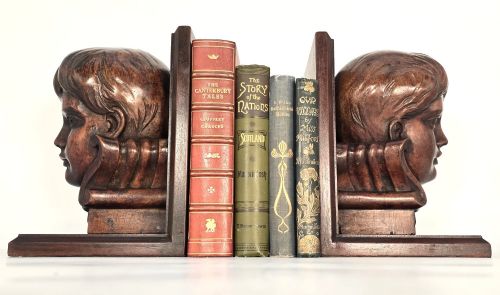
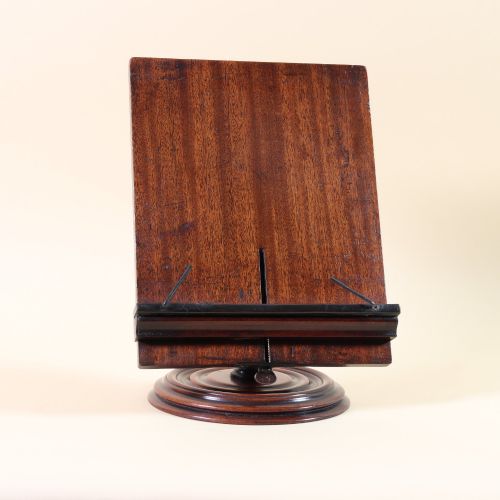
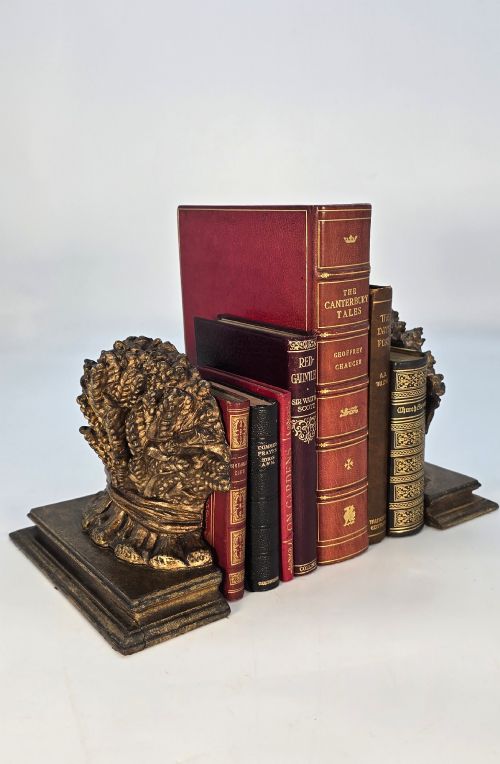
Book storage and reading aids form the largest portion of what survives today. You will encounter everything from ecclesiastical carved mahogany bookends to brass-mounted burr walnut book holders.
Materials and construction methods
Cabinet makers utilised dense hardwoods such as mahogany, rosewood, and oak for structural items like book rests, troughs, and desk stands. Brass mountings, hinges, and extending mechanisms provided durability and contrast against the dark timber.
Carved pieces often relied on softer woods or specialist techniques, particularly seen in Black Forest animal carvings and detailed relief work on bookends. Glass lenses for magnifying aids were fitted into brass, silver plate, or metal mounts.
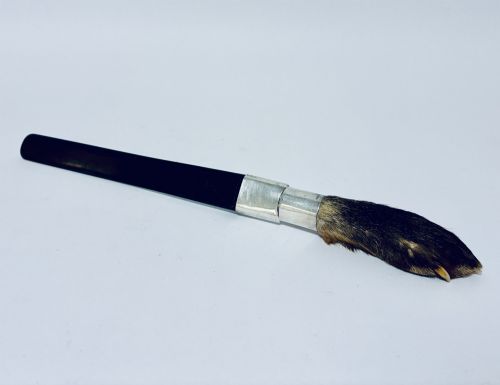
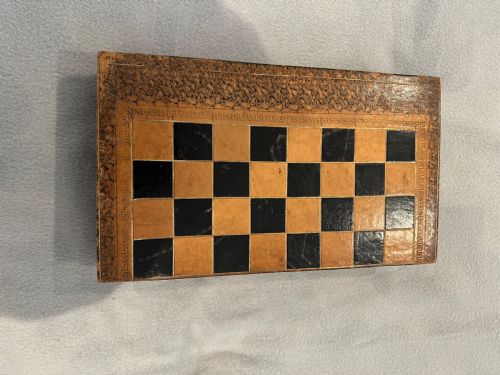
Leather and faux book bindings offered durable surfaces for games boards and desk blotters. Silver and horn were occasionally combined for smaller accoutrements like candlesticks and table gongs.
Distinctions in craftsmanship and design
The standard of carving and the weight of the materials separate standard items from superior pieces. Fine examples feature crisp detail in carved animal figures, such as bears or goldfish, rather than soft or generalized moulding.
The integration of secondary materials dictates overall quality. High-grade items incorporate solid brass mounts, well-fitted extending mechanisms, and painted ceramic plaques rather than stamped plated substitutes.
Mappin and Webb·Thornton Smith Co
The Antique Library Accessories Glossary
- Book slide
- An extending wooden stand designed to hold a varying number of volumes upright between two fixed or sliding ends.
- Standish
- A heavy desk-top tray or stand fitted to hold inkwells, pens, and sealing wax.
- Magnifying glass
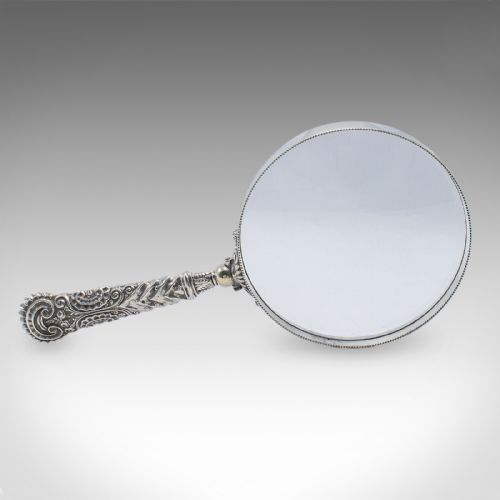
- A reading aid featuring an optical glass lens set into a brass, silver, or wooden frame with a handle.
- Black Forest
- A nineteenth-century style of carved wooden animal sculpture originating from the Swiss and German border regions.
- Gothic Revival
- An architectural and decorative style characterised by pointed arches, ecclesiastical motifs, and heavy timber construction.
Antique Library Accessories: Frequently Asked Questions
How do I maintain wood library accessories?
Keep wooden pieces away from direct heat sources to prevent timber from splitting or warping over time. A light application of beeswax helps maintain the polished finish of mahogany and oak.
Avoid using modern chemical sprays on antique timber or brass mounts. Gentle dusting with a dry lint-free cloth is sufficient for regular care.
What is an extending book slide?
An extending book slide is a desk accessory featuring a sliding base that expands or contracts to fit a specific row of books. These devices kept volumes upright before fitted shelving was common in every room.
Victorian examples frequently incorporate brass tracks and matching wooden ends to complement the desk furniture of the period.
How are magnifying glasses mounted?
Magnifying glasses from this period use brass, silver plate, or metal frames attached to handles made of horn, wood, or metal. Angle-poise stands allowed the glass to remain stationary above a map or text.
Larger reading aids were designed for desk placement rather than handheld use.
Where were smokers stands placed?
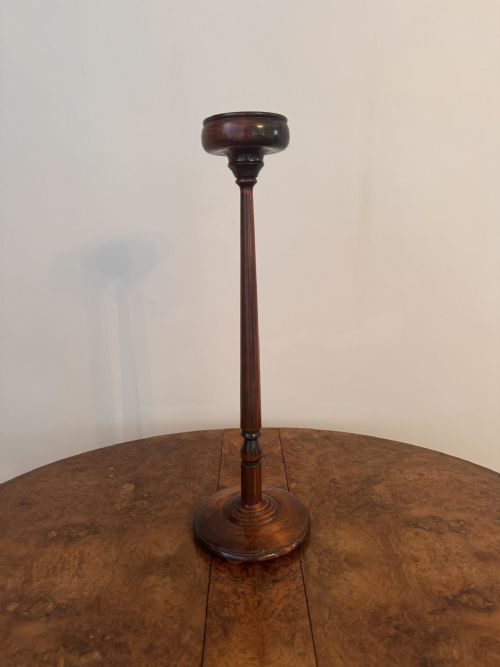
Smokers stands and cigar cabinets stood beside desks or armchairs in libraries and smoking rooms to hold tobacco, pipes, and matches. These pieces were built from sturdy woods like oak and mahogany to withstand heavy daily use.
Locking compartments kept tobacco fresh and kept smoking implements tidy when not in use.