





Antique Liberty Chair
An antique liberty chair brings the distinctive aesthetic of the famous London store into a room through honest materials and thoughtful design.
Antique Liberty Chair
When you search for an antique liberty chair, you encounter a distinct blend of Arts and Crafts utility, aesthetic movement exoticism, and Edwardian domestic comfort. These pieces reflect the retailer's revolutionary approach to interior design from the late nineteenth and early twentieth centuries.
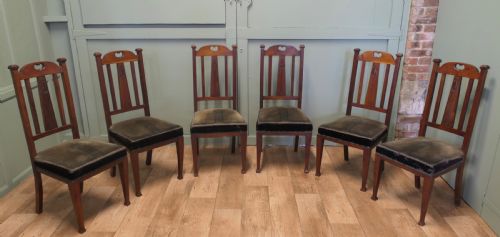
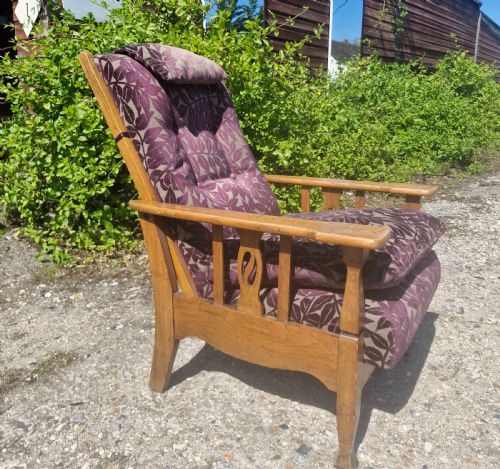
You are most likely to meet sturdy oak dining chairs, low rush-seated armchairs, and occasional seating produced during the Victorian and Edwardian periods. Many items bear direct association with the Regent Street firm or mirror its signature aesthetic through retailer supply and attribution.
The selection ranges from simple ladder-back forms to elaborate inlaid corner chairs featuring Mashrabiya panels. Each piece demonstrates how commercial retail shaped domestic tastes by offering artistic furniture to the middle classes.
How they were made
Makers utilised solid timbers such as oak, beech, ash, walnut, and assorted hardwoods to build frames designed for daily service. Turnery, pegged joints, and carved details provide structural integrity without concealing the natural grain of the wood.
Seating surfaces incorporate woven rush, cane, leather, and textured velvet or standard fabric upholstery. Brass elements often appear as decorative tacks, castors, or hinges, complementing the warm tones of the woodwork.
Antique Liberty Chair Retail Price Guide 2026
Typical asking prices for liberty chair among the pieces listed under this phrase on Sellingantiques today, from the lower quarter to the upper quarter. They describe what is for sale here now, not the wider market.
Some chairs arrived with Mashrabiya panels, proving that nineteenth-century Londoners were entirely willing to let Moorish screens invade the Edwardian parlour.
What varies in quality
The distinction between standard commercial output and exceptional workshop production lies in the crispness of the carving, the tightness of the joinery, and the selection of timber. Pieces produced by associated makers or specific designers display superior hand-finishing and more ambitious proportions.
Upholstery preservation and the integrity of woven rush or cane seating significantly affect the character of a surviving chair. Pieces retaining their original fabric or tightly bound rush show a higher degree of historic preservation than those rebuilt in later decades.
Morris and Co·Goodyers of London·Ford Madox Brown·Charles Bevan·William Birch·Leonard Wyburd
The Antique Liberty Chair Glossary
- Arts and Crafts
- A design movement prioritising traditional craftsmanship, simple forms, and visible construction methods. This philosophy guided much of the furniture retailed during the late nineteenth century.
- Mashrabiya
- An intricate wooden latticework screen made from turned bobbins, often incorporated into Anglo-Moorish corner chairs. It reflects the global influences embraced by London retailers of the period.
- Rush seat
- A seating surface woven from dried marsh grass twisted into cord, frequently found on ladder-back and low armchairs. It provides a durable and tactile alternative to solid wood or upholstery.
- Ladder-back
- A chair back featuring horizontal slats set between two upright posts. This traditional form was revived with great success during the Arts and Crafts period.
- Carver
- A traditional term for an armchair, often supplied alongside matching side chairs to form a complete dining set. These pieces usually feature open arms suited to dining table use.
Antique Liberty Chair: Frequently Asked Questions
How do I identify an authentic piece?
Authentication relies on examining construction methods, timber selection, and stylistic alignment with known retail catalogues from the period. Some items bear paper labels, stamps, or specific attribution tied to the Regent Street store and its principal designers.
Comparison with documented archive pieces helps clarify whether a chair originated directly from the firm or simply reflects its widespread domestic influence.
What woods were commonly used?
Oak forms the primary material for most dining and low armchairs, reflecting the preference for honest, unpretentious timbers during the Arts and Crafts movement. Walnut, ash, beech, and assorted hardwoods also appear frequently in specific chair types.
Darker polished finishes were common in Victorian examples, while later Edwardian pieces often highlight the natural grain of lighter oak.
How should I care for rush seats?
Rush seating requires stable indoor humidity to prevent the dried marsh grass from becoming brittle over time. Regular gentle dusting with a soft brush keeps the weave clean without introducing excess moisture.
Placing chairs away from direct heat sources and strong sunlight preserves both the tensile strength of the cord and the natural colour of the fibre.
Were these chairs made in sets?
Dining chairs were frequently produced in matched sets of four, six, or more, often accompanied by a central dining table or carver armchairs. Surviving complete sets remain desirable for period dining rooms.
Individual occasional chairs, corner chairs, and low armchairs were sold as single decorative items for drawing rooms and libraries.