

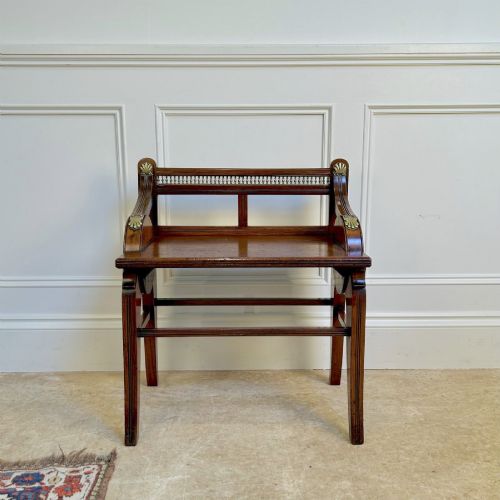
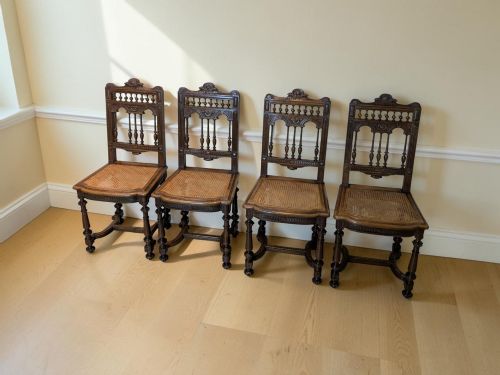
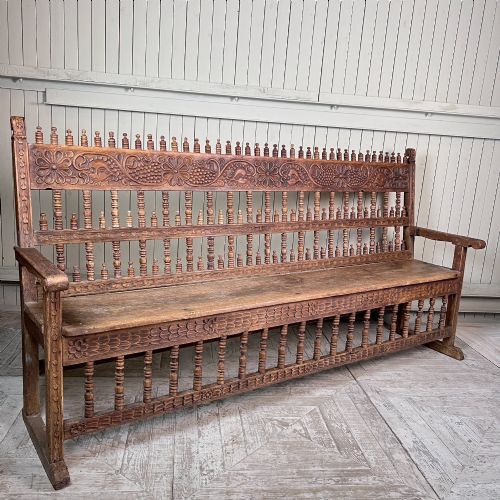
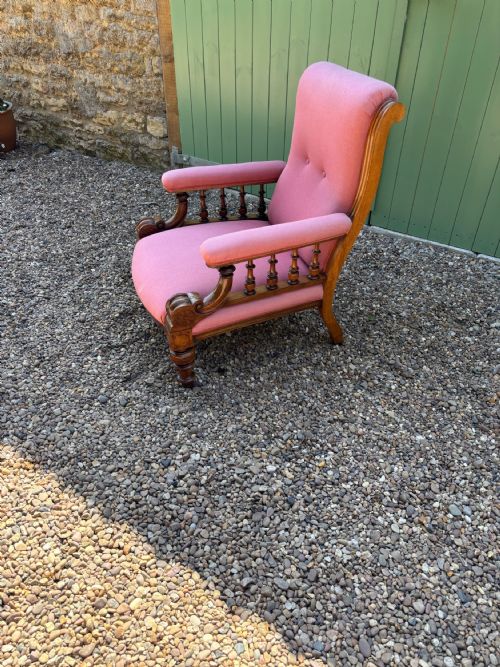
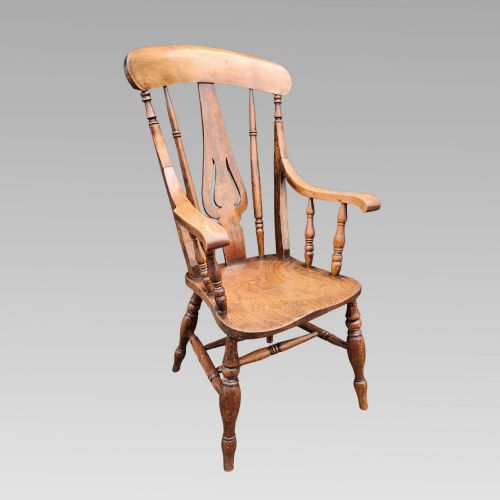
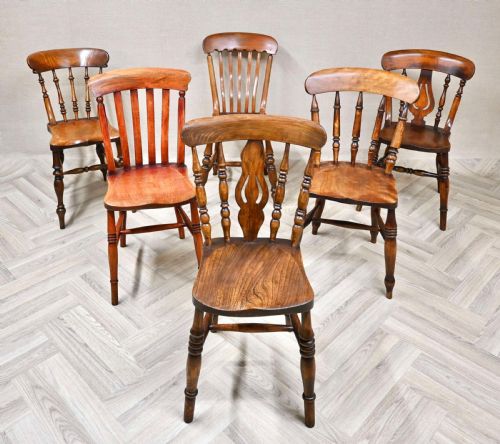


Carved Spindle Back Seat
A carved spindle back seat offers sturdy construction and classic joinery, making it a functional choice for traditional interiors.
Carved Spindle Back Seat
A carved spindle back seat encompasses a variety of wooden chairs, armchairs, and benches designed with upright turned or shaped uprights supporting the backrest.
The selections available here range from English elm Windsor armchairs and oak Thames Valley pieces to Spanish colonial hardwood benches and Swedish bobbin thrones.
Buyers will most frequently encounter nineteenth-century examples and Victorian farmhouse chairs alongside earlier eighteenth-century vernacular forms.
Materials and construction methods
These seats rely on domestic and imported timbers such as mahogany, oak, elm, beech, walnut, ash, and satin birch, often paired with carved details or turned components.
Joinery techniques involve traditional turning for spindles and structural framing, sometimes incorporating solid plank seats and steam-bent components for arched backs.
Carved Spindle Back Seat Retail Price Guide 2026
Typical asking prices for carved spindle back seat among the pieces listed under this phrase on Sellingantiques today, from the lower quarter to the upper quarter. They describe what is for sale here now, not the wider market.
Form variations range from compact nursing chairs and writing armchairs to wide Spanish colonial benches and Swedish painted settles.
Distinctions in quality
Quality rests on the integrity of the original timber selection, the crispness of the turning and carving work, and the structural tightness of the joints.
Finer examples demonstrate careful selection of figured woods like mahogany or satin birch alongside robust vernacular construction that survives centuries of daily use.
Liberty of London
The Carved Spindle Back Seat Glossary
- Spindle back
- A chair back constructed from vertical turned wooden rods or spindles. These elements distribute pressure evenly along the sitter's spine.
- Windsor
- A chair built with a solid wooden seat into which the legs, back spindles, and bow are separately bored and wedged. This technique creates a rigid, unified frame.
- Vernacular
- Regional furniture built by local craftsmen using traditional methods rather than strict academic styles. These pieces reflect local timber availability and practical needs.
- Bobbin
- A style of turning where the wood is shaped into a series of rounded spheres resembling textile bobbins. It appears frequently on nineteenth-century framework.
- Settle
- A wooden bench featuring a high solid back, enclosed arms, and often a storage compartment beneath the seat. They were designed to block draughts in large rooms.
Carved Spindle Back Seat: Frequently Asked Questions
How do I identify a genuine antique Windsor chair?
Look for saddle-shaped solid seats, visible wedged joints where the legs pass through the base, and minor variations in hand-turned spindles that indicate individual craftsmanship.
Examine the wood for genuine age patina, tool marks underneath the seat, and timber shrinkage appropriate to the nineteenth century or earlier.
Where should I place a carved wooden bench at home?
These benches work well in entrance hallways, along narrow corridors, or paired with a dining table where space permits a sturdy wooden seat.
Ensure the piece rests on a level floor and keep it away from direct heat sources to protect the historic timber.
Are these chairs suitable for daily dining use?
Many nineteenth-century farmhouse and Windsor designs were built specifically for everyday practical use around the home and remain robust today.
Check that all leg and back joints remain firm before regular seating use.
What is the difference between elm and oak in these seats?
Elm offers an interlocking grain that resists splitting, making it the traditional choice for solid carved chair seats that require durability under stress.
Oak provides a heavier, stiffer frame with distinct grain patterns utilised for structural uprights and decorative panels.