
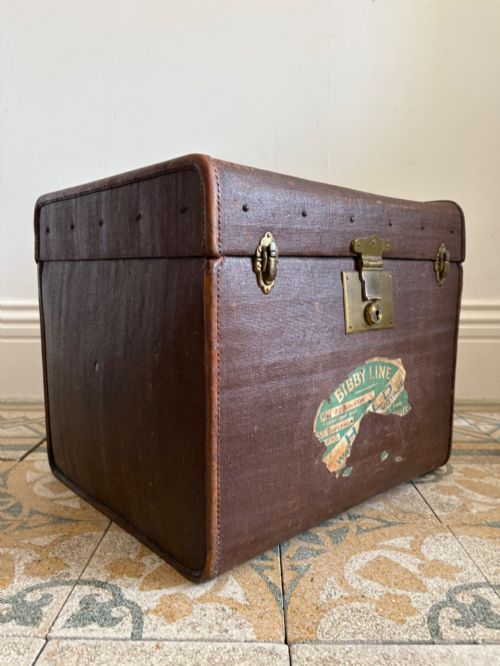


Antique Leather Hat Case
An antique leather hat case is a sturdy piece of period travel gear designed to protect tall hats, offering robust storage for the modern home.
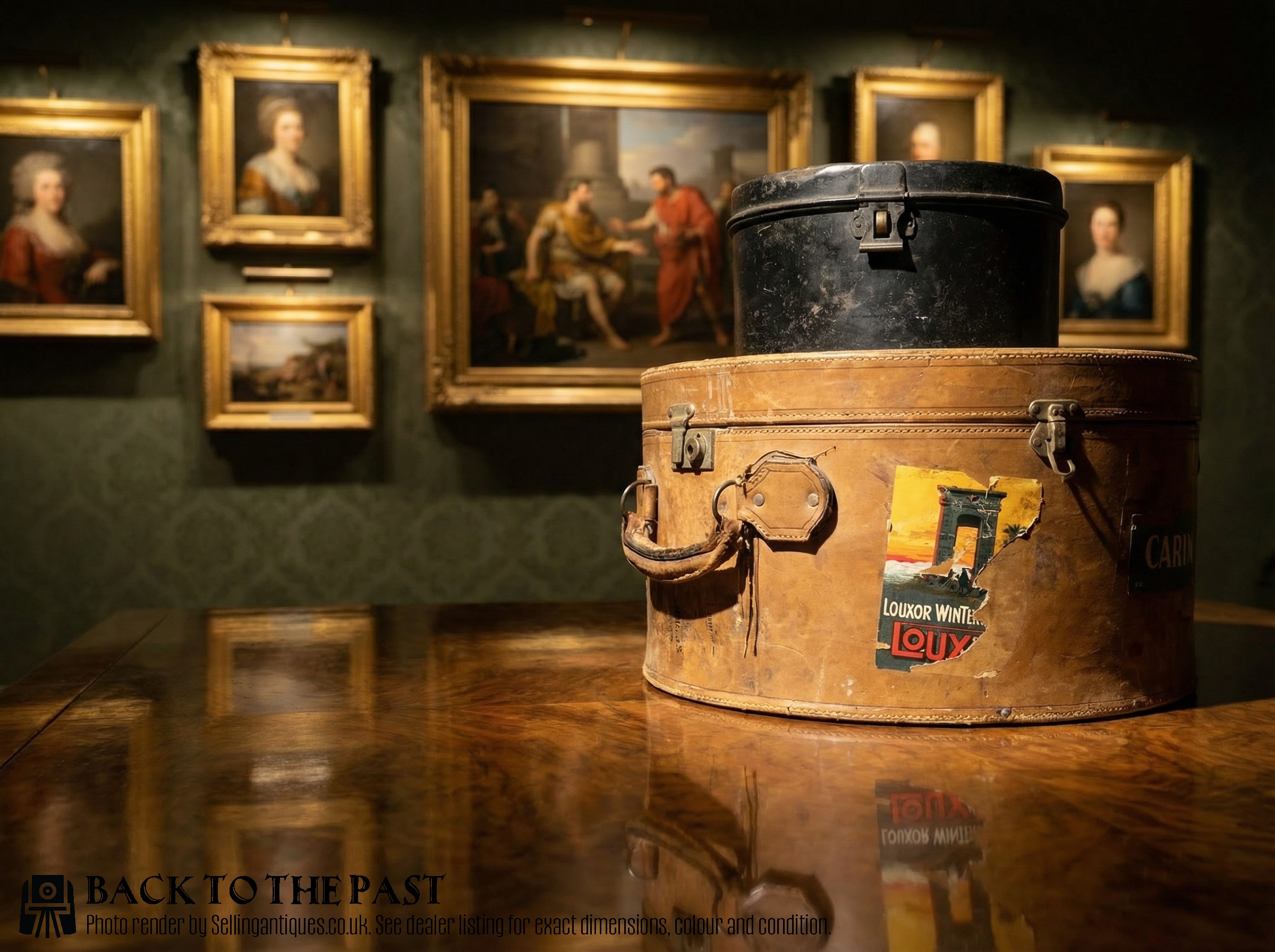
Antique Leather Hat Case
When you search for an antique leather hat case, you encounter robust storage containers designed specifically to protect formal headwear during travel. These pieces emerge from periods ranging through the Georgian, Victorian, and Edwardian eras, extending into the 1920s.
The versions most commonly met on this page include single and multi top hat boxes, alongside larger canvas and leather luggage trunks. They survive in forms that reflect the rigorous travel requirements of past centuries.
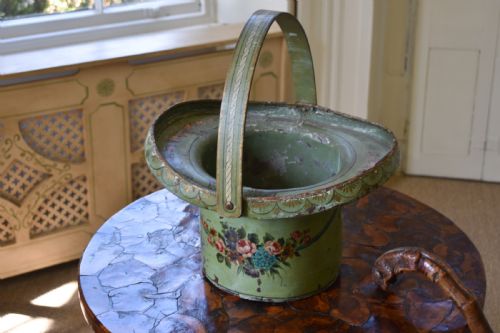
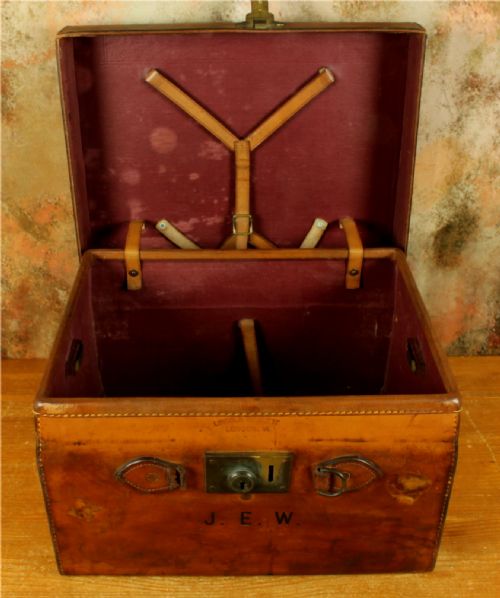
Makers such as Lincoln Bennett, J.E.W., JW Allen, and Goyard appear in the record, alongside Army and Navy supply pieces. These items range from simple painted Georgian boxes to elaborate military and transit cases.
How they were made
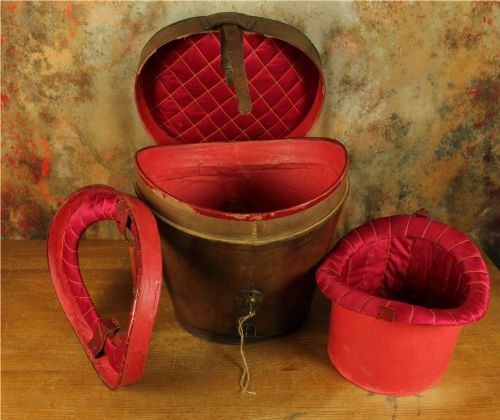
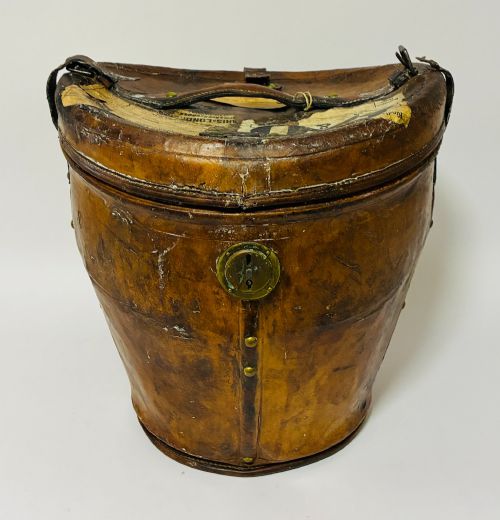
Construction relies heavily on thick leather moulded or stitched over rigid carcases, frequently reinforced with brass hardware for durability on long journeys. Canvas, paint, and fabric also appear as exterior coverings or internal linings.
Interiors often feature delicate silk, silk plush, or paper linings designed to cushion the delicate nap of a top hat. Metal elements secure the lids and provide reliable closure mechanisms for transit.
Listings feature pieces spanning the Georgian, Victorian, Edwardian, and 1920s periods, utilising leather, brass, canvas, paint, silk, and paper.
What varies in quality
Quality rests in the integrity of the structural leather and the preservation of internal silk and paper linings. Pieces by notable makers command attention through superior hardware and refined proportions.
The presence of original travel labels, monograms, and working brass locks elevates a piece from a basic utilitarian container to a compelling historical artefact. Simpler painted Georgian examples derive their appeal from age and decorative presence.
Lincoln Bennett·JW Allen·Goyard
The Antique Leather Hat Case Glossary
- Top Hat
- A tall, cylindrical men's hat of beaver fur or silk, worn with formal attire. These hats required specialised cylindrical cases for safe transport.
- Transit Case
- A heavy-duty luggage form built to withstand the rigours of long-distance travel. These cases often accommodated multiple hats or layered storage.
- Silk Plush
- A high-pile woven silk fabric used to line the interiors of fine hat cases or cover formal hats. It provides a soft cushion that protects delicate surfaces.
- Brass Hardware
- Metal fittings including locks, hinges, and corner brackets made from copper and zinc alloy. Quality pieces utilise solid brass for durability and corrosion resistance.
Antique Leather Hat Case: Frequently Asked Questions
What fits inside an antique leather hat case?
These cases were originally built to hold formal silk or beaver top hats securely during travel. Today, buyers utilise them for storing smaller accessories, gloves, or simply as sculptural decorative objects in a hallway or study.
Larger multi-hat trunks accommodate several items at once, while single boxes suit a solitary statement piece.
How do I date an antique leather hat case?
Dating relies on the overall form, the style of the brass hardware, and any maker's stamps or labels found inside. Georgian and Victorian examples generally display heavier hand-stitching and simpler interior fittings.
Later Edwardian and 1920s pieces often incorporate canvas panels, distinct maker signatures like Goyard or Lincoln Bennett, and more sophisticated internal compartments.
Are these cases waterproof?
While heavy treated leather and canvas exteriors offered significant protection against rain during nineteenth-century transit, ageing seams mean modern owners should not rely on them for weatherproofing.
The materials are inherently robust, but decades of exposure require storing them in dry environments to preserve the leather and internal paper or silk linings.
How should I clean the leather exterior?
Maintenance involves gentle dusting with a soft cloth and applying appropriate leather balms sparingly to prevent the hide from drying out. Avoid harsh chemical cleaners that might strip original patination or damage historic travel labels.
Preserving the surface marks and labels maintains the historical character and travel history of the piece.