

Antique Leather Cabinet
An antique leather cabinet brings tactile warmth and disciplined storage into a room, uniting rich hide surfaces with fine period timbers.
Antique Leather Cabinet
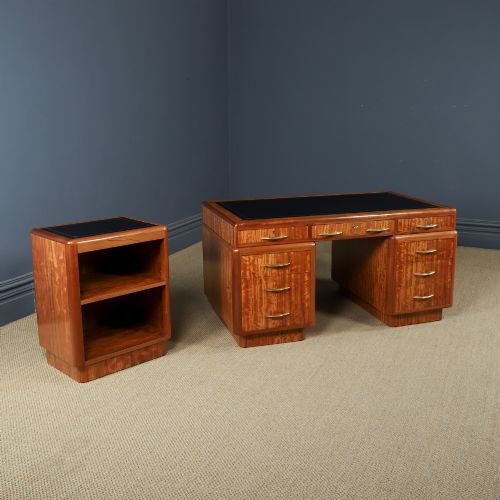
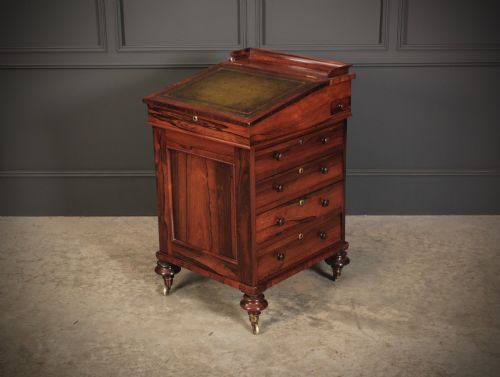
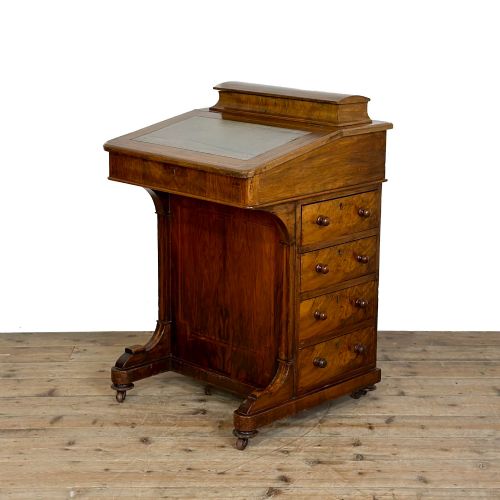
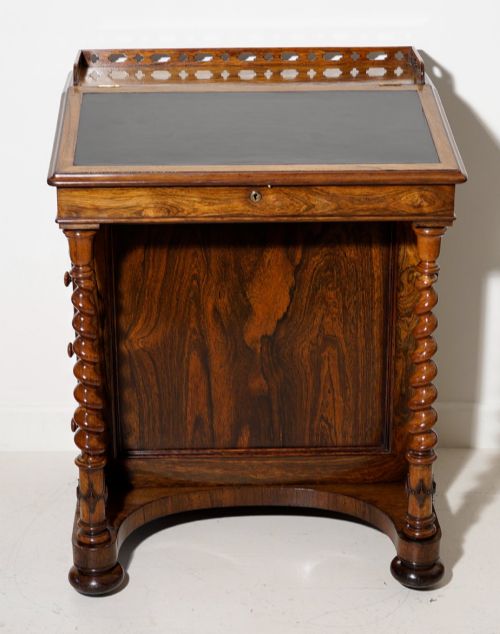
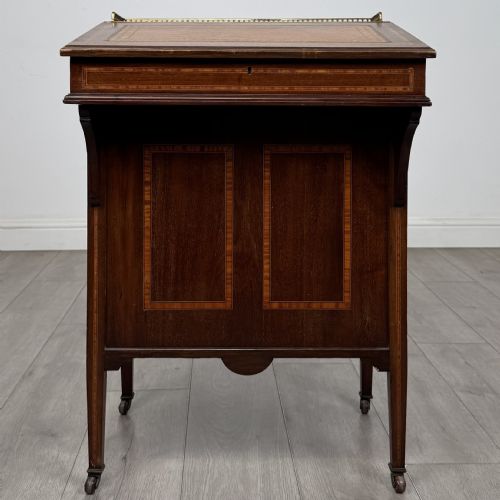
When you search for an antique leather cabinet, you encounter a specialised form of antique furniture designed for writing, filing, and storage. These pieces bridge the gap between utilitarian office furniture and fine domestic cabinetry, incorporating leather writing surfaces or bound elements.
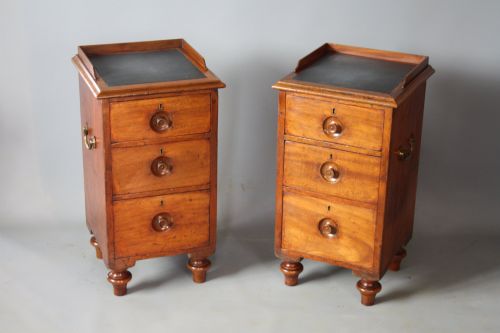
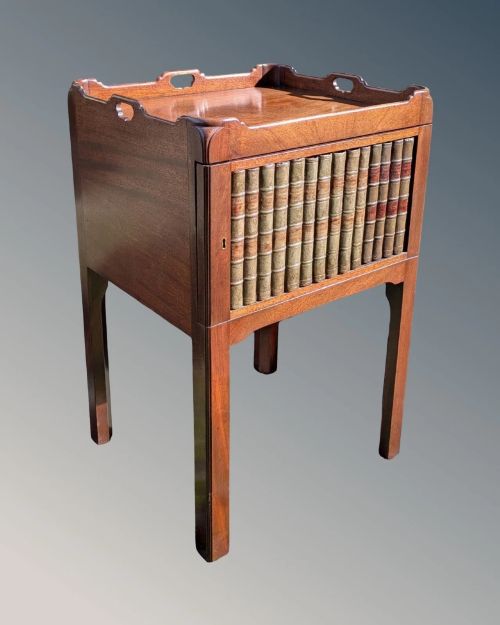
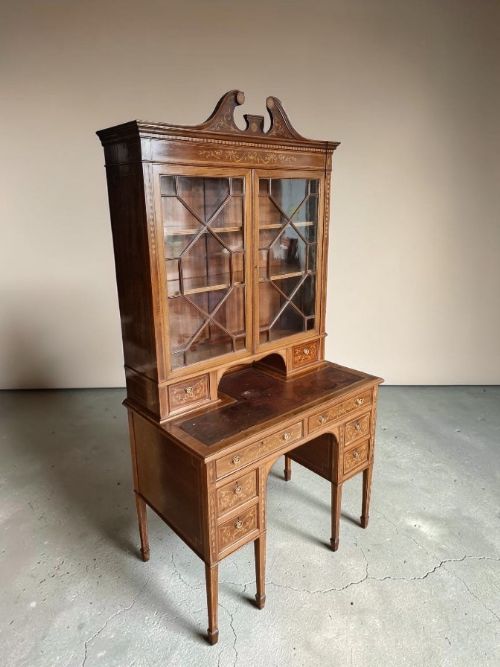
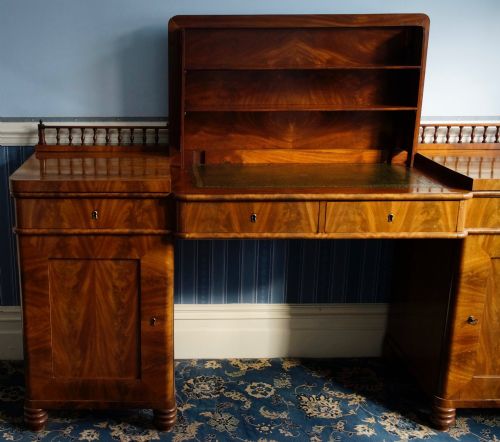
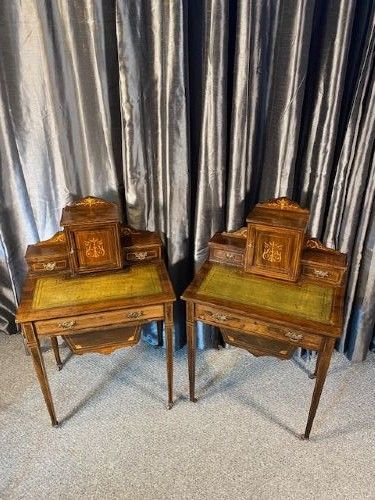
The selections available span multiple eras, drawing heavily from Victorian, Regency, and Georgian periods. You will frequently find Davenport desks, writing tables, and secretaire bookcases featuring integrated leather inserts alongside dedicated campaign filing units and bedside cabinets.
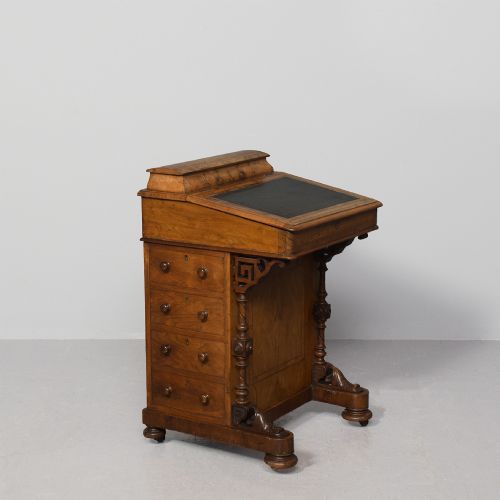
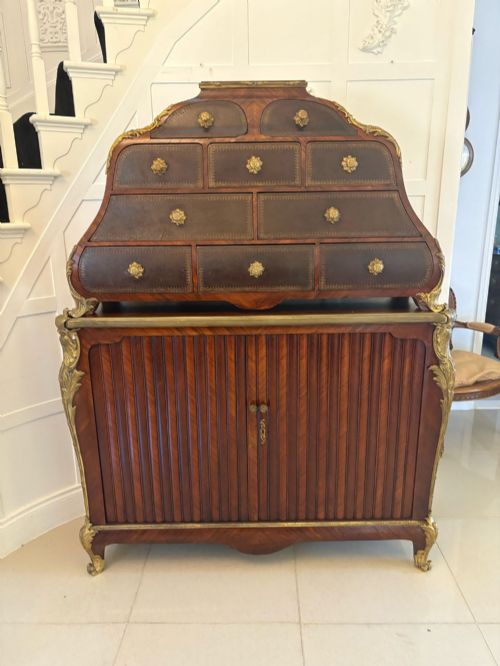
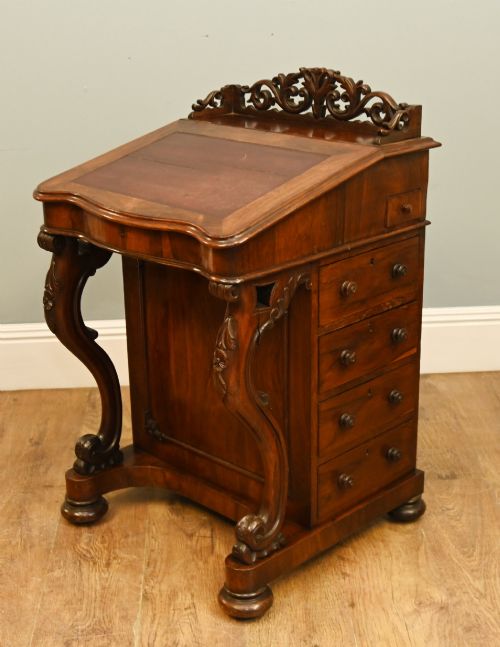
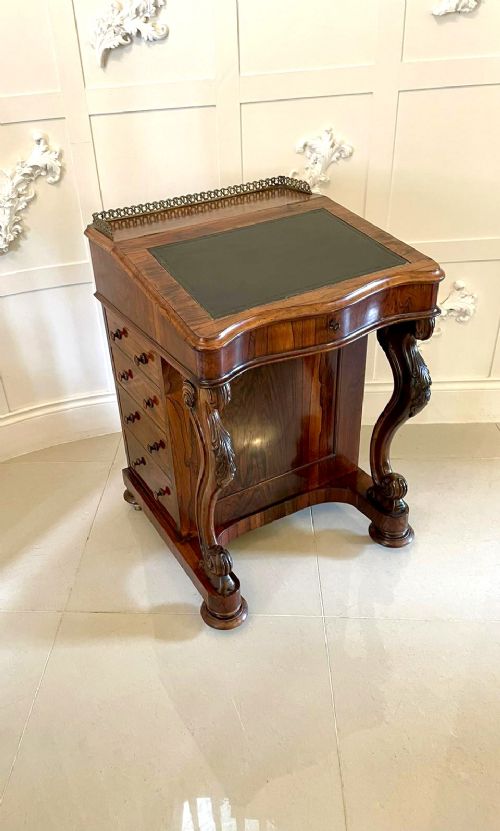
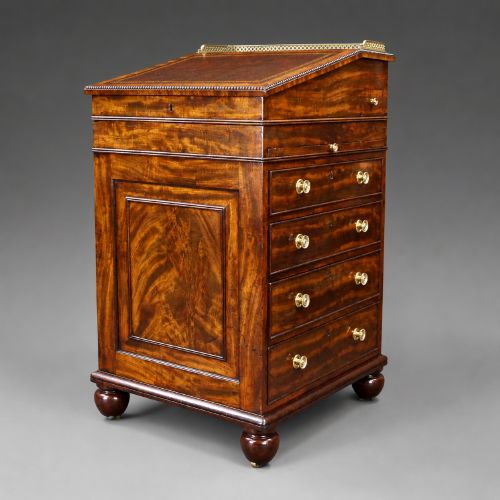
Origins range from English workshops, notably those of Gillows, to French makers producing refined cartonnier chests and neoclassical office sets. The primary form met on this page is the compact writing desk or Davenport, where sloping leather-lined surfaces conceal fitted interiors.
Materials and construction
Makers built these cabinets using dense primary hardwoods such as mahogany, burr walnut, rosewood, and satinwood, often selecting figured veneers to cover structural carcases. Solid timbers provided durability for functional pieces like campaign filing cabinets and writing desks.
Leather formed the primary writing and lining material, frequently tooled with gold leaf borders to frame the working surface. Brass mounts, corner brackets, and handles reinforced the construction, particularly on campaign pieces and French ormolu-mounted cabinets designed for travel or formal display.
Antique Leather Cabinet Retail Price Guide 2026
Typical asking prices for leather cabinet among the pieces listed under this phrase on Sellingantiques today, from the lower quarter to the upper quarter. They describe what is for sale here now, not the wider market.
An eighteenth-century bureau sits beside a preserved Nile crocodile, proving antique interiors embraced unexpected company.
Judging execution and finish
Quality rests upon the selection of timber figures and the crispness of internal fittings, such as secret drawers and stationary compartments within a Davenport. Superior pieces display book-matched veneers and precise joinery that remains tight across centuries of use.
The treatment of secondary materials dictates overall execution, seen in the fineness of brass mounts and the tooling upon leather surfaces. Maker attribution, such as documented work from Gillows, elevates a piece through superior carving and structural integrity.
Gillows of Lancaster·Mercier Frères
The Antique Leather Cabinet Glossary
- Davenport desk
- A compact writing desk featuring a sloping, leather-lined desktop that lifts to reveal drawers, typically mounted over a pedestal of side drawers.
- Cartonnier
- A structured cabinet fitted with upright compartments or pigeonholes for sorting papers, often surmounted by a decorative top and associated with French writing furniture.
- Secretaire
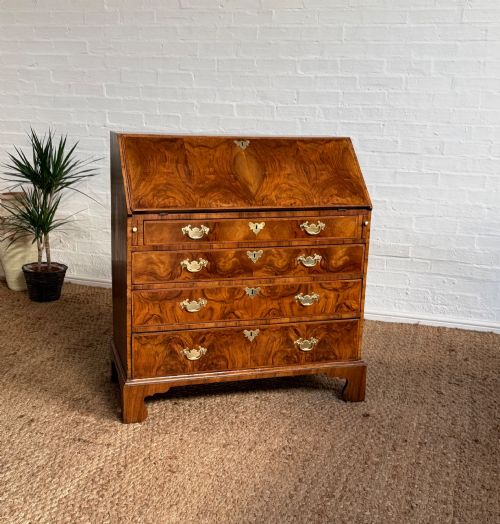
- A piece of furniture incorporating a pull-down writing flap that conceals a fitted interior of small drawers and pigeonholes.
- Ormolu
- Gilded bronze used for decorative mounts and accents on French cabinets and desks of the nineteenth century.
- Campaign furniture
- Dismantling or robustly braced furniture designed for travel, frequently fitted with brass corners and recessed carrying handles.
Antique Leather Cabinet: Frequently Asked Questions
What is a Davenport desk?
A Davenport desk is a small writing cabinet featuring a sloping lid inset with leather. The upper section conceals fitted compartments, while the pedestal below contains banks of drawers.
First popularised in the late eighteenth and nineteenth centuries, this form provided a space-efficient writing station for domestic use.
How were leather writing surfaces finished?
Writing surfaces were inset using tanned leather, frequently decorated with blind or gold-tooled borders around the perimeter. This provided a smooth, durable plane for handwriting.
Craftsmen secured the leather directly into timber recesses on desks and secretaire drawers.
Where were these cabinets used?
These pieces served in domestic studies, libraries, and bedrooms as private writing and storage stations. Campaign variations were built for travel and military use.
Their compact footprints allowed them to function in principal reception rooms without dominating the floor space.
How do I care for antique leather?
Maintain antique leather by keeping it away from direct sunlight and heat sources that dry out the hide. Gentle dusting and occasional specialist conservation waxes preserve the material.
Avoid modern chemical cleaners which strip the original tooling and pigment.