




Antique Leaf Games Table
An antique leaf games table brings folding ingenuity and polished timber to the drawing room, offering a dual surface for both cards and tea.
Antique Leaf Games Table
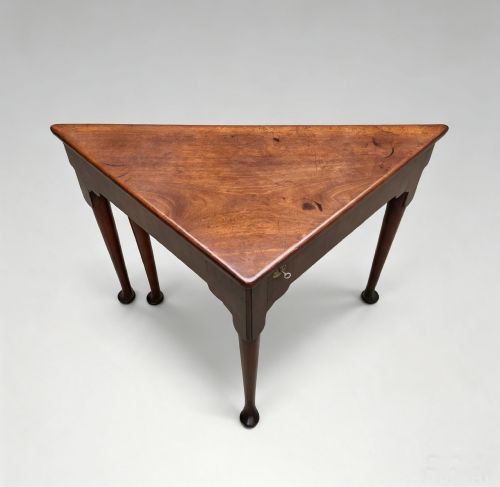
An antique leaf games table combines domestic utility with social pastimes, materialising as foldover tops, envelope designs, and drop leaves across Georgian, Regency, and Victorian periods.
The pieces on this page span walnut, mahogany, and rosewood constructions, frequently taking the form of card tables, occasional tables, and combined tea and games surfaces.
Originating largely from British and Irish workshops alongside continental examples, these tables accommodate domestic entertainment through clever pivoting and unfolding mechanisms.
Materials and Construction
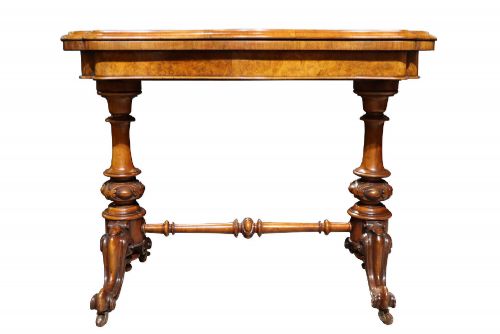
Cabinet makers utilised dense timbers such as mahogany, rosewood, and burr walnut, often applying intricate floral marquetry, satinwood inlay, or brass mounts to the primary surfaces.
Structural ingenuity defined the construction, employing hinged leaves, folding tops, and rotating mechanisms supported by carved pedestals, cabriole legs, or folding corner brackets.
Secondary materials included oak for internal framing and specialised fabric or gaming wells inset into the surfaces for cards and counters.
Listings feature mahogany, rosewood, burr walnut, and satinwood, spanning Georgian, Regency, and Victorian eras alongside occasional French and Dutch pieces.
Markers of Quality
Excellence rests in the precision of the pivoting or folding mechanism, where top-tier examples operate with seamless alignment between the leaves and the supporting frame.
The selection of timber grain, particularly matched burr walnut or figured mahogany, separates standard production from superior pieces commissioned from prominent makers.
Finishing details such as hand-cut inlay, carved supports, and well-preserved original polished surfaces dictate the standing of an individual table.
Gillows
The Antique Leaf Games Table Glossary
- Envelope table
- A card table featuring four triangular flaps that swivel open to reveal a baize-lined interior. This clever folding mechanism became popular during the Victorian period.
- Turn over leaf
- A hinged table top that folds out to double the surface area for gaming or dining. It usually rests on a swinging rear leg or pivots on the frame.
- Marquetry
- Decorative veneer work forming pictorial or geometric patterns using various coloured woods. Craftsmen cut contrasting timbers like satinwood and walnut to adorn the top.
- Pembroke table
- A small occasional table with hinged drop leaves on two opposing sides. These versatile pieces often incorporated small drawers and slender legs.
- Baize
- A coarse woolen fabric traditionally used to line the playing surfaces of card tables. It provides a soft, durable mat for dealing cards and placing gaming pieces.
Antique Leaf Games Table: Frequently Asked Questions
How do you open an antique leaf games table?
Most models feature a top that either rotates ninety degrees before folding flat or lifts on hinges while the rear leg swings outward to support the weight.
Care must be taken to operate the hinges gently, ensuring no hidden pivot locks remain engaged before moving the timber leaves.
What were these tables originally used for?
Owners used them primarily for evening social pastimes such as whist, chess, and backgammon, utilising the hidden wells to store playing cards and counters.
Between gatherings, the leaves folded down to function as side tables, tea tables, or decorative display surfaces in the parlour.
How do I care for the polished wooden top?
Keep the timber away from direct sunlight and steady heat sources to prevent the veneer from drying, cracking, or warping over time.
Apply a traditional beeswax polish sparingly and buff with a soft cloth to maintain the lustre of mahogany, walnut, or rosewood surfaces.
How do I identify a Georgian games table?
Georgian examples typically feature solid mahogany or finely figured veneers, straight or cabriole legs ending in pad or claw-and-ball feet, and restrained proportions.
They rely on crisp architectural mouldings and subtle brass hardware rather than the heavier marquetry and elaborate carving found on later Victorian pieces.