





Antique Lattice Armchairs
Antique lattice armchairs bring refined geometric fretwork into the room, offering sturdy seating with intricate openwork backrests.
Antique Lattice Armchairs
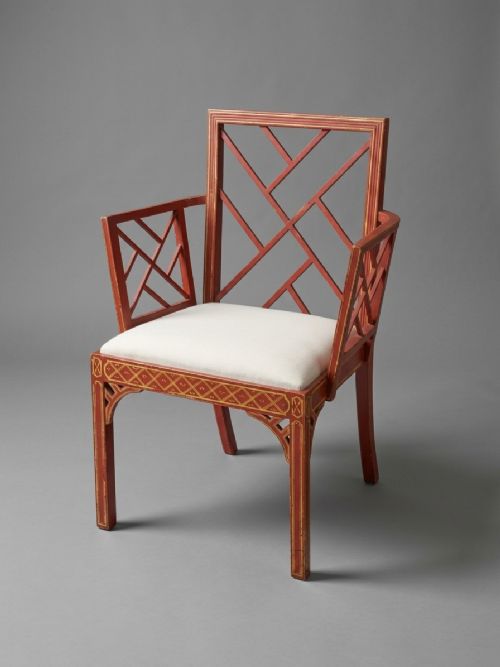
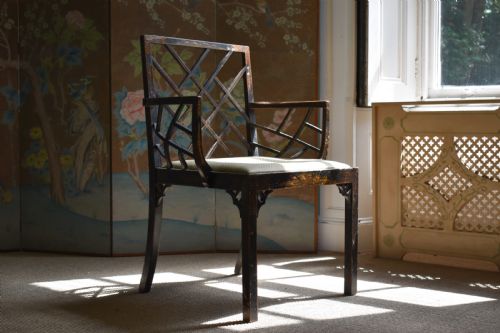
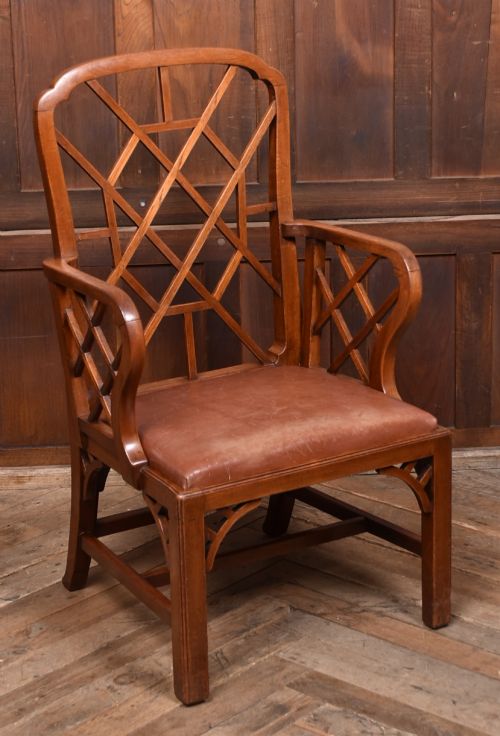
When buyers search for antique lattice armchairs, they look at seating defined by open fretwork backrests, crossing wooden bars, and Chinese-inspired or Gothic geometric patterns. These pieces span the eighteenth and nineteenth centuries, alongside Edwardian revivals, offering robust frames designed for reception rooms, libraries, and dining spaces.
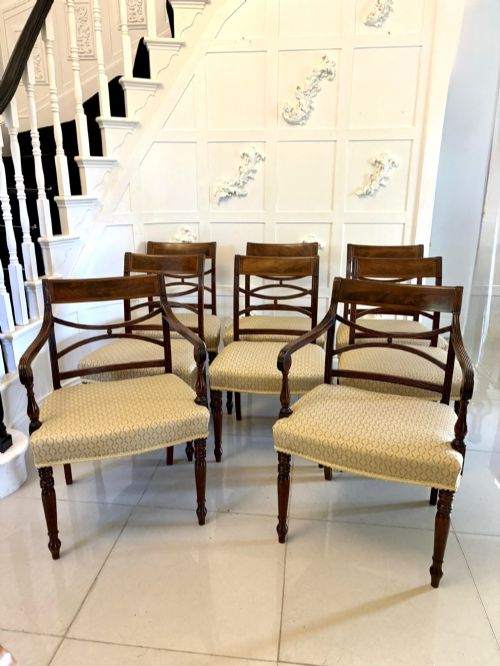
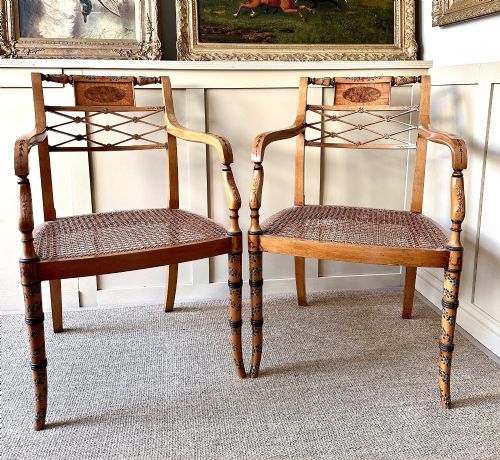
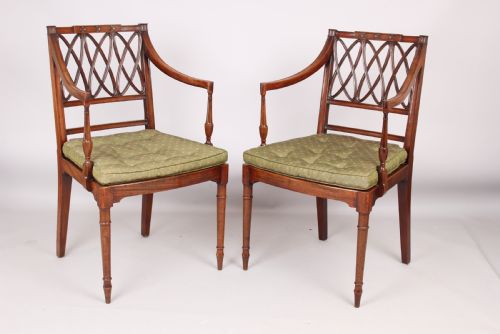
The versions most commonly met on this page include mahogany elbow chairs from the George III period, Edwardian Sheraton Revival painted pieces, and Chinese Export designs such as Cockpen chairs. They appear as individual armchairs, pairs, or within larger sets of dining chairs featuring characteristic intersecting wooden laths.
How they were made
Cabinetmakers utilised dense timbers such as mahogany and satinwood, shaping the lattice backsplats through precise joinery and hand-carved detailing. Frames often incorporated cane panels or drop-in seats upholstered in fabric and leather.
Surface decoration varied from clear polish highlighting the natural grain to elaborate paintwork and lacquer finishes, particularly on Chinoiserie and Sheraton Revival examples.
Antique Lattice Armchairs Retail Price Guide 2026
Typical asking prices for lattice armchairs among the pieces listed under this phrase on Sellingantiques today, from the lower quarter to the upper quarter. They describe what is for sale here now, not the wider market.
The furniture forms on this page include single reading chairs, matched pairs of elbow chairs, and large dining sets.
What varies in quality
The refinement of the lattice fretwork dictates the distinction between standard production and superior craftsmanship, where intersecting joints fit seamlessly without bulky reinforcements. Heavier structural proportion and balanced arm supports also separate fine library or elbow chairs from simpler dining seating.
Original surface preservation plays a major role, distinguishing pieces retaining their early paintwork, polish, or cane panels from those altered by later interventions.
The Antique Lattice Armchairs Glossary
- Cockpen chair
- A chair style featuring an open lattice grid backrest, inspired by Chinese export designs and popularised during the eighteenth and early twentieth centuries.
- Fretwork
- Ornamental perforated wood carving arranged in geometric or interlaced patterns, forming the characteristic lattice of the backrest.
- Elbow chair
- A term used historically for an armchair, often denoting a dining or desk chair with supportive armrests attached to the seat.
- Cane
- Strips of rattan woven into an open pattern to form lightweight, breathable seat panels or back inserts.
- Sheraton Revival
- A late nineteenth and early twentieth century design movement that reinterpreted the light, neoclassical furniture forms of the eighteenth century.
Antique Lattice Armchairs: Frequently Asked Questions
What is an antique lattice armchair?
These are wooden chairs featuring openwork geometric backrests formed by crossing laths or fretwork bars. They frequently draw upon eighteenth-century Chinese Export and Gothic revival styles.
They serve as decorative and functional seating, often placed in studies, drawing rooms, or around dining tables as elbow chairs.
How do I date an antique lattice chair?
Dating relies on identifying the timber species, joinery techniques, and stylistic revival periods. Georgian originals display heavy mahogany construction, while Edwardian Sheraton Revival pieces often feature painted satinwood.
Examining the wear patterns on the feet and seat frames also helps establish whether a chair is an eighteenth-century original or an early twentieth-century reproduction.
Were these chairs used for dining?
Yes, many lattice-back chairs were produced as part of larger dining suites or as carver chairs used alongside simpler side chairs at the table. Their sturdy proportions made them suitable for daily use.
They also functioned as occasional seating in parlours and reception rooms, providing comfortable arm support without heavy upholstery.
How do I care for cane seats?
Cane panels require occasional gentle cleaning with a damp cloth and should be kept away from direct heat sources to prevent the natural fibres from drying out and snapping. Applying a light conditioner can maintain flexibility.
If the weaving does break, traditional cane work can be successfully repaired by a skilled restorer to preserve the chair's structure.